Long-term efficacy and renal safety of SGLT2 inhibitors in patients with heart failure and advanced chronic kidney disease (stage 4): a propensity score-matched retrospective cohort study - Report - MDSpire
Advertisement
Long-term efficacy and renal safety of SGLT2 inhibitors in patients with heart failure and advanced chronic kidney disease (stage 4): a propensity score-matched retrospective cohort study
Long-term effectiveness and kidney safety of SGLT2 inhibitors in heart failure patients
Overview
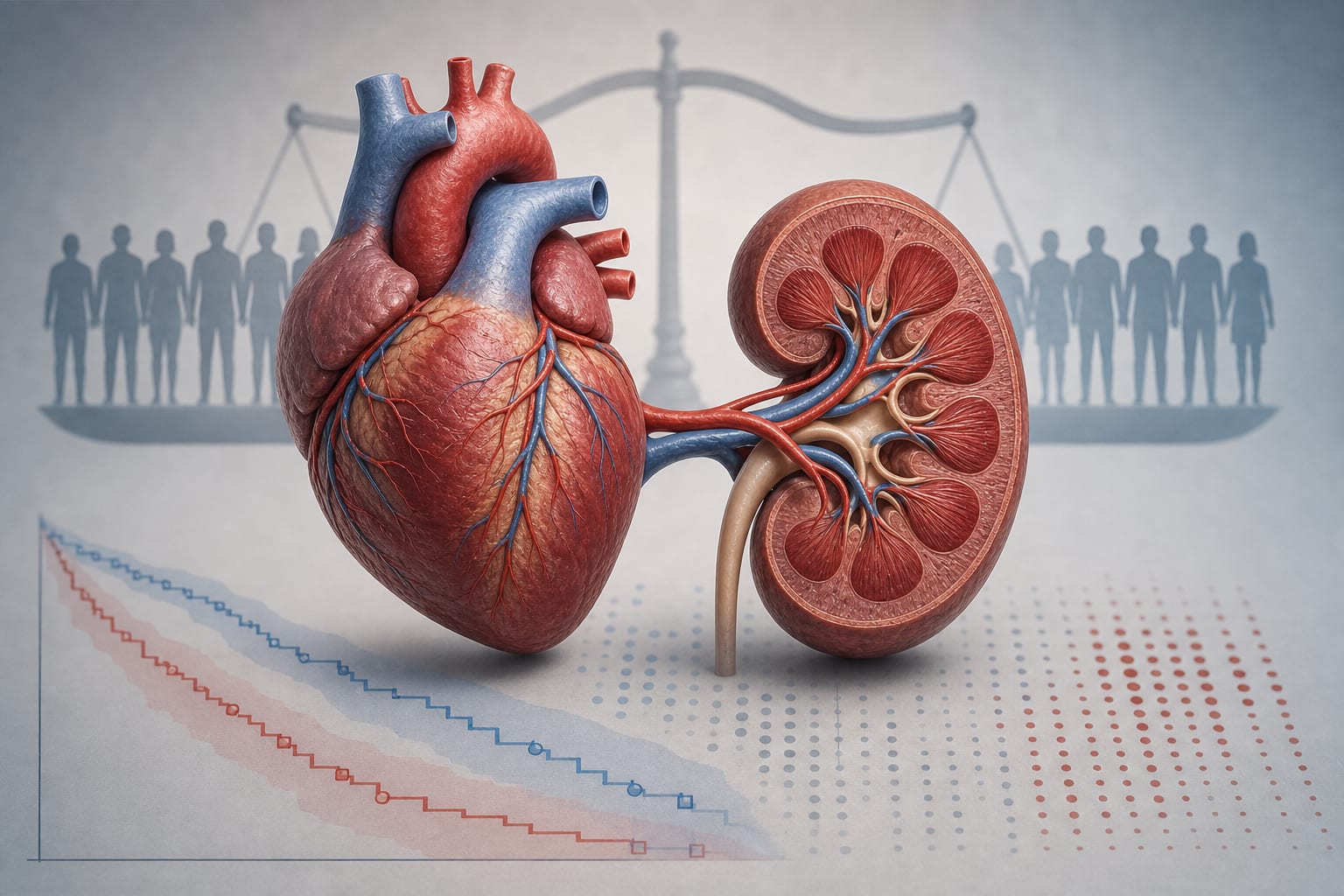
This study evaluates the long-term efficacy and renal safety of SGLT2 inhibitors in heart failure patients with advanced chronic kidney disease (CKD stage 4). Results indicate a significant reduction in heart failure hospitalizations and cardiovascular death without increased risk of major adverse kidney events.
Background
Expand on safety concerns related to SGLT2 inhibitors in patients with severe renal impairment.
Data Highlights
Outcome
SGLT2i Group
Control Group
Adjusted HR (95% CI)
P-value
Heart failure hospitalization or cardiovascular death
30.6%
45.6%
0.62 (0.44–0.87)
0.005
Major adverse kidney events (MAKE)
14.4%
16.9%
0.86 (0.52–1.43)
0.550
Annualized eGFR decline
-1.2 mL/min/1.73 m²
-3.5 mL/min/1.73 m²
N/A
P < 0.001
Key Findings
SGLT2i therapy resulted in a 38% relative risk reduction in heart failure hospitalization or cardiovascular death.
The incidence of major adverse kidney events was similar between SGLT2i and control groups.
Initial eGFR decline was observed with SGLT2i, but subsequent decline was significantly less than standard care.
No significant increase in severe acute kidney injury or hyperkalemia was noted with SGLT2i use.
Long-term use of SGLT2i may attenuate renal function decline in advanced CKD patients.
Clinical Implications
Clinicians should consider SGLT2 inhibitors for heart failure patients with advanced CKD, as they may provide significant cardiovascular benefits without compromising renal safety. Careful monitoring of renal function is essential, especially during the initial treatment phase.
Conclusion
SGLT2 inhibitors appear to be a safe and effective treatment option for heart failure patients with advanced CKD, potentially improving both cardiovascular outcomes and long-term renal function.