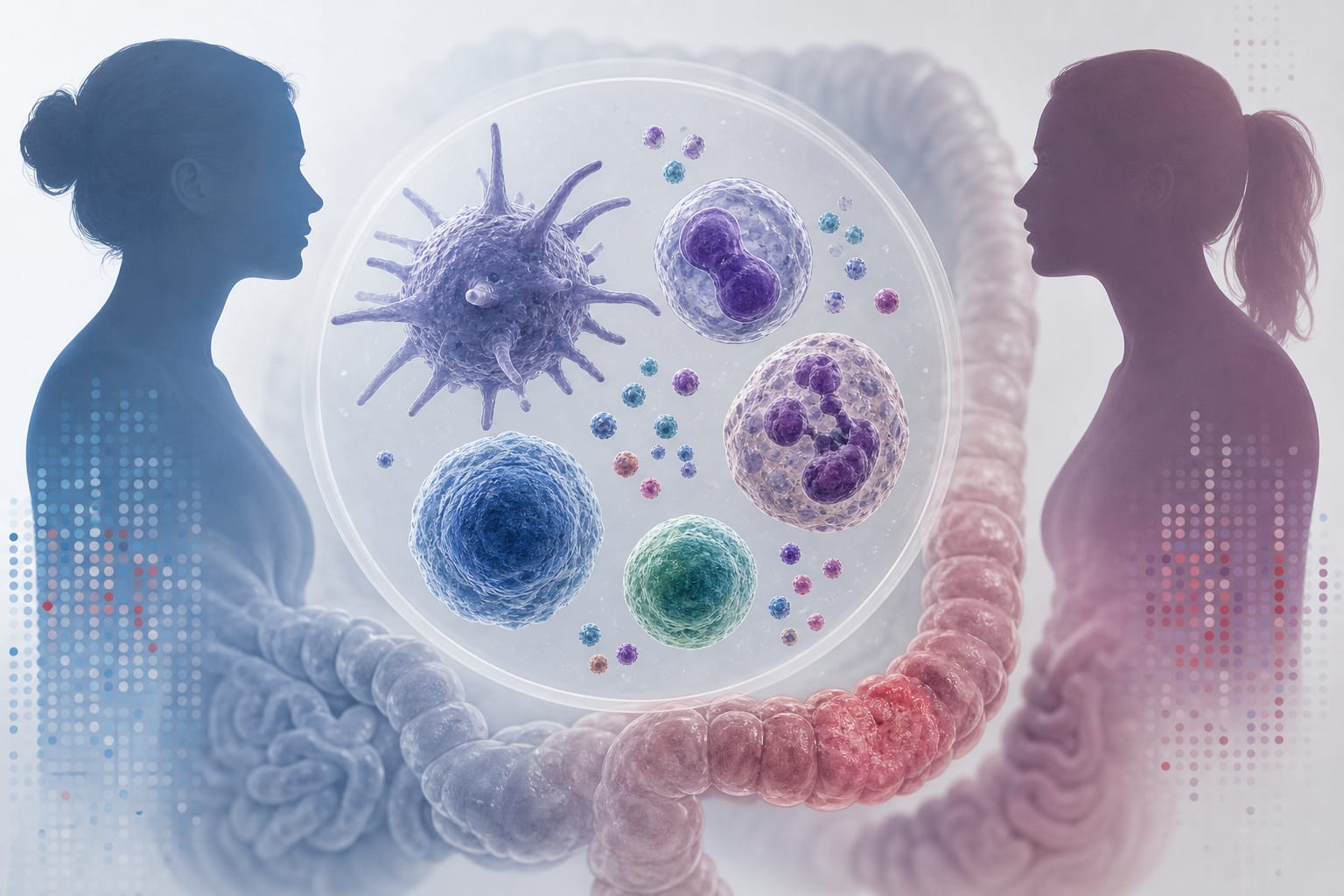
Multi-Omics Integration Identifies Biomarkers and Subtypes in IBD
Overview
This study utilized multi-omics data from the SPARC IBD cohort to distinguish Crohn’s disease (CD) from ulcerative colitis (UC) and to identify patient subtypes within each condition. Machine learning models demonstrated high accuracy in classifying CD versus UC, while unsupervised analyses revealed molecularly distinct subgroups associated with disease severity and inflammation.
Background
Inflammatory bowel disease (IBD), including CD and UC, is a heterogeneous condition with variable clinical manifestations and underlying molecular mechanisms. Traditional research has focused on genetics and microbiome data, but recent advances in multi-omics technologies enable comprehensive profiling of genomics, transcriptomics, and proteomics. The SPARC IBD cohort provides one of the largest datasets integrating these modalities, facilitating biomarker discovery and patient stratification to advance precision medicine approaches.
Data Highlights
Omics Modality
Number of Patients
Samples/Intervals
Genomics
603
1184 intervals
Transcriptomics (gut biopsy)
603
1184 intervals
Proteomics (blood plasma)
603
1184 intervals
Key Findings
Machine learning models trained on multi-omics data accurately classified UC versus CD samples, demonstrating distinct molecular signatures.
Both known and novel omics features were identified as potential diagnostic biomarkers for IBD subtypes.
Unsupervised multi-omics factor analysis revealed distinct patient subgroups within UC and CD populations.
In UC, subgroups correlated with disease severity, while in CD, subpopulations exhibited distinct inflammation profiles.
The study identified two CD subpopulations characterized by different molecular inflammation signatures.
Clinical Implications
The integration of multi-omics data can improve diagnostic accuracy between CD and UC, aiding in the management of patients with indeterminate colitis. Furthermore, identifying molecularly defined patient subgroups may enable personalized treatment strategies targeting specific disease pathways and severity profiles.
Conclusion
This comprehensive multi-omics analysis of the SPARC IBD cohort advances understanding of IBD heterogeneity by identifying biomarkers that distinguish CD from UC and by defining molecularly distinct patient subtypes. These findings support the potential for precision medicine approaches in IBD care.
References
SPARC IBD Cohort Study, 2024 -- Integration of Multi-Omics Approaches Reveals New Biomarkers and Patient Subtypes in Inflammatory Bowel Disease
The company adds $300 million to its Puerto Rico biologics site as Pfizer reports Phase 3 myeloma data, J&J advances a dual-pathway IBD antibody, and BioNTech streamlines production