Editorial: Investigating Extended Reality Innovations in Joint Surgery and Their Clinical Implications
-
By
-
Shilong Su
-
May 29, 2026
Clinical Report: Investigating Extended Reality Innovations in Joint Surgery
Overview
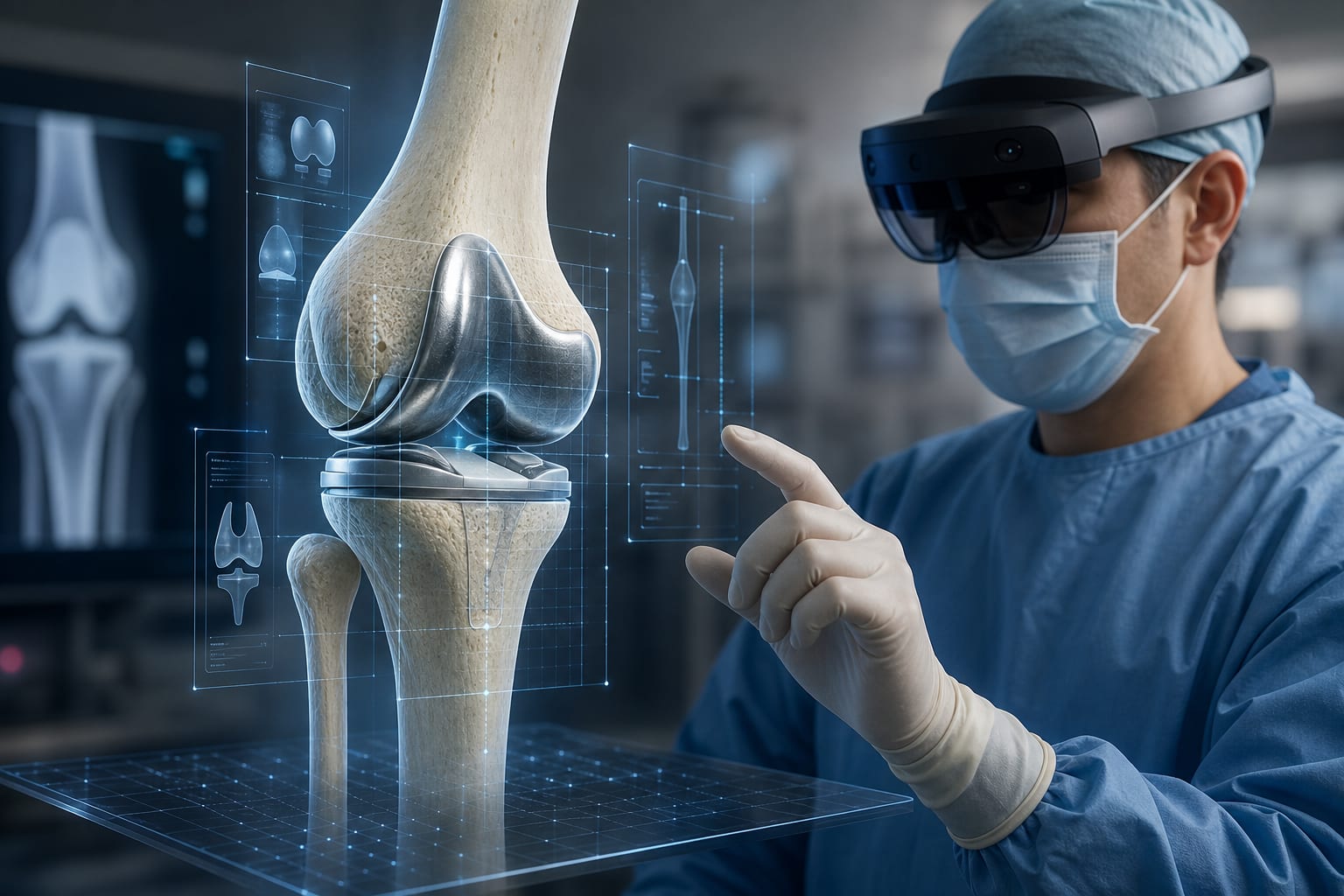
Extended reality (XR) technologies, including augmented reality (AR) and mixed reality (MR), show promise in enhancing joint surgery through improved surgical guidance and medical education. However, the current clinical evidence remains limited, necessitating further research to address existing challenges and validate efficacy.
Background
The aging population and increasing complexity of orthopedic diseases have heightened the demand for innovative surgical solutions. XR technologies have emerged as valuable tools in joint surgery, offering immersive experiences that can enhance surgical precision and educational outcomes. Understanding the current state of XR applications is crucial for integrating these technologies into clinical practice.
Data Highlights
No numerical data was provided in the source material.
Key Findings
['XR technologies have been applied in various aspects of joint surgery, including intraoperative assistance and medical education.', 'AR navigation technology has been shown to assist in atlantoaxial pedicle screw placement effectively.', 'MR technology allows for depth-aware holographic visualization, with potential applications in anterior cruciate ligament reconstruction.', 'Current studies indicate that while XR shows technical feasibility, high-quality evidence supporting its clinical effectiveness is still lacking.', 'Integrating MR with 3D printing has improved educational outcomes in orthopedic training.']Clinical Implications
Healthcare professionals should consider the potential of XR technologies to enhance surgical precision and educational effectiveness in orthopedic practices. However, they must remain cautious due to the current limitations in clinical evidence and the need for further validation of these technologies.
Conclusion
XR technologies represent a promising frontier in joint surgery, yet the field requires more robust clinical trials to establish their efficacy and address existing limitations. Continued research and collaboration will be essential for advancing these innovations in clinical settings.
Related Resources & Content
- Broytman D, Rosenberg E, Ophthalmology Management, 2025 -- Expanding Opportunities in Ophthalmic Surgical Training
- Systematic Review of Augmented Reality-Assisted Navigation in Spinal Surgery
- A Bibliometric Study of Extended Reality Applications in Cranial and Spinal Neurosurgery
- Position Statements - American Academy of Orthopaedic Surgeons
- Augmented reality navigation systems vs. conventional techniques in acetabular cup positioning: a systematic review and meta-analysis
- Accuracy of a New Augmented Reality Assisted Technique for Total Knee Arthroplasty: An In Vivo Study
- Reassessing Benchmarks: Commentary on Technological Advances in Neurosurgery
- Position Statements - American Academy of Orthopaedic Surgeons
- Augmented reality navigation systems vs. conventional techniques in acetabular cup positioning: a systematic review and meta-analysis - ScienceDirect
- Accuracy of a New Augmented Reality Assisted Technique for Total Knee Arthroplasty: An In Vivo Study - ScienceDirect
Based on findings from:
Editorial: Exploring XR technologies for joint surgery: innovations and clinical applications
Shilong Su. Frontiers In Surgery, 2026.
https://www.frontiersin.org/journals/surgery/articles/10.3389/fsurg.2026.1864293/full
This content is an AI-generated, fully rewritten summary based on a published scholarly article. It does not reproduce the original text and is not a substitute for the original publication. Readers are encouraged to consult the source for full context, data, and methodology.