Prognostic analysis of first-recurrence/metastasis esophageal squamous cell carcinoma: chemoimmunotherapy combined with radiotherapy as one of the optimal clinical management strategies - Report - MDSpire
Advertisement
Prognostic Evaluation of First Recurrence or Metastasis in Esophageal Squamous Cell Carcinoma: The Role of Combined Chemoimmunotherapy and Radiotherapy in Optimal Treatment Approaches
Prognostic Evaluation of First Recurrence or Metastasis in ESCC
Overview
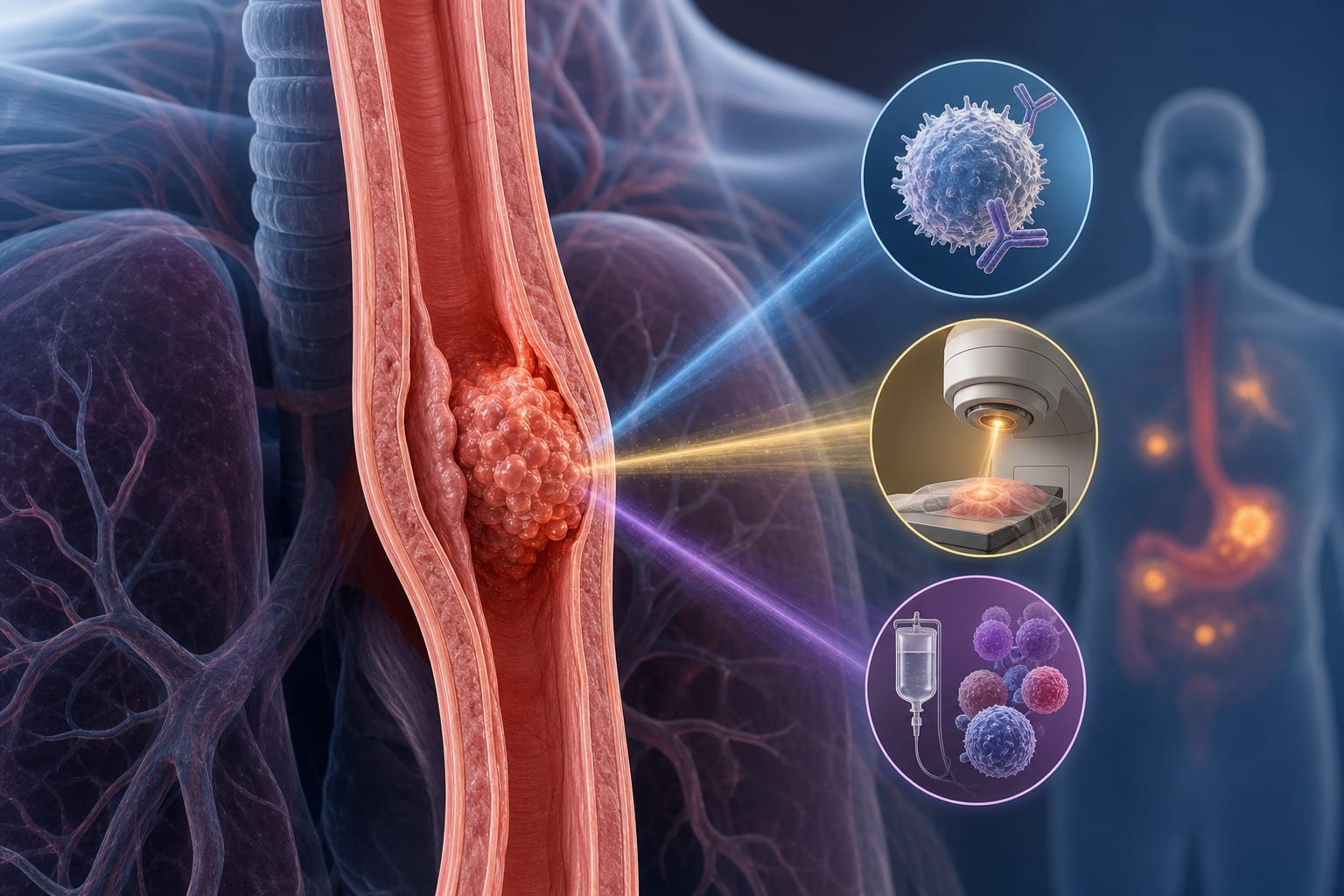
This study evaluates the efficacy of combined chemoimmunotherapy and radiotherapy in treating first-recurrent/metastatic esophageal squamous cell carcinoma (ESCC). The findings indicate differences in progression-free survival (PFS) and overall survival (OS) between the IT+RT+CT and CT+IT regimens.
Background
Esophageal cancer is a leading cause of cancer-related mortality, with a particularly poor prognosis for recurrent and metastatic cases. The treatment landscape for esophageal squamous cell carcinoma (ESCC) is evolving, with novel therapies like immunotherapy being explored alongside traditional methods.
Data Highlights
Group
Progressive Disease Incidence
1-Year OS
2-Year OS
IT+RT+CT
80.0%
76.2%
46.5%
CT+IT
90.6%
39.5%
19.4%
Key Findings
The IT+RT+CT group had a lower incidence of progressive disease compared to the CT+IT group (80.0% vs 90.6%).
First-line treatment was an independent factor affecting progression-free survival (PFS), with better PFS in the IT+RT+CT group (HR: 0.50, 95% CI: 0.28-0.90, P = 0.020).
IT+RT+CT was identified as a significant prognostic factor for overall survival (OS) in both first-line and subsequent-line treatments.
After inverse probability of treatment weighting, the 1- and 2-year OS rates were higher in the IT+RT+CT group compared to the CT+IT group (P = 0.011).
The doubly robust Cox proportional hazards model indicated that IT+RT+CT was significantly associated with improved OS (HR: 0.48, 95% CI: 0.27-0.85, P = 0.011).
Clinical Implications
The findings suggest that the combination of immunotherapy, radiotherapy, and chemotherapy may offer a more effective treatment strategy for patients with recurrent or metastatic ESCC. Clinicians should consider these treatment regimens when developing individualized patient management plans.
Conclusion
The study reports on the differences in survival outcomes for patients with recurrent/metastatic ESCC treated with combined chemoimmunotherapy and radiotherapy compared to other regimens.