Clinical Report: Transcriptomic Analysis Reveals IL-17/FOS Pathways in CP
Overview
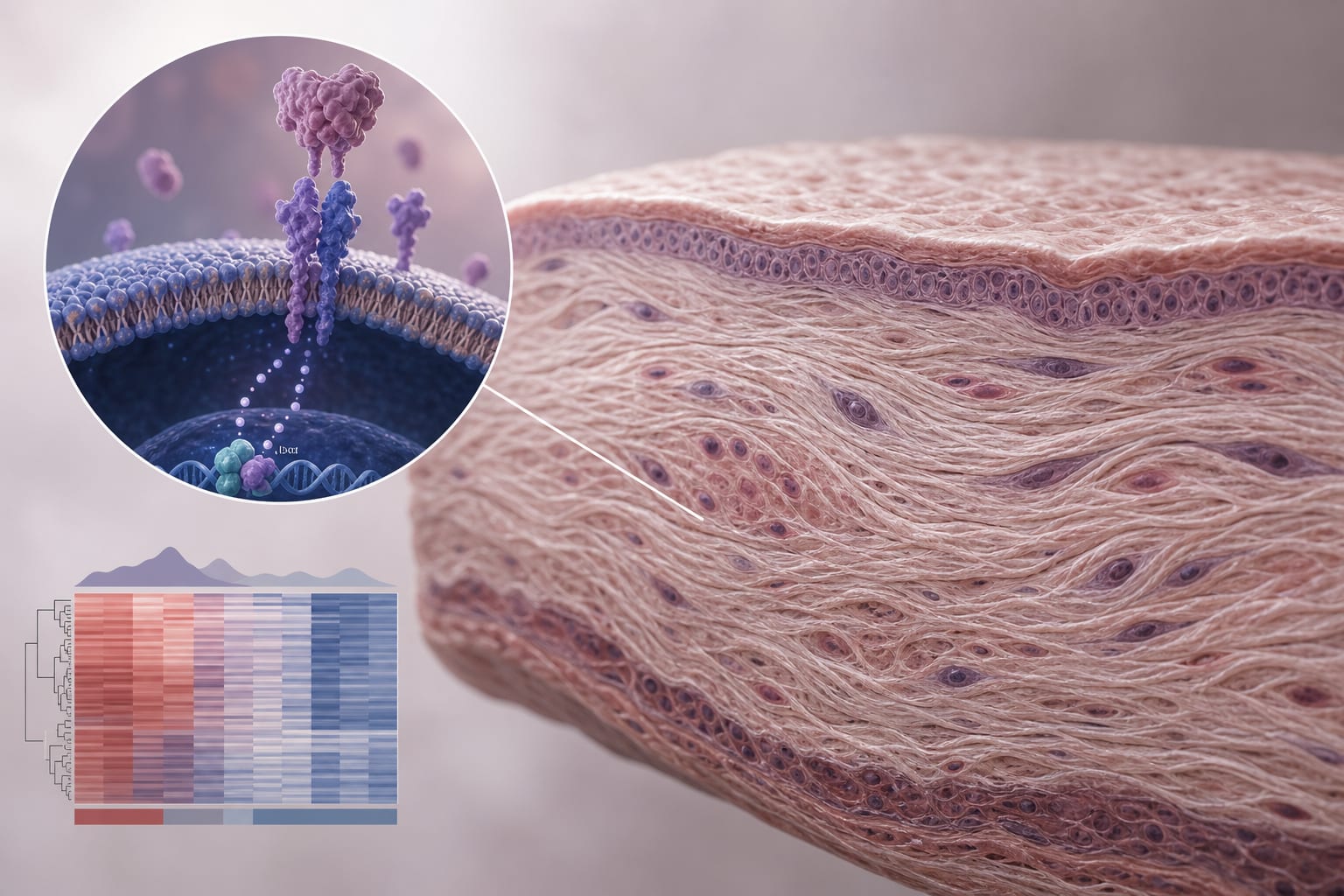
This study identifies IL-17-related signaling pathways as significantly enriched in the dartos fascia of pediatric concealed penis (CP) patients. Key nodes such as IL-17RA, ACT1, and FOS were found to be upregulated.
Background
Pediatric concealed penis (CP) is a congenital anomaly characterized by abnormal dartos fascia development, leading to fibrotic remodeling and reduced tissue compliance. Understanding the molecular mechanisms underlying this condition is crucial for advancing treatment approaches. The study explores the transcriptomic landscape of CP to identify potential therapeutic targets.
Data Highlights
RNA-seq analysis revealed a significantly enriched IL-17-related signaling signature in CP tissues, with validation showing increased expression of IL-17RA, ACT1, FOS, IL-6, and PTGS2.
Key Findings
IL-17-related signaling pathways are significantly enriched in CP dartos fascia.
Key nodes such as IL-17RA, ACT1, and FOS are upregulated in CP tissues.
Increased expression of IL-6 and PTGS2 was observed alongside FOS upregulation.
Histological examination revealed fragmented elastic fibers and increased matrix deposition in CP tissues.
Clinical Implications
The identification of IL-17/FOS-related pathways in CP may inform future research into targeted therapies for managing fibrotic remodeling in this condition. Understanding these molecular mechanisms could enhance surgical outcomes and patient care.
Conclusion
This study provides evidence of the role of IL-17/FOS signaling in the pathogenesis of pediatric concealed penis.