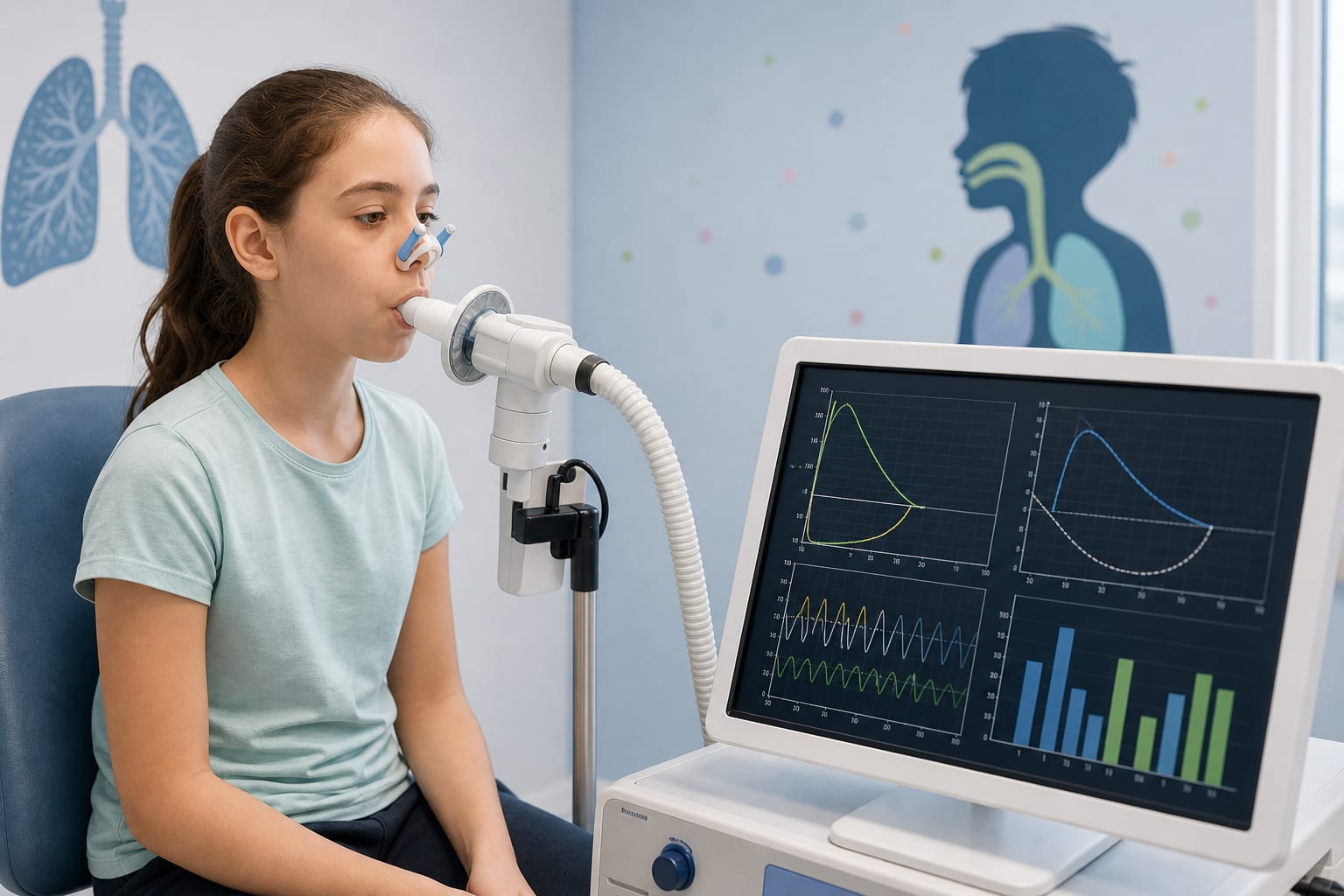
Calibration of Impulse Oscillometry Measurements Against Spirometric Indicators
Overview
This study evaluates impulse oscillometry (IOS) parameters against spirometry in children with suspected asthma, identifying specific cutoff values for detecting airway obstruction. The findings suggest that IOS can serve as a complementary diagnostic tool in pediatric asthma assessment.
Background
Accurate assessment of lung function is crucial for managing pediatric asthma, with spirometry being the traditional gold standard. However, spirometry requires significant cooperation, making impulse oscillometry (IOS) a valuable alternative, particularly in younger or less cooperative patients. Establishing reliable IOS cutoff values is essential for improving diagnostic accuracy and guiding treatment decisions in pediatric populations.
Data Highlights
{'format': 'Ensure the table is properly formatted for readability.'}
Key Findings
IOS parameters R5−R20 showed the strongest correlation with FEV1 and MMEF.
AX and Fres cutoff values were established for two age groups: 6–11 years and 12–18 years.
Post-bronchodilator decreases in Fres and AX were predictive of obstructive lung disease.
IOS demonstrated moderate diagnostic accuracy when compared to spirometry.
IOS can be a useful adjunct in diagnosing asthma, particularly when spirometry is not feasible.
Clinical Implications
Clinicians should consider incorporating IOS into their diagnostic toolkit for pediatric asthma, especially for patients who struggle with traditional spirometry. Understanding the established IOS cutoff values can enhance the accuracy of diagnosing airway obstruction and guide treatment strategies.
Conclusion
The study highlights the potential of IOS as a complementary tool to spirometry in assessing pediatric asthma, with specific cutoff values identified for clinical use. Further research may solidify IOS's role in routine asthma management.