Clinical Report: N4-acetylcytidine Modification Links Metabolic Changes and Immune Evasion in Cancer
Overview
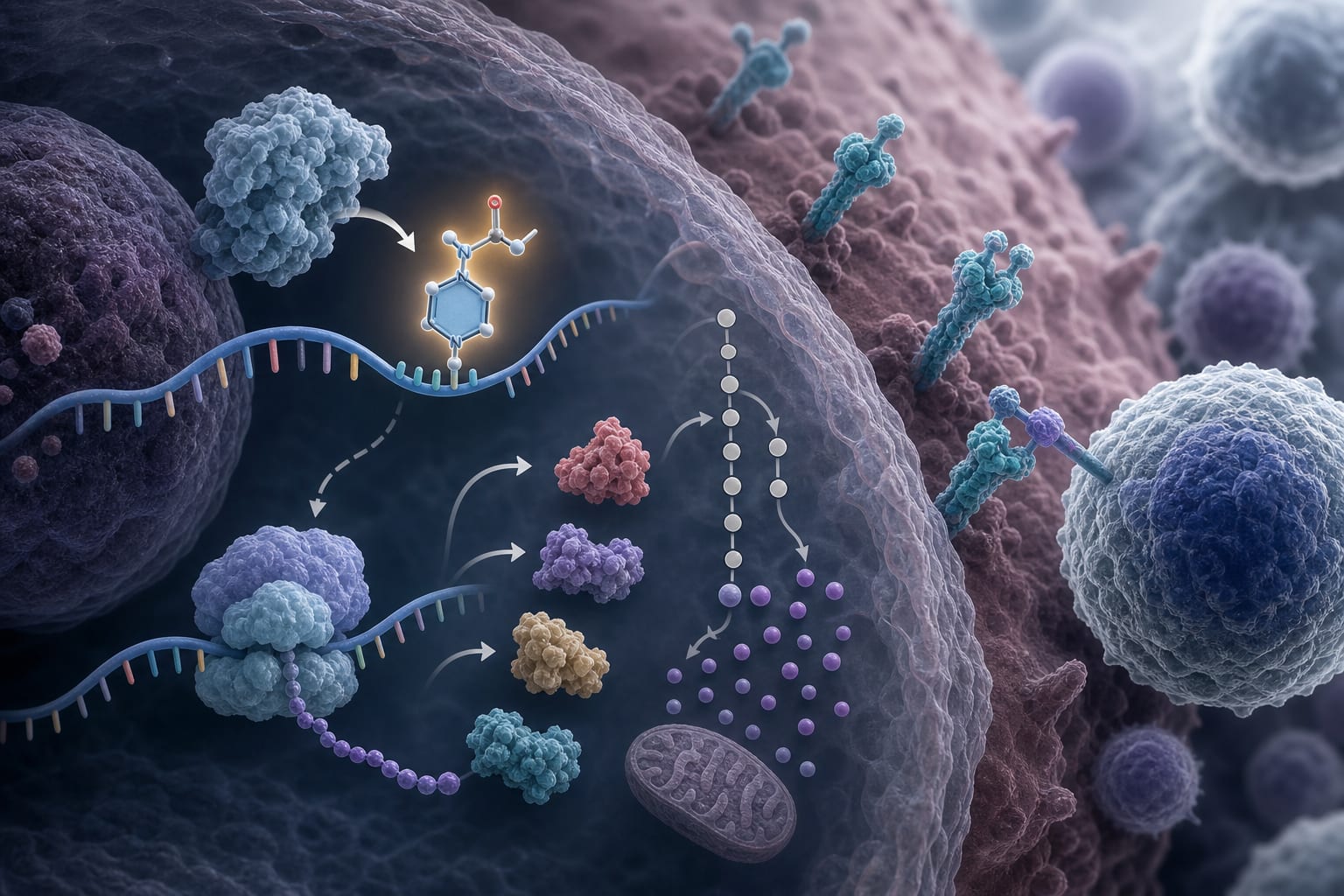
N4-acetylcytidine (ac4C) modification, mediated by NAT10, plays a crucial role in cancer by enhancing mRNA stability and translation of glycolytic enzymes, promoting metabolic reprogramming and immune evasion.
Background
The epitranscriptome, which includes various RNA modifications, is essential in regulating gene expression and has significant implications in cancer biology. N4-acetylcytidine (ac4C) is a key modification that influences both metabolic pathways and immune responses in tumors, linking these two hallmarks of cancer.
Data Highlights
No numerical data or trial data provided in the source material.
Key Findings
ac4C modification enhances the stability and translation of glycolytic enzymes, contributing to the Warburg effect.
NAT10-mediated ac4C modification facilitates immune evasion by upregulating PD-L1 and suppressing T cell function.
Glycolysis-driven lactate accumulation creates an immunosuppressive tumor microenvironment.
Targeting NAT10 with inhibitors like Remodelin shows preclinical efficacy.
Emerging controversies exist regarding ac4C stoichiometry and its cell-type-specific functions in the tumor microenvironment.
Clinical Implications
Further research is needed to explore the clinical applicability of NAT10 inhibitors.
Conclusion
N4-acetylcytidine modification represents a critical link between metabolic reprogramming and immune evasion in cancer, highlighting its potential as a therapeutic target.
Harold Burstein, MD, PhD, and Ana C. Garrido-Castro, MD discuss results from the Saci-IO HR+ trial, which were presented at the 2026 ESMO Breast Cancer Congress.