Specialty Soft Design for Keratoconus - Report - MDSpire
Advertisement
Specialty Soft Design for Keratoconus
Explore a success story of a patient with keratoconus who found relief through custom soft lenses after conventional lenses failed, shared by Dr. Lindsay A. Sicks.
Specialty Soft Contact Lens Design for Keratoconus Management
Overview
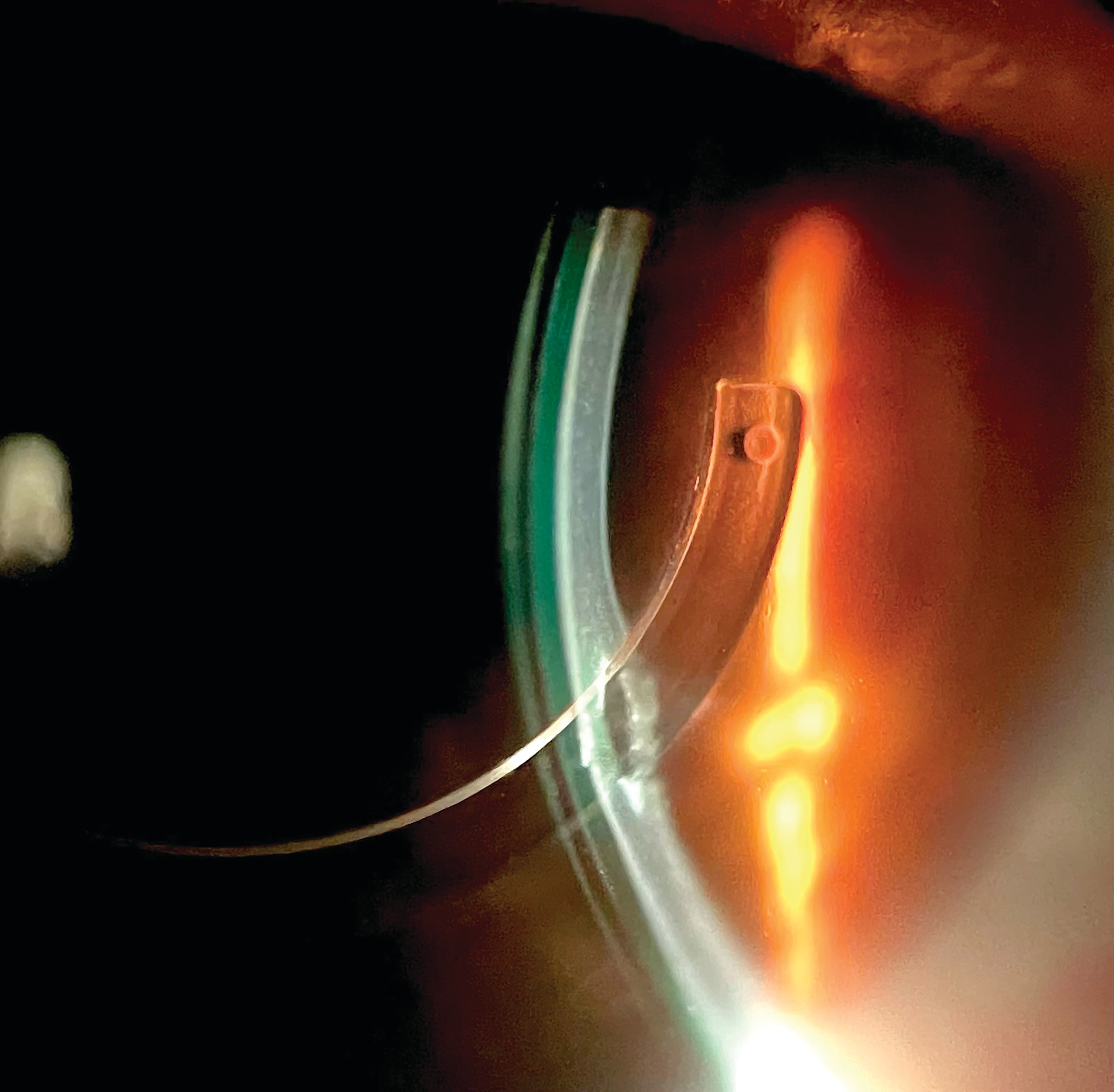
This case report highlights the successful use of a custom specialty soft contact lens in a patient with keratoconus who experienced discomfort and suboptimal vision with conventional gas permeable lenses. Over an eight-year follow-up, the patient maintained excellent visual acuity and comfort with the specialty soft lenses despite disease progression.
Background
Keratoconus is a progressive corneal ectasia characterized by corneal thinning and irregular astigmatism, often requiring specialized contact lens management for optimal visual rehabilitation. Conventional rigid gas permeable lenses can provide good vision but may cause discomfort and poor tolerance in some patients. Specialty soft contact lenses designed to address irregular astigmatism offer an alternative for patients who struggle with typical lens modalities. This report presents a case of a 43-year-old male with severe keratoconus who transitioned from gas permeable lenses to a custom soft lens design with sustained success.
Data Highlights
Parameter
Right Eye (OD)
Left Eye (OS)
Keratometry (D)
58.40/53.62 @ 063°
48.59/45.64 @ 042°
Manifest Refraction
+0.50 -3.75 x 075
-0.25 -2.75 x 155
Best-Corrected Visual Acuity (BCVA)
20/125
20/30
Near Add
+1.00 DS
+1.00 DS
Specialty Soft Lens Parameters (initial)
8.6/14.5/PL/STD
8.6/14.5/PL/STD
Overrefraction
-2.75 -2.00 x 080 (VA 20/20-3)
+1.75 -1.50 x 180 (VA 20/20)
Lens Movement
1.0 mm
1.0 mm
Lens Rotation
5° left
5° left
Current Lens Parameters (8 years later)
8.4/14.5/STD/-1.00 -1.25 x 168
8.6/14.5/STD/+1.00 DS
Wearing Schedule
5 days/week, ~6 hours/day
Key Findings
The patient had severe keratoconus OD and moderate keratoconus OS confirmed by corneal topography.
Conventional gas permeable lenses caused discomfort and limited wear time, prompting exploration of specialty soft lenses.
Specialty soft lenses (KeraSoft Thin) provided excellent centration, stable rotation, and 1.0 mm movement with improved visual acuity (20/20 or better).
Comfort was excellent, allowing the patient to wear lenses comfortably for several hours daily.
Over an eight-year follow-up, the patient maintained stable vision and comfort despite progression of keratoconus and development of cataracts.
Lens parameters were adjusted slightly over time to accommodate disease progression, demonstrating adaptability of the specialty soft lens design.
Clinical Implications
Specialty soft contact lenses designed for irregular astigmatism can be a viable alternative for keratoconus patients intolerant to rigid gas permeable lenses, providing improved comfort and stable vision. Regular follow-up is important to monitor disease progression and adjust lens parameters accordingly. These lenses may support long-term wear and patient satisfaction in moderate to severe keratoconus.
Conclusion
This case demonstrates that specialty soft contact lenses can successfully address the challenges of keratoconus management, offering sustained visual improvement and comfort over many years. Custom lens designs should be considered for patients with intolerance to conventional modalities.
Related Resources & Content
Sicks LA, 2024 -- Specialty Soft Design for Keratoconus