Lactate dehydrogenase A exhibits sorbitol/fructose-related catalytic activity and contributes to polyol pathway metabolism in tumor cells - Report - MDSpire
Advertisement
Lactate Dehydrogenase A Facilitates Sorbitol and Fructose Metabolism in Tumor Cells via the Polyol Pathway
Lactate Dehydrogenase A Facilitates Sorbitol and Fructose Metabolism in Tumor Cells
Overview
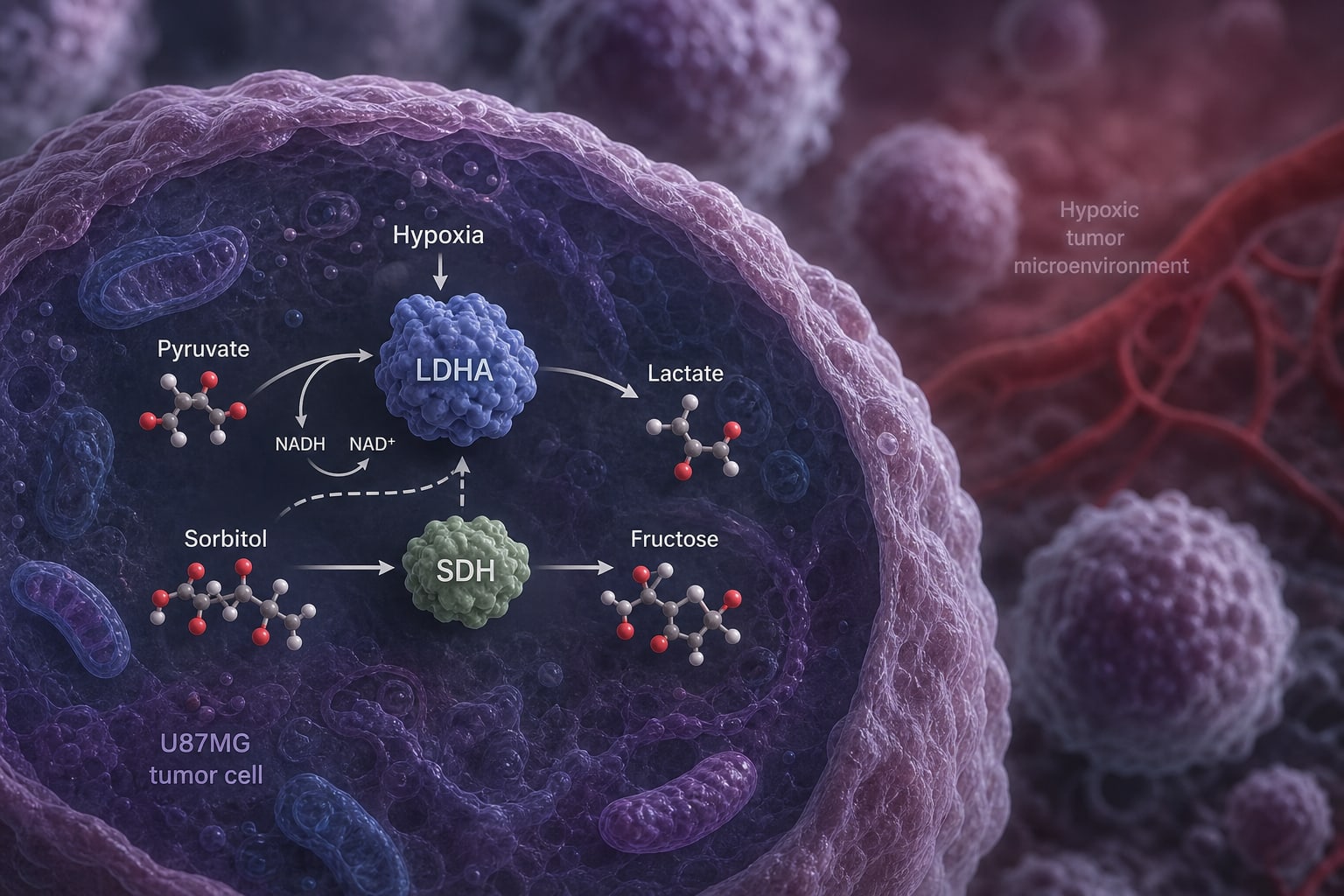
This study demonstrates that lactate dehydrogenase A (LDHA) plays a significant role in the metabolism of sorbitol and fructose in hypoxic U87MG tumor cells. LDHA knockdown reduces fructose levels and cell viability, while its overexpression has the opposite effect.
Background
Understanding tumor metabolism is crucial for developing effective cancer therapies. The polyol pathway, which converts glucose to fructose, has been implicated in tumor cell metabolism under hypoxic conditions. This study explores the role of LDHA in this metabolic process, particularly in tumor cells with low sorbitol dehydrogenase expression.
Data Highlights
Condition
Fructose Levels
Sorbitol Levels
Cell Viability
ROS Levels
LDHA Knockdown
Decreased
Increased
Decreased
Increased
LDHA Overexpression
Increased
Decreased
Increased
Decreased
Key Findings
LDHA is increased in hypoxic U87MG cells.
LDHA catalyzes sorbitol oxidation and fructose reduction in vitro.
LDHA knockdown leads to reduced fructose and increased sorbitol accumulation.
Increased reactive oxygen species (ROS) levels are observed with LDHA knockdown.
Cell viability decreases with LDHA knockdown under hypoxic conditions.
Clinical Implications
The findings suggest that targeting LDHA may influence tumor metabolism and viability in hypoxic environments. Understanding LDHA's role could inform therapeutic strategies in cancers exhibiting metabolic reprogramming.
Conclusion
This study highlights the role of LDHA in facilitating sorbitol and fructose metabolism in tumor cells under hypoxic conditions.