Clinical Report: Development of an Early Risk Assessment Framework for Patients with High-Risk Diabetic Feet
Overview
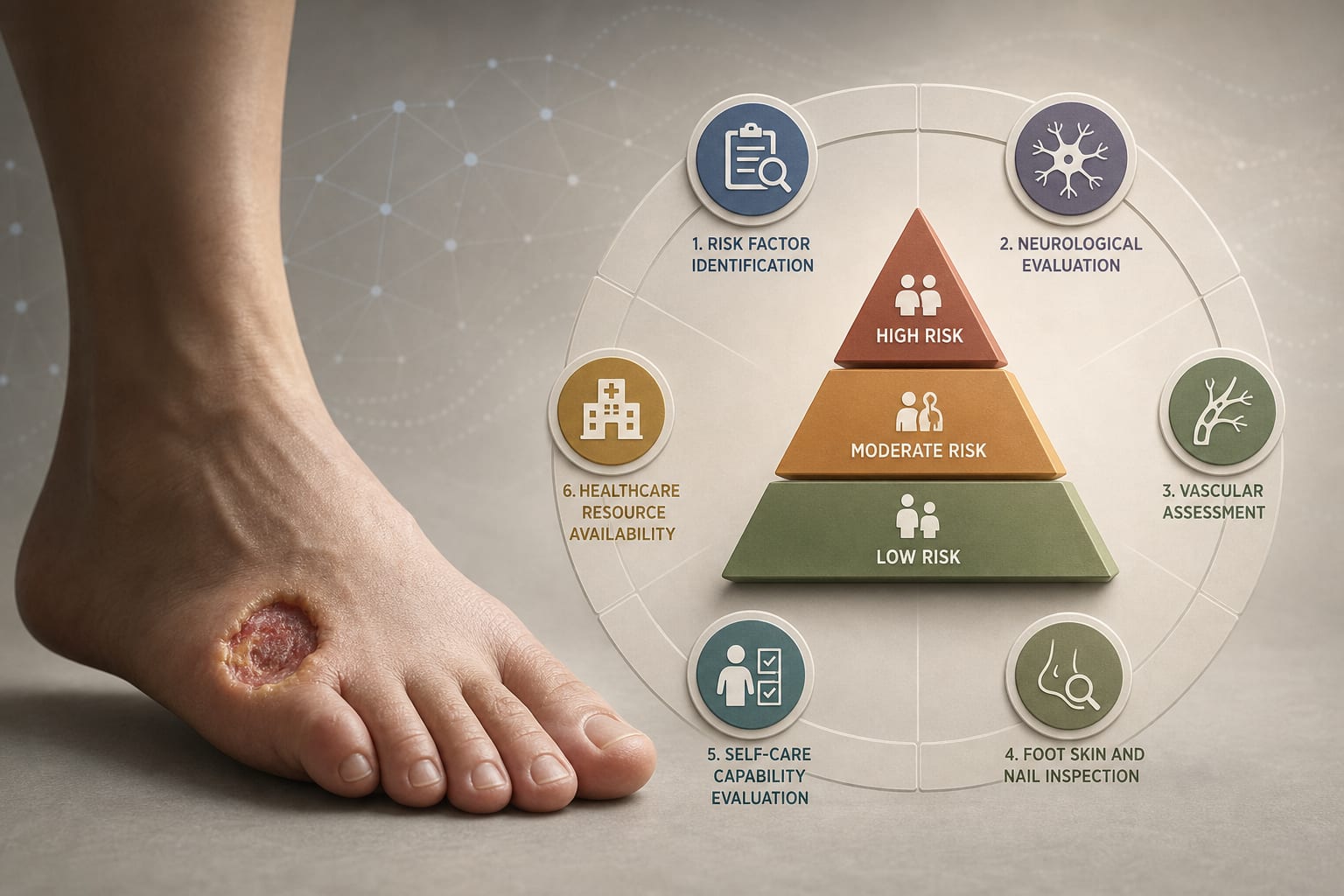
This report presents a newly developed early risk assessment system for patients with high-risk diabetic feet, validated through expert consultation. The framework encompasses six dimensions and 42 items for structured risk stratification, aiming to enhance prevention and management of diabetic foot complications.
Background
Diabetic foot syndrome is a significant complication of diabetes, leading to ulcers and amputations. With the rising prevalence of diabetes globally, effective risk assessment and management strategies are crucial to prevent severe outcomes. Current practices lack a comprehensive, standardized approach to early risk identification in diabetic foot care.
Data Highlights
Consultation Round
Response Rate
Authority Coefficient
Kendall’s W
Round 1
73.3%
0.802
0.302
Round 2
100.0%
0.933
0.103
Key Findings
The early risk assessment system includes six dimensions: risk factor identification, neurological assessment, vascular evaluation, foot skin and nail examination, self-care ability assessment, and healthcare resource accessibility.
A total of 42 items were identified for structured risk stratification of high-risk diabetic feet.
Expert consensus was achieved with high authority coefficients and significant Kendall’s coefficients of concordance.
Standardized early risk screening can potentially prevent nearly 50% of diabetic foot ulcers and amputations.
The framework can guide nursing training and standardize prevention practices across healthcare institutions.
Clinical Implications
Healthcare professionals should integrate this evidence-based risk assessment framework into clinical practice to enhance diabetic foot care. Training programs can be refined based on the identified competencies, promoting standardized interventions and improving patient outcomes.
Conclusion
The developed early risk assessment framework provides a structured approach to identifying high-risk diabetic feet, supporting better management and prevention strategies in clinical settings.