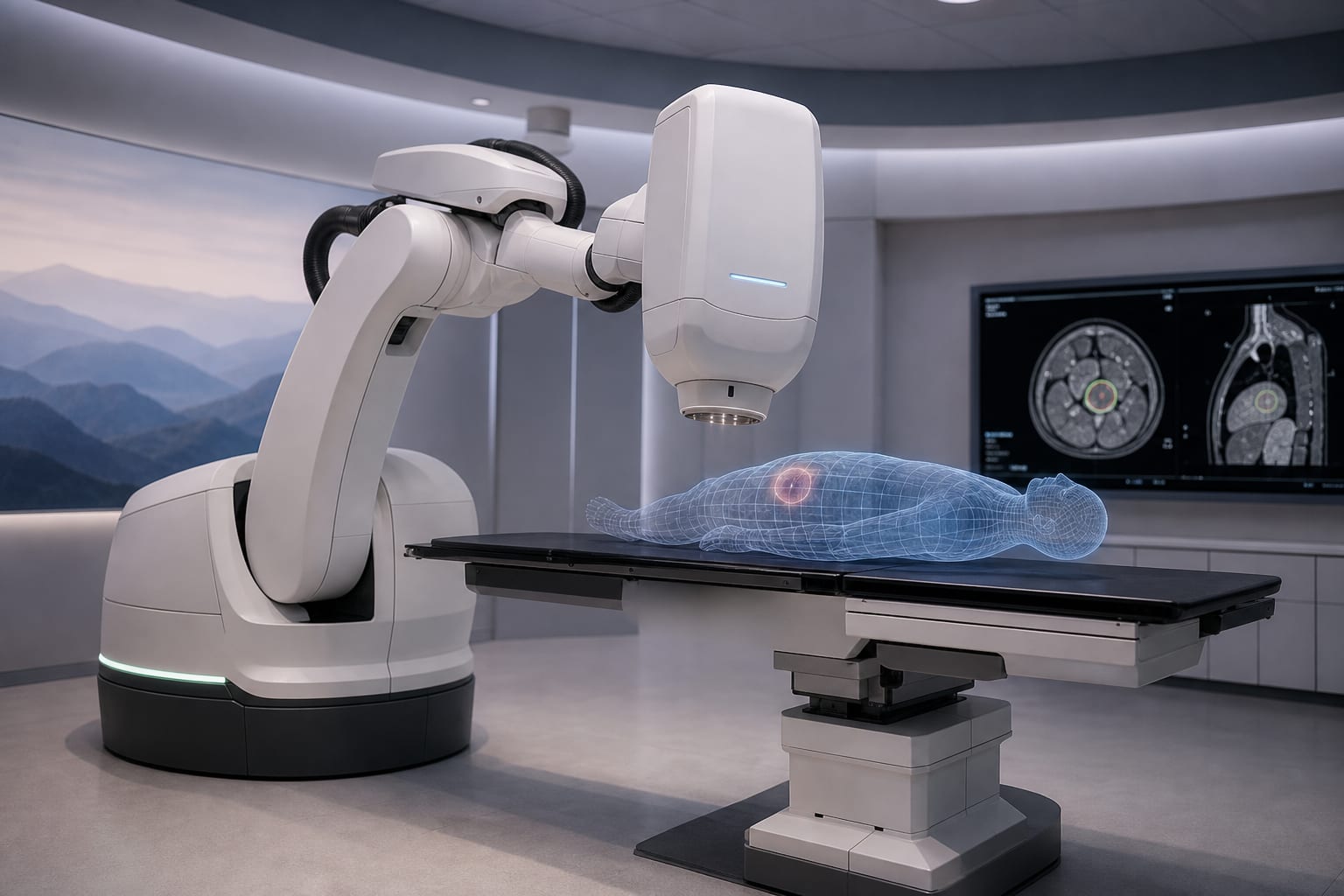
Clinical Report: An Overview of the CyberKnife Robotic Radiosurgery System
Overview
The CyberKnife system is a sophisticated technology for cancer treatment, utilizing a robotic arm and image guidance to deliver high-dose radiation with sub-millimeter accuracy. This report reviews its evolution, target-tracking strategies, and clinical applications over three decades.
Background
The CyberKnife system represents a significant advancement in stereotactic radiosurgery, enabling precise treatment of tumors while minimizing damage to surrounding healthy tissues. Its frameless design allows for real-time motion tracking, making it particularly effective for moving targets.
Data Highlights
No numerical data available in the source material.
Key Findings
The CyberKnife system was first introduced in 1994 and has undergone six generations of technological advancements.
It utilizes a 6 MV X-band linear accelerator mounted on a six-degree-of-freedom robotic arm for high-precision radiation delivery.
Real-time motion tracking enables sub-millimeter targeting accuracy for both stationary and moving tumors.
Clinical applications include re-irradiation settings, dose prescriptions, and survival outcomes.
Recent advances have improved the system's capabilities and expanded its clinical applications.
Clinical Implications
The CyberKnife system's ability to deliver precise radiation therapy with real-time tracking can enhance treatment outcomes for patients with various tumor types. Clinicians should consider its advantages in settings requiring high accuracy and patient comfort.
Conclusion
The CyberKnife system has evolved significantly since its inception, offering advanced capabilities in stereotactic radiosurgery.