Case Report: Tumor regression and neurological recovery in paraplegia from POLD1-mutated hepatocellular carcinoma treated with targeted immunotherapy and electroacupuncture - Report - MDSpire

Case Report: Tumor regression and neurological recovery in paraplegia from POLD1-mutated hepatocellular carcinoma treated with targeted immunotherapy and electroacupuncture

  • By

  • Xionghao Pang

  • Xinyi Zhao

  • Jiajian Lin

  • Yansu Wang

  • Liang Xiao

  • Meixiang Li

  • Lin Dong

  • Yaoguang Xie

  • Lingzhi Jiang

  • Caiping Yang

  • Geng Tian

  • June 1, 2026

  • 0 min

Share

Clinical Report: Tumor Shrinkage and Neurological Improvement in Paraplegic Patient

Overview

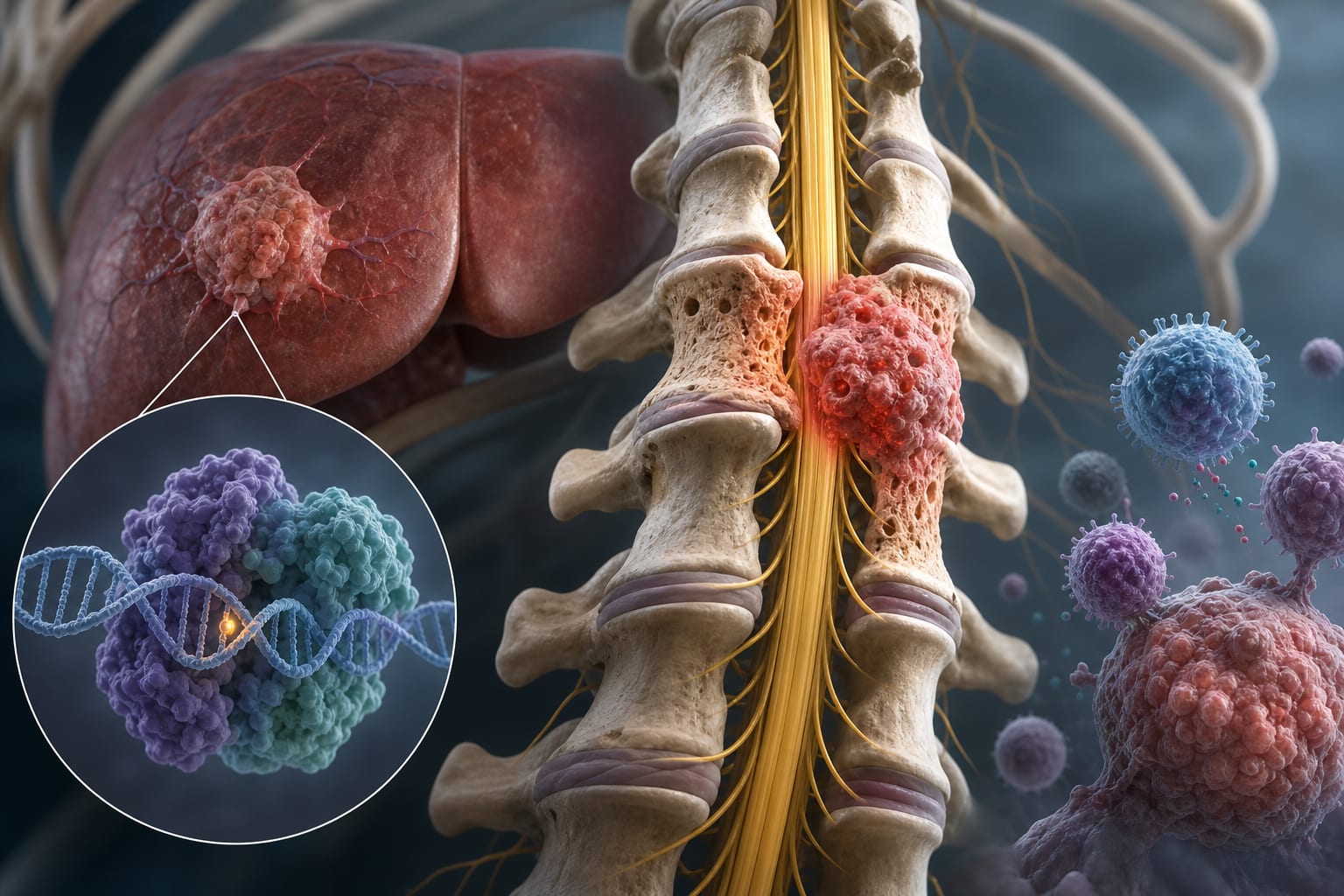
This case study presents a 58-year-old male with POLD1-mutated hepatocellular carcinoma (HCC) who experienced complete tumor response and significant neurological recovery following targeted immunotherapy and electroacupuncture.

Background

Hepatocellular carcinoma (HCC) is a highly malignant liver tumor often associated with poor prognosis, particularly in patients with bone metastases leading to paraplegia. The integration of immunotherapy and rehabilitation strategies in this context is underexplored.

Data Highlights

MeasurementBaselinePost-ImmunotherapyPost-Electroacupuncture
IL-1β113.7-fold increase31.8-fold increase
TNF-α12.5-fold increase7.2-fold increase
IFN-γ133.3-fold increase96.1-fold increase

Key Findings

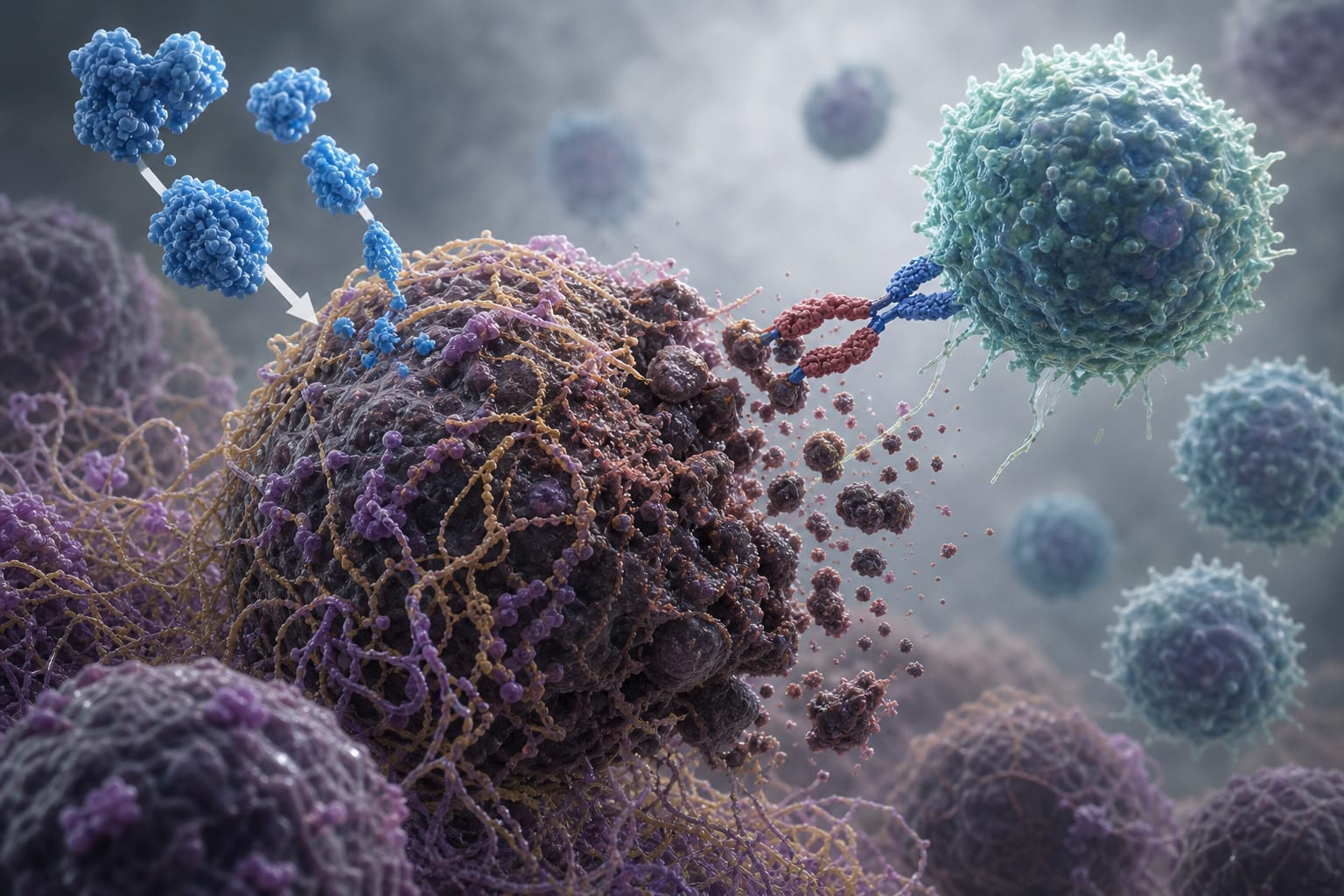
The patient had a POLD1 c.1745C>T (p.T582M) mutation with low tumor mutational burden. Immunotherapy with atezolizumab and bevacizumab led to a complete response in the tumor. Neurological improvement allowed the patient to walk independently after 28 months. Distinct peaks in cytokine levels were observed following immunotherapy and electroacupuncture. There is no direct evidence linking immunotherapy to accelerated neural recovery.

Clinical Implications

The case highlights the potential for targeted immunotherapy to achieve tumor response in HCC patients with specific genetic mutations.

Conclusion

This case suggests that POLD1 mutations may enhance sensitivity to immunotherapy in HCC.

Related Resources & Content

  1. EASL Clinical Practice Guidelines on the management of hepatocellular carcinoma - ScienceDirect, 2024 -- Overview of HCC management
  2. Investigation of Changes in Tumor Microenvironment in Rectal Cancer Patients with Partial Response to Neoadjuvant Chemoradiotherapy, 2024 -- Tumor Microenvironment Changes
  3. Targeted therapies and immune-based strategies are creating new hope in neuro-oncology, UCI Health, 2024 -- Neuro-oncology Advances
  4. Case Report: Quantitative and qualitative evaluation for electroacupuncture combined with moxibustion in the treatment of recalcitrant low anterior resection syndrome, Frontiers in Medicine, 2026 -- Electroacupuncture in LARS
  5. Beyond proofreading: POLD1 mutations as dynamic orchestrators of genomic instability and immune evasion in cancer, Frontiers in Immunology, 2025 -- POLD1 Mutations in Cancer
  6. Frontiers in Oncology — Acupuncture for post-chemoradiotherapy complications in lung cancer with bone metastasis: a case report and literature review
  7. Overview | Spinal metastases and metastatic spinal cord compression | Guidance | NICE
  8. EASL Clinical Practice Guidelines on the management of hepatocellular carcinoma - ScienceDirect
  9. Beyond proofreading: POLD1 mutations as dynamic orchestrators of genomic instability and immune evasion in cancer

Original Source(s)

Related Content