Discovery of New Plasma Protein Biomarkers Linked to Knee Osteoarthritis Through Human Proteome Integration: Insights from Mendelian Randomization and Initial In Vitro Studies - Report - MDSpire
Conexiant’s news site is now MDSpire News. Learn more
Advertisement
Discovery of New Plasma Protein Biomarkers Linked to Knee Osteoarthritis Through Human Proteome Integration: Insights from Mendelian Randomization and Initial In Vitro Studies
Clinical Report: Discovery of New Plasma Protein Biomarkers Linked to KOA
Overview
This study identifies galectin-3 as a potential plasma protein biomarker for knee osteoarthritis (KOA) through Mendelian randomization. In vitro experiments suggest that galectin-3 may play a role in inflammatory processes associated with KOA.
Background
Knee osteoarthritis (KOA) is a prevalent degenerative joint disease affecting millions globally, leading to significant disability. The transition to effective early intervention is hindered by the absence of specific molecular biomarkers. Identifying plasma proteins as biomarkers could enhance understanding and management of KOA.
Data Highlights
Biomarker
Odds Ratio (OR)
95% Confidence Interval (CI)
p-value
Galectin-3
1.07
1.03–1.11
0.00048
Key Findings
Galectin-3 is identified as a biomarker for KOA with an OR of 1.07.
Moderate-to-strong co-localization support for a shared causal variant was found (PPH4 = 77.3%).
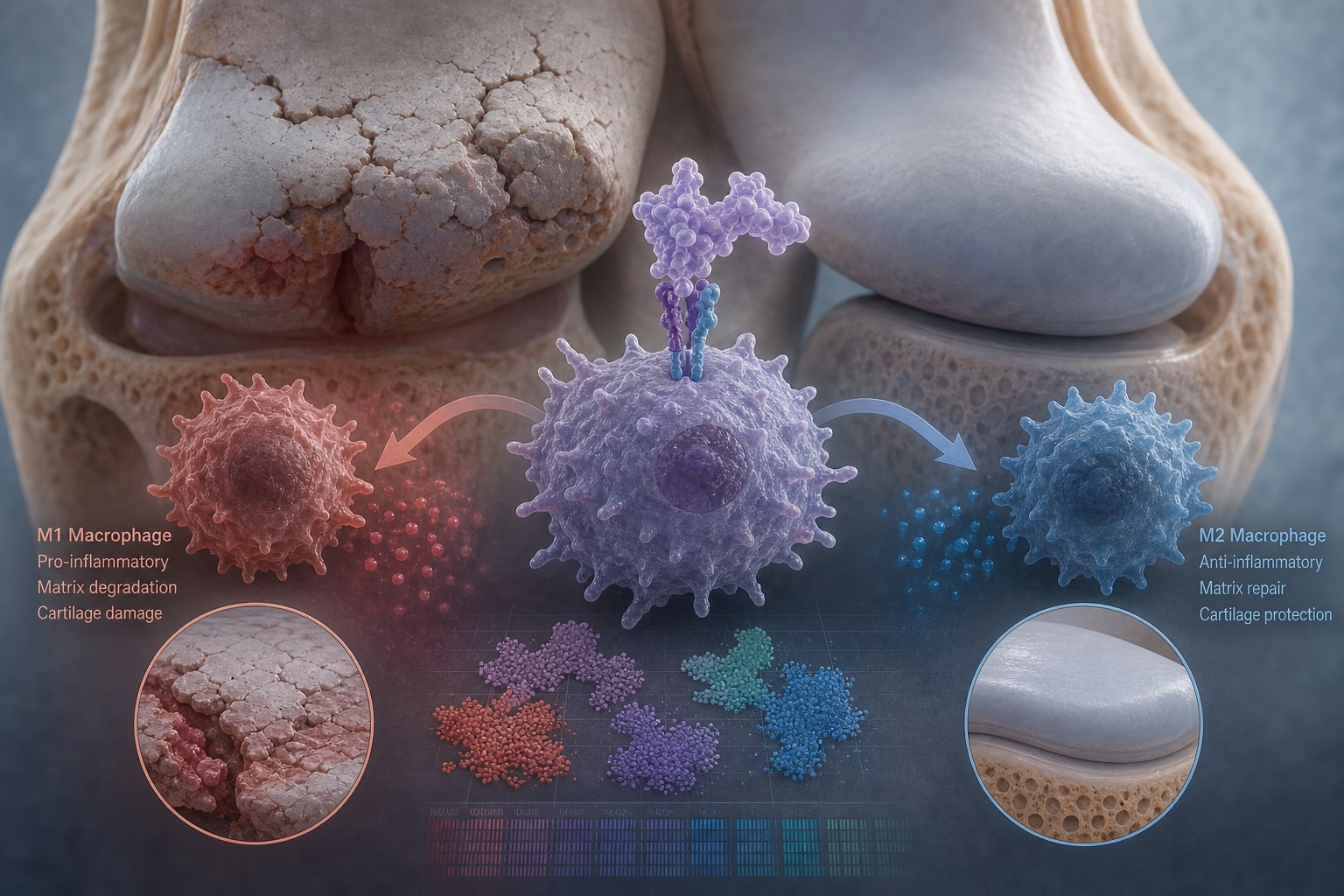
In vitro studies showed galectin-3 stimulation upregulated inflammatory cytokines in macrophages.
Potential involvement of myeloperoxidase and proteinase 3 in inflammatory responses was suggested.
The study utilized two-sample Mendelian randomization to assess causality.
Clinical Implications
The identification of galectin-3 as a biomarker for KOA may facilitate earlier diagnosis and targeted therapeutic strategies. Understanding its role in inflammation could lead to novel interventions aimed at mitigating KOA progression.
Conclusion
Highlight specific areas for future research, such as clinical trials or mechanistic studies.