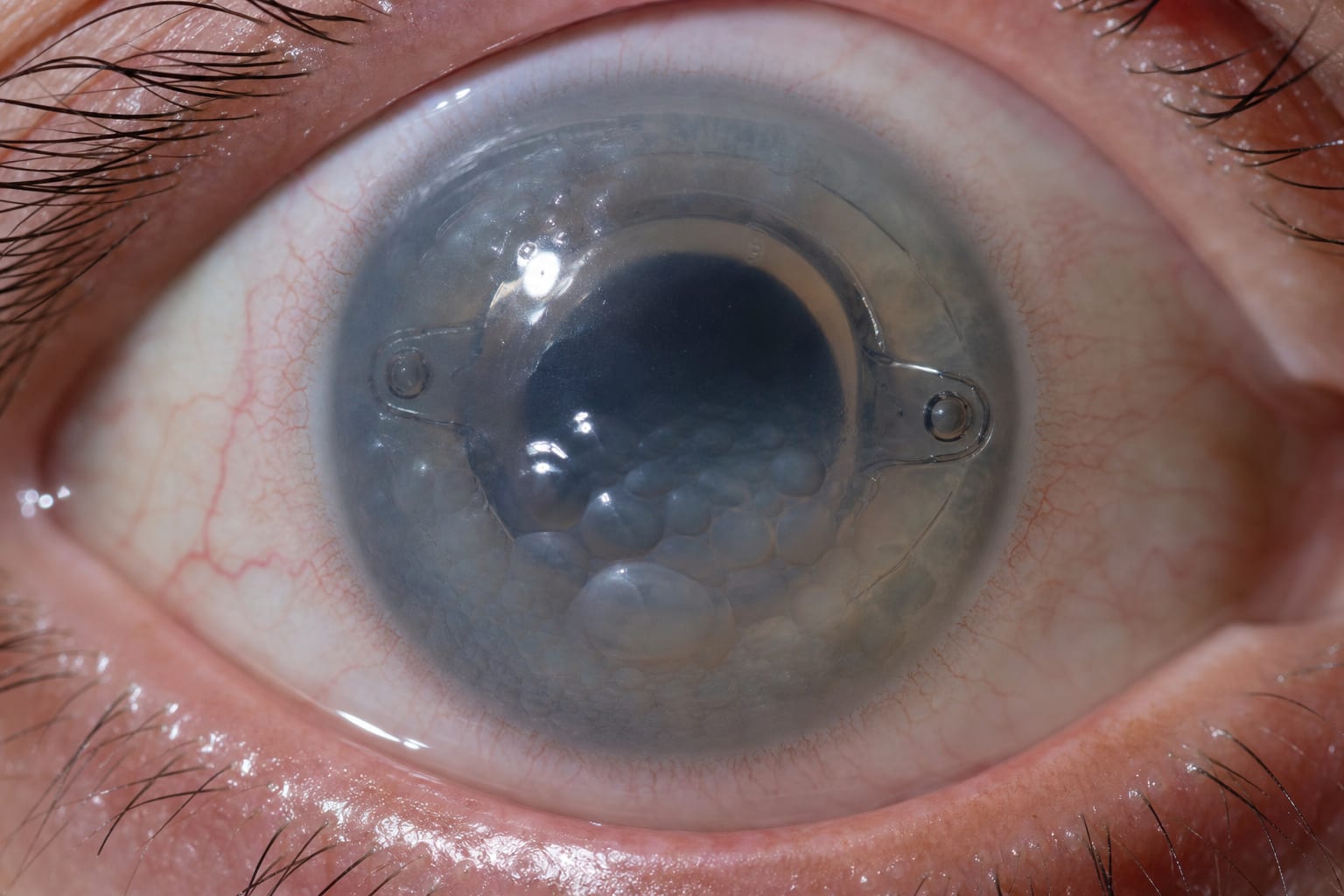
Clinical Report: The Impact of Ocular Conditions on the Contralateral Eye
Overview
This report discusses the bilateral tendencies of ocular conditions and the fellow eye effect, highlighting its implications across various ophthalmic subspecialties. Key findings include the influence of unilateral treatments on the contralateral eye, particularly in glaucoma and retinal diseases.
Background
Understanding the fellow eye effect is crucial in ophthalmology as many ocular conditions can affect both eyes, even when they initially present asymmetrically. This phenomenon underscores the importance of considering systemic, immunologic, and neurogenic mechanisms that can influence treatment outcomes and disease progression. Recognizing these bilateral interactions can enhance patient management and therapeutic strategies.
Data Highlights
No specific numerical data provided in the article.
Key Findings
- Sympathetic ophthalmia exemplifies how unilateral injury can lead to bilateral inflammation due to loss of ocular immune privilege.
- Patients with unilateral angle recession glaucoma have a 50% increased risk of developing glaucoma in the contralateral eye.
- Topical antiglaucoma medications can reduce intraocular pressure in the untreated fellow eye through systemic absorption.
- Unilateral anti-VEGF injections can lead to anatomical or functional improvements in the contralateral eye.
- Unilateral cataract surgery may result in reduced intraocular pressure in the fellow eye, suggesting neurohumoral regulation.
- Neuro-ophthalmologic therapies can induce bilateral effects, as seen in amblyopia treatment.
Clinical Implications
Clinicians should be aware of the fellow eye effect when diagnosing and treating ocular conditions, as unilateral interventions may have significant implications for the contralateral eye. This awareness can guide treatment decisions and improve patient outcomes by ensuring comprehensive bilateral assessments.
Conclusion
The fellow eye effect highlights the interconnectedness of ocular health, emphasizing the need for bilateral monitoring and treatment strategies in ophthalmology. Understanding these dynamics can lead to better management of ocular diseases.
Related Resources & Content
- Ophthalmology Management, Managing glaucoma and its comorbidities, 2019 -- Managing glaucoma and its comorbidities
- Optometric Management, Identifying and Treating Ocular Motor Palsies, 2026 -- Identifying and Treating Ocular Motor Palsies
- Contact Lens Spectrum, Complications When You Least Expect Them, 2012 -- Complications When You Least Expect Them
- The effect of selective laser trabeculoplasty on the intraocular pressure of the contralateral eye – a systematic review and meta-analysis | Eye, 2026 -- The effect of selective laser trabeculoplasty on the intraocular pressure of the contralateral eye
- Sympathetic Ophthalmia - StatPearls - NCBI Bookshelf, 2023 -- Sympathetic Ophthalmia
- Optometric Management — Identifying and Treating Ocular Motor Palsies
- optometric management — Identifying and Treating Ocular Motor Palsies
- The effect of selective laser trabeculoplasty on the intraocular pressure of the contralateral eye – a systematic review and meta-analysis | Eye
- Diabetic Retinopathy Preferred Practice Pattern® - PubMed
- Sympathetic Ophthalmia - StatPearls - NCBI Bookshelf
Based on findings from:
The fellow eye effect
Hashem Abu Serhan. Eye, 2026.
https://www.nature.com/articles/s41433-026-04517-x
This content is an AI-generated, fully rewritten summary based on a published scholarly article. It does not reproduce the original text and is not a substitute for the original publication. Readers are encouraged to consult the source for full context, data, and methodology.