Efficacy of Jishi Shuanghua Granules in preventing radiation-induced esophagitis in non-small cell lung cancer patients undergoing concurrent chemoradiotherapy: protocol for a multicenter, randomized, double-blind, placebo-controlled trial - Report - MDSpire
Advertisement
Efficacy of Jishi Shuanghua Granules in preventing radiation-induced esophagitis in non-small cell lung cancer patients undergoing concurrent chemoradiotherapy: protocol for a multicenter, randomized, double-blind, placebo-controlled trial
Assessment of Jishi Shuanghua Granules for Radiation-Induced Esophagitis
Overview
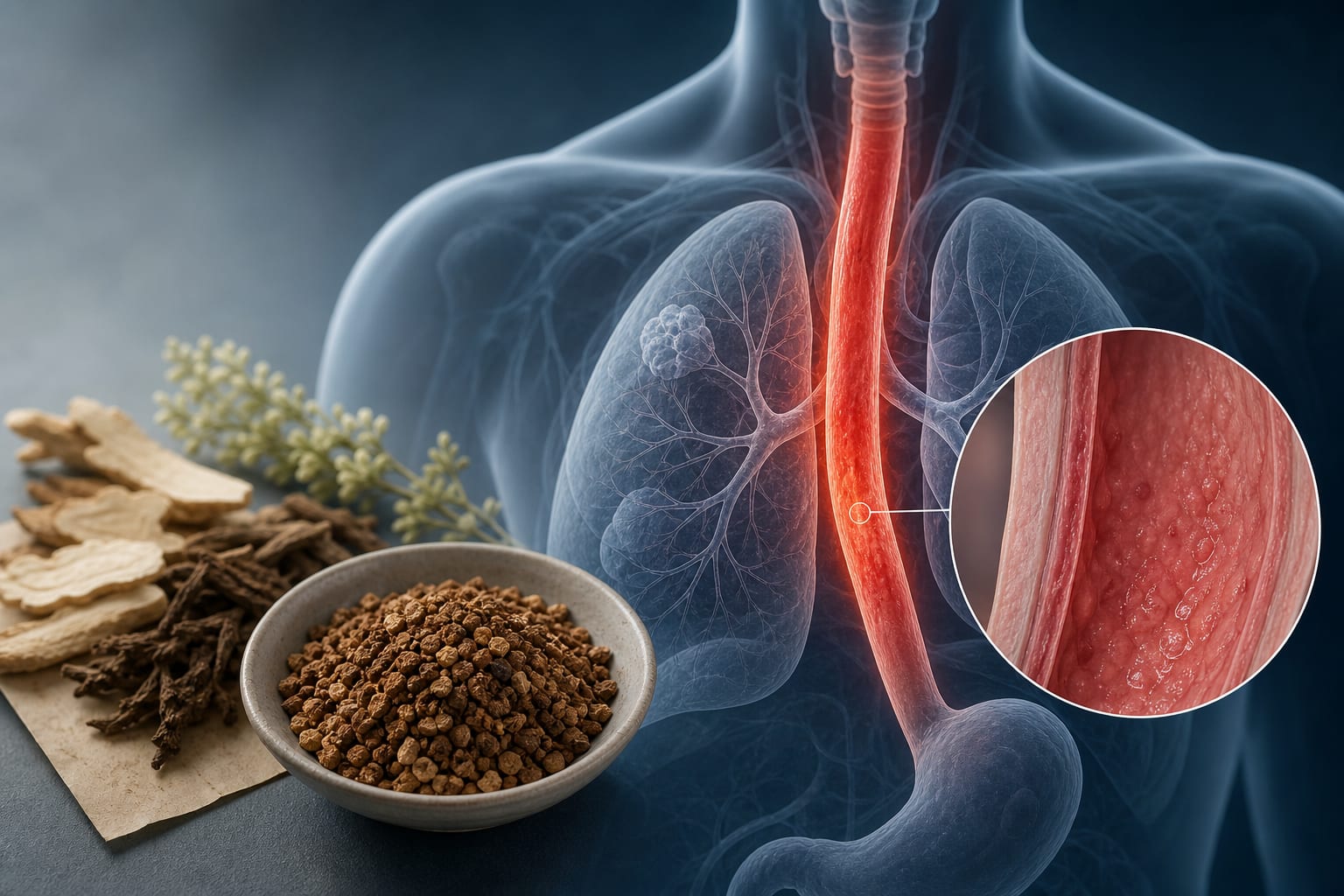
This study aims to evaluate the efficacy of Jishi Shuanghua Granules (JSG) in preventing acute radiation-induced esophagitis (ARIE) in non-small cell lung cancer (NSCLC) patients undergoing concurrent chemoradiotherapy (CCRT). A multicenter, randomized, double-blind, placebo-controlled trial will assess the incidence and severity of ARIE among participants.
Background
Acute radiation-induced esophagitis is a common complication in NSCLC patients receiving CCRT, significantly impacting their quality of life and treatment outcomes. Current preventive measures lack robust evidence.
Data Highlights
No numerical data available in the provided source.
Key Findings
The trial will enroll 240 stage III NSCLC patients receiving CCRT.
Participants will be randomly assigned to receive either JSG or a placebo in a 1:1 ratio.
Primary endpoints include the incidence of ARIE (≥Grade 1) and severe ARIE (≥Grade 3).
Secondary endpoints will assess ARIE-related pain, dysphagia, quality of life, and long-term outcomes.
The study will explore the mechanisms of JSG through multi-omics analyses.
Clinical Implications
The findings from this trial could provide evidence for the use of JSG in clinical practice to prevent ARIE in NSCLC patients undergoing CCRT. Understanding the mechanisms of JSG may also enhance treatment strategies for managing ARIE.
Conclusion
This study is poised to deliver critical insights into the effectiveness of Jishi Shuanghua Granules in preventing ARIE, potentially informing future clinical practices.