Systemic Glucocorticoid Therapy for Cutaneous Rosai-Dorfman Disease of the Ear
Overview
A 49-year-old man with cutaneous Rosai-Dorfman disease (CRDD) involving the left external auditory canal experienced hearing loss that improved following systemic glucocorticoid treatment. Initial combination therapy with prednisone and methotrexate was ineffective and poorly tolerated, but prednisone monotherapy led to lesion resolution and hearing recovery within two months.
Background
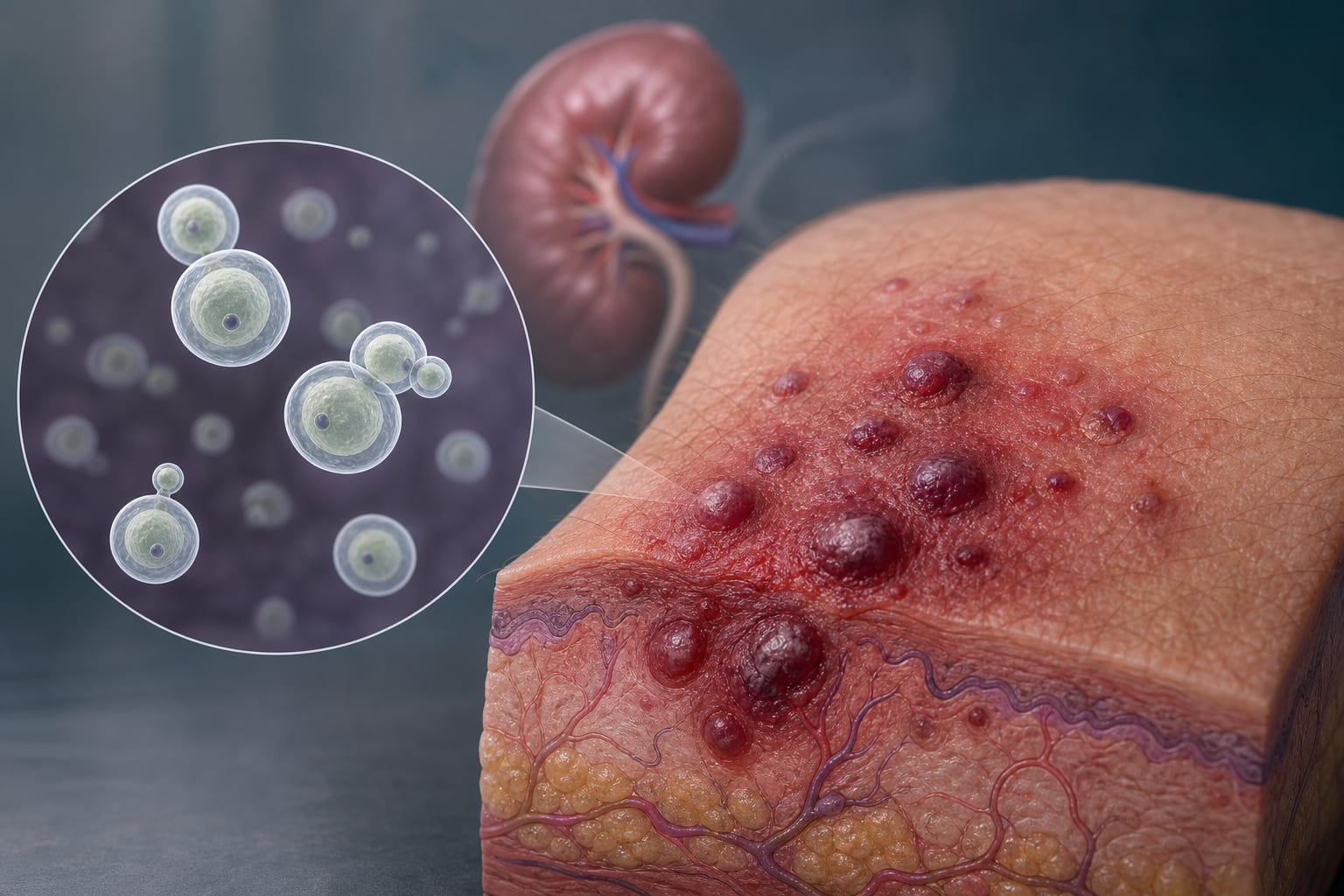
Rosai-Dorfman disease (RDD) is a rare benign histiocytic disorder typically affecting lymph nodes but can involve extranodal sites including the skin. Cutaneous RDD (CRDD) is uncommon and even more rarely involves the external auditory canal, which can cause conductive hearing loss. Diagnosis is confirmed by histopathology showing S100-positive histiocytes with emperipolesis. Treatment options vary, with systemic glucocorticoids used in some cases.
Data Highlights
Parameter
Value
Age
49 years
Sex
Male
Initial prednisone dose
15 mg/day
Initial methotrexate dose
10 mg/week, increased to 15 mg/week
Duration of combination therapy
4 weeks
Duration of prednisone monotherapy
6 weeks
Follow-up duration
7 months
Key Findings
CRDD involving the external auditory canal can cause conductive hearing loss due to lesion occlusion.
Histopathology showed S100-positive, CD68PGM1-positive histiocytes with emperipolesis, confirming CRDD diagnosis.
Combination therapy with prednisone and methotrexate was ineffective and caused adverse effects (oral ulcers), leading to methotrexate discontinuation.
Prednisone acetate monotherapy (15 mg/day) led to gradual lesion flattening and hearing improvement within 4 weeks.
Complete lesion resolution and hearing recovery were achieved after 8 weeks of systemic corticosteroid therapy.
No relapse or hearing deterioration was observed during 7 months of follow-up.
Clinical Implications
Systemic glucocorticoid monotherapy can be an effective treatment for CRDD involving the ear, leading to both cutaneous lesion resolution and hearing recovery. Methotrexate may have limited efficacy and tolerability in this context. Early recognition and treatment of CRDD with ear involvement are important to prevent persistent hearing loss.
Conclusion
This case highlights that systemic corticosteroid therapy can successfully treat cutaneous Rosai-Dorfman disease affecting the external auditory canal, resulting in lesion resolution and restoration of hearing. Prednisone monotherapy may be preferred over combination regimens due to better tolerability and efficacy.
Related Resources & Content
Rosai and Dorfman 1969 -- Sinus histiocytosis with massive lymphadenopathy
Histiocyte Society 2016 -- Classification of Rosai-Dorfman disease
Recent case studies and reviews on CRDD involving the ear