Clinical Report: Expanding Applications of STAR-Inspired Cardiac Radioablation
Overview
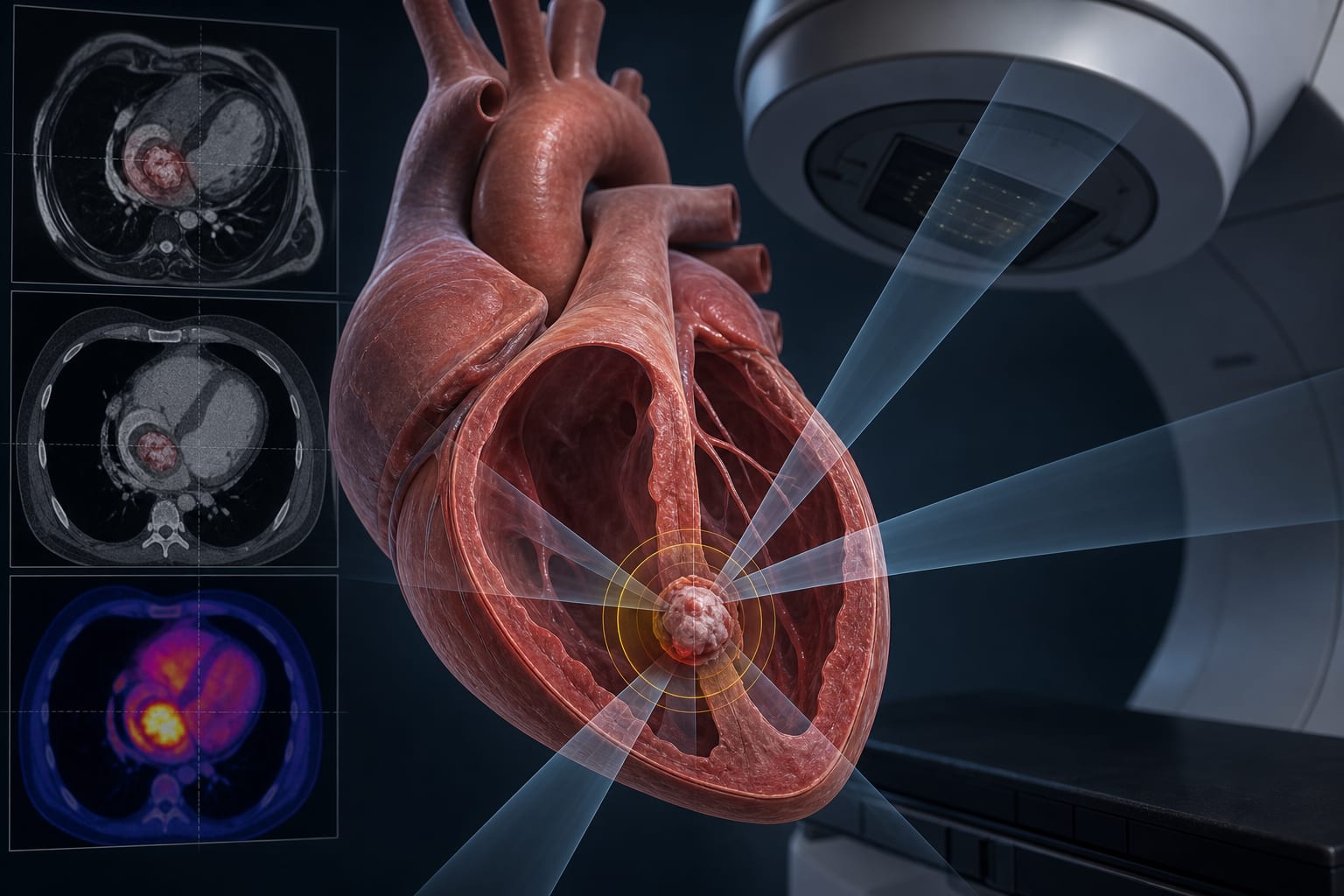
This case report discusses the use of a STAR-inspired 25 Gy single-fraction cardiac radioablation for treating right-ventricular metastasis from Ewing sarcoma. The patient showed a significant reduction in lesion size and remained free of cardiac symptoms for over two years post-treatment.
Background
Stereotactic arrhythmia radioablation (STAR) has been established as an effective treatment for refractory ventricular arrhythmias. Its application in oncologic scenarios, particularly for unresectable cardiac tumors, is an emerging area of interest, given the limitations of conventional treatment options for such lesions.
Data Highlights
No numerical data or trial data provided in the article.
Key Findings
A 26-year-old man with Ewing sarcoma developed a right-ventricular mass.
After partial surgical debulking, a 25 Gy single-fraction cardiac radioablation was performed using STAR principles.
At 12 months post-treatment, MRI showed a reduction in the lesion size from 17 × 15 mm to 8 × 10 mm.
The patient remained free of cardiac symptoms and signs of disease progression at 31 months follow-up.
No cardiac toxicity was observed following the STAR-inspired treatment.
Clinical Implications
The successful application of STAR-inspired radioablation for cardiac metastases suggests a potential new treatment avenue for patients with unresectable cardiac tumors. Further evaluation is warranted to establish the efficacy and safety of this approach in broader clinical settings.
Conclusion
The case demonstrates the feasibility of adapting STAR techniques for oncologic cardiac targets, providing durable control of the tumor without significant toxicity. This warrants further investigation into its broader applications.