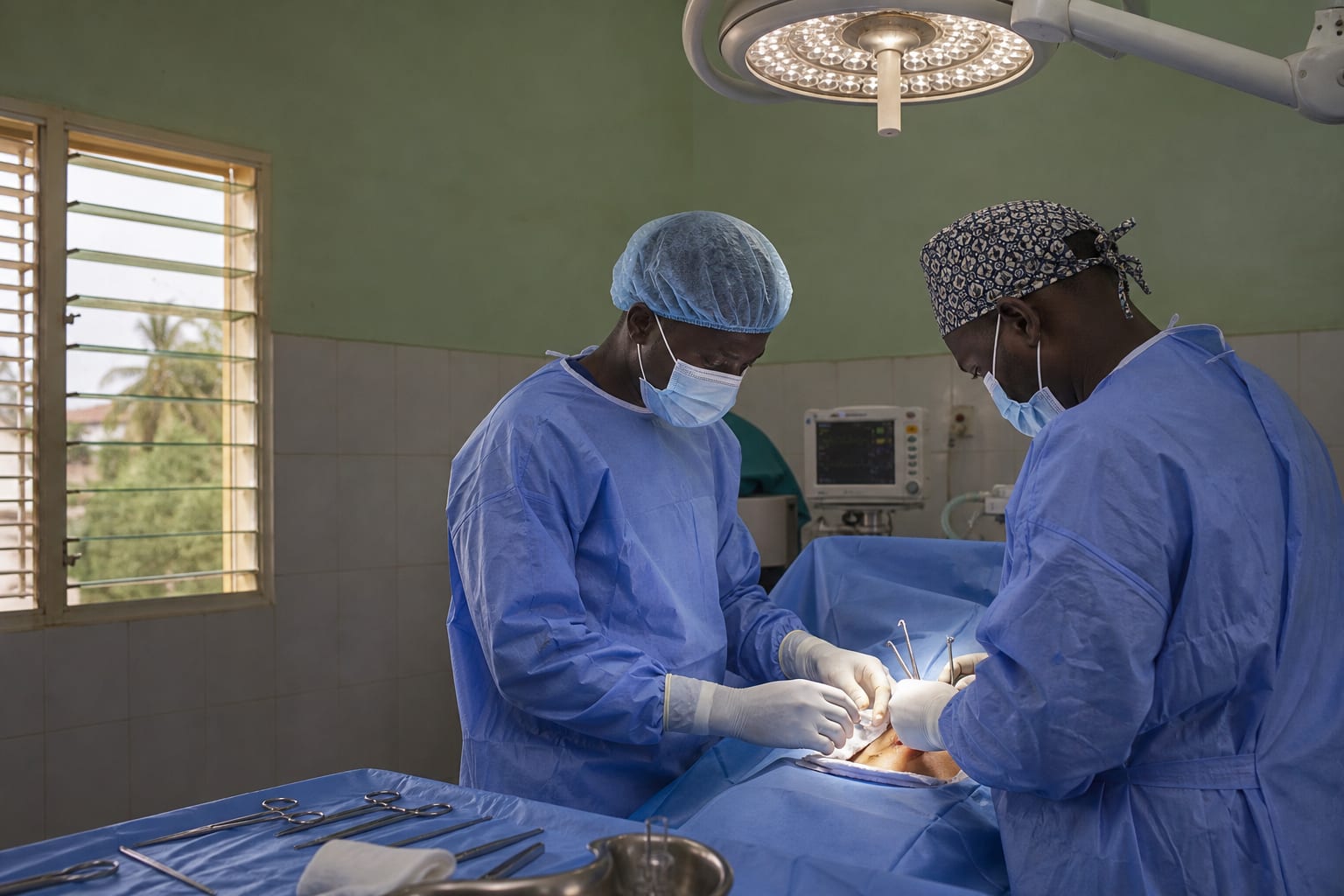
Abdominal wall hernia management in a second level hospital of Senegal: a cross-sectional study - Report - MDSpire

Abdominal wall hernia management in a second level hospital of Senegal: a cross-sectional study

  • By

  • Guillaume Tcheutchoua Soh

  • Seneba Aicha Gaye

  • Papa Mamadou Faye

  • Thierno Amadou Telly Diallo

  • Abdoul Kharim Diop

  • Jacques Noel Tendeng

  • Ousmane Thiam

  • Philippe Manyacka Ma Nyemb

  • Alpha Oumar Toure

  • Ibrahima Konate

  • Mamadou Cisse

  • June 26, 2026

  • 0 min

Share

Management of Abdominal Wall Hernias at a Secondary Hospital in Senegal

Overview

This study analyzes the management of abdominal wall hernias in a secondary hospital in Senegal, highlighting that hernia repairs constitute a significant portion of surgical activity. The findings reveal the predominance of inguinal hernias and the use of various surgical techniques, with notable complications associated with the procedures.

Background

Abdominal wall hernias are a prevalent condition globally, particularly in low-income settings where access to surgical care is limited. In Sub-Saharan Africa, the lack of local guidelines and research funding complicates the management of hernias, leading to high rates of complications. Understanding current practices in this context is essential.

Data Highlights

ParameterValue
Total Surgeries199
Hernia Repairs34.2%
Inguinal Hernias25.6%
Midline Ventral Hernias8.5%
Emergency Repairs19.1%
Mesh Usage51.5%
Tissue Repair48.5%

Key Findings

  • Hernia repairs accounted for 34.2% of all surgeries performed at the center.
  • Inguinal hernias represented 75% of the hernias operated on, with all being primary cases.
  • Spinal anaesthesia was used in 90.2% of inguinal hernia repairs.
  • Complications included surgical site pain (17.7%) and lower urinary tract obstructive disorders (11.8%).
  • Midline ventral hernias were treated exclusively under general anaesthesia, with primary aponeurotic closure in 88.2% of cases.

Clinical Implications

The findings indicate a need for improved awareness and early consultation for hernia management in the population. The high complication rates associated with spinal anaesthesia highlight the importance of careful patient selection and monitoring.

Conclusion

While the management of abdominal wall hernias has progressed in Senegal, further efforts are necessary to develop localized guidelines and improve patient outcomes.

Related Resources & Content

  1. Surgical Management of Groin Hernias in Uganda: An Analysis of Patient Volumes and Techniques in Public Healthcare Facilities
  2. Identifying Risk Factors for Incarceration in Patients with Primary Abdominal Wall and Incisional Hernias: Findings from a Prospective Study Involving 4472 Individuals
  3. Competency-Based Training for Medical Professionals in Mesh Inguinal Hernia Repair in Sierra Leone
  4. BJS (British Journal of Surgery) — Five-Year Outcomes of Elective Anterior Mesh Inguinal Hernia Repair by Associate Clinicians Compared to Medical Doctors in Sierra Leone: Results from a Randomized Clinical Trial
  5. Recent guidance for abdominal wall hernias: HerniaSurge update
  6. https://academic.oup.com/bjsopen/article/7/5/zrad080/7325871
  7. https://academic.oup.com/bjs/article/110/12/1732/7277564?searchresult=1
  8. Is laparoscopy better? A Meta-analysis comparing laparoscopic and open inguinal hernia repair across 4,000 patients - PMC

Original Source(s)

Related Content