Single-port laparoscopic excision of choledochal cysts in neonates versus older infants and children: a comparative safety and feasibility study from a single-center 5-year experience - Report - MDSpire
Conexiant’s news site is now MDSpire News. Learn more
Advertisement
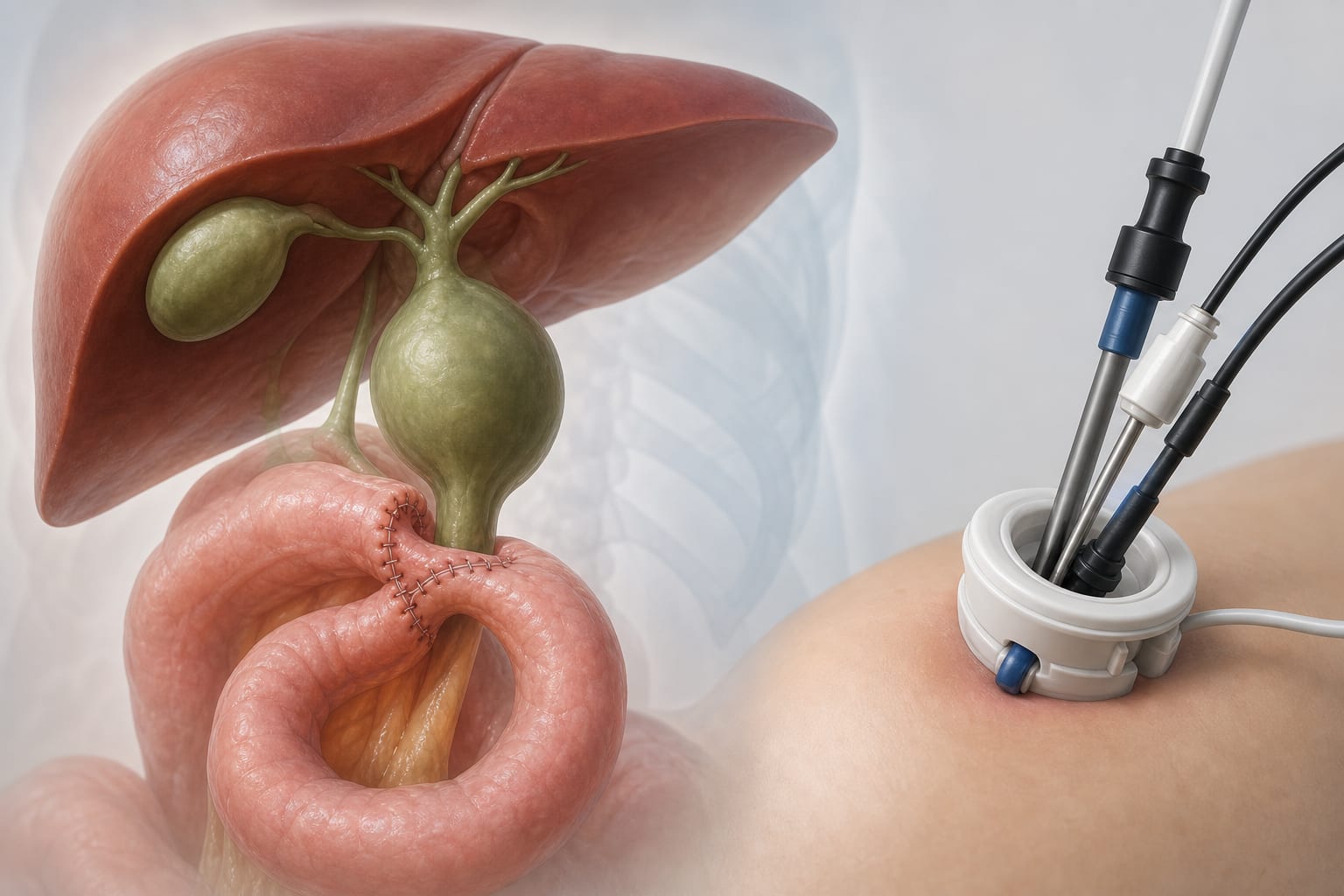
Comparative Analysis of Single-Port Laparoscopic Choledochal Cyst Excision in Neonates Versus Older Infants and Children: A Five-Year Experience from a Single Center on Safety and Feasibility
Clinical Report: Comparative Analysis of Single-Port Laparoscopic Choledochal Cyst Excision
Overview
This study evaluates the safety and feasibility of single-port laparoscopic choledochal cyst excision in neonates compared to older infants and children. Findings indicate that neonates experience longer postoperative stays despite no increase in complication rates.
Background
Choledochal cysts are common congenital biliary malformations that can lead to serious complications if not treated appropriately. The timing of surgical intervention remains debated, particularly for neonates, who may face unique anatomical challenges.
Data Highlights
Group
Neonates (n=21)
Older Infants/Children (n=49)
Cyst Diameter (cm)
5.49
4.49
Prenatal Detection Rate (%)
85.7
49.0
Pancreaticobiliary Maljunction (%)
4.8
44.9
Operative Time (min)
230.33
256.43
Blood Loss (mL)
6.43
6.86
Postoperative Stay (days)
8.24
6.69
Complication Rate (%)
4.8
2.0
Key Findings
Neonates had larger cyst diameters (5.49 cm) compared to older infants/children (4.49 cm).
Higher rates of prenatal detection were observed in neonates (85.7%) versus older infants/children (49.0%).
Older infants/children presented more frequently with pancreaticobiliary maljunction (44.9% vs. 4.8%).
Operative time and blood loss were comparable between the two groups.
Neonates had no small diameter hepaticojejunostomy anastomoses, while 32.7% of older infants/children did.
The findings suggest that single-port laparoscopic choledochal cyst excision can be safely performed in neonates without increasing complication rates. However, clinicians should be aware of the potential for longer postoperative hospitalization in this population.
Conclusion
Single-port laparoscopic choledochal cyst excision is a feasible option for neonates, providing similar safety and efficacy to older children while necessitating careful postoperative management.