Hemoglobin-albumin-lymphocyte-platelet score and early neurological deterioration in acute ischemic stroke: a single-center retrospective cohort study - Report - MDSpire
Advertisement
Hemoglobin-albumin-lymphocyte-platelet score and early neurological deterioration in acute ischemic stroke: a single-center retrospective cohort study
Clinical Report: Association of HALP Score with Early Neurological Decline in AIS
Overview
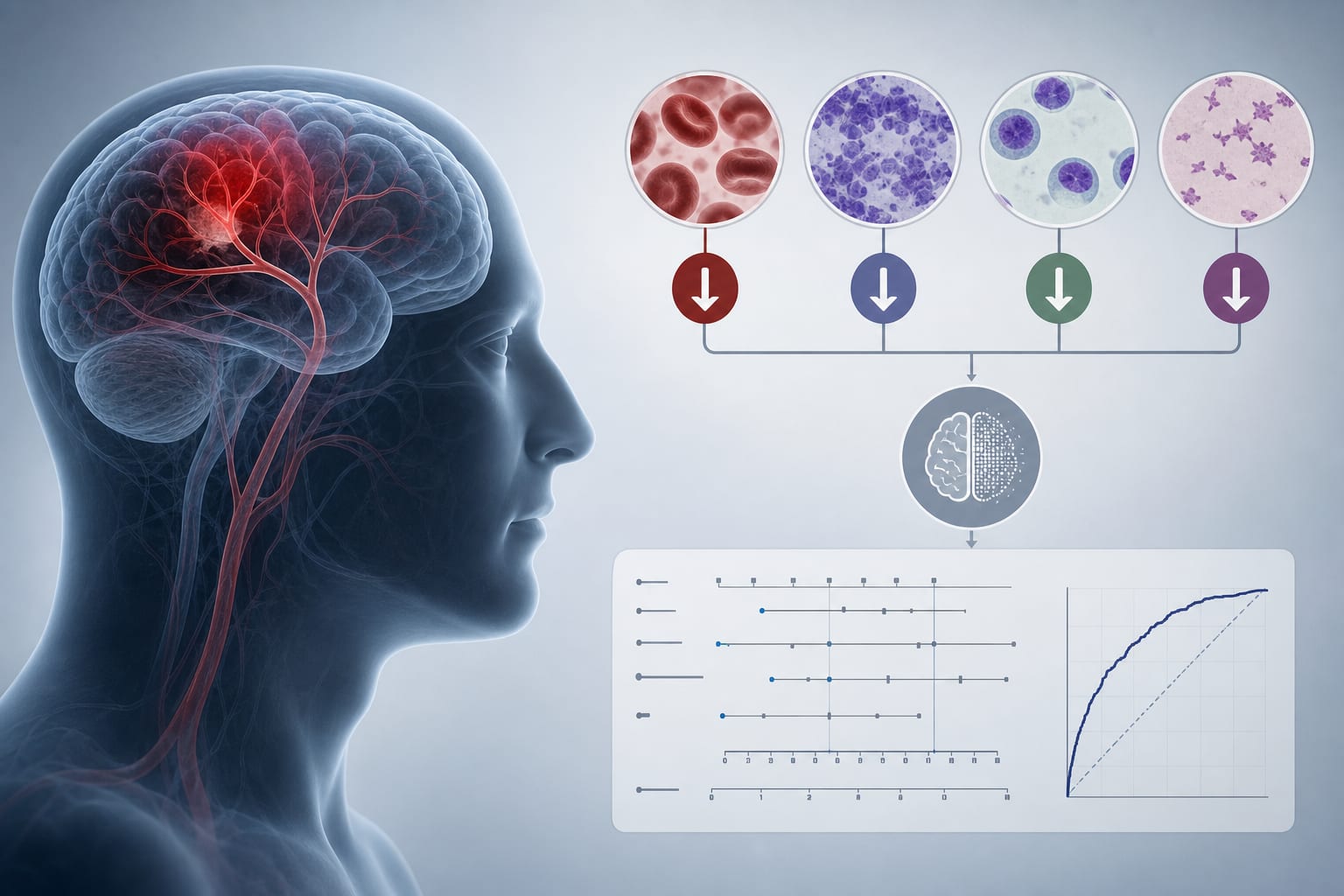
This study investigates the relationship between the hemoglobin-albumin-lymphocyte-platelet (HALP) score and early neurological deterioration (END) in acute ischemic stroke (AIS) patients. A lower HALP score was found to be an independent predictor of END.
Background
Acute ischemic stroke (AIS) is a leading cause of morbidity and mortality, with early neurological deterioration (END) being a significant complication that can worsen outcomes. Identifying risk factors for END is crucial for improving patient management and outcomes. The HALP score, which integrates several biomarkers, may provide a more comprehensive assessment of risk in AIS patients.
Data Highlights
Parameter
Value
Patients with END
186 (31.3%)
Training cohort size
416
Independent determinants for END
LAA subtype, elevated NIHSS, lower HALP score
Key Findings
31.3% of patients developed early neurological deterioration (END).
Independent predictors of END included lower HALP score, elevated NIHSS score, and LAA subtype.
The HALP score remained significant after adjusting for demographic and treatment-related variables.
A nomogram incorporating HALP score, LAA subtype, and NIHSS score showed moderate discrimination for predicting END.
Clinical Implications
The HALP score may serve as a valuable tool for early risk assessment in patients with acute ischemic stroke. Clinicians should consider incorporating this score into their evaluation to identify patients at higher risk for early neurological deterioration.
Conclusion
A lower HALP score was associated with increased risk of early neurological deterioration in AIS patients.