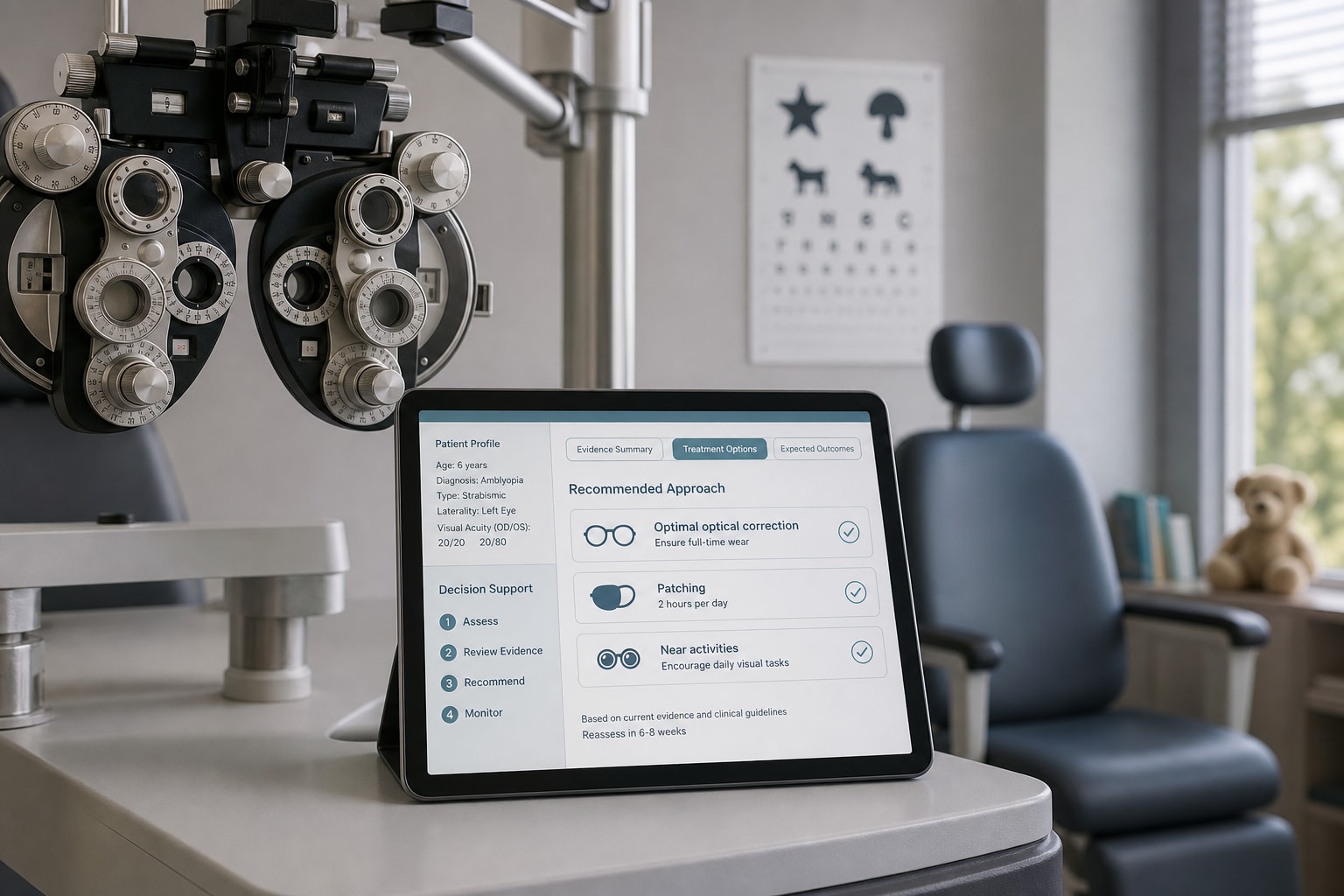
NIH-supported project expands access to care for children with amblyopia
-
May 15, 2026
-
0 min
Clinical Report: NIH-Funded Initiative Enhances Care Accessibility for Pediatric Amblyopia Patients
Overview
A new online tool, the Amblyopia Navigator Decision-Support Instrument (ANDI), has been developed to assist clinicians in managing pediatric amblyopia cases. This initiative aims to improve access to evidence-based treatment options amidst a shortage of pediatric eye care specialists in the U.S.
Background
Amblyopia is the leading cause of preventable monocular vision loss, affecting approximately 3% of children. Early detection and treatment are crucial, as untreated amblyopia can lead to permanent vision impairment and negatively impact quality of life. The development of ANDI addresses the geographic disparities in access to pediatric eye care specialists, facilitating better management of this condition.
Data Highlights
The ANDI tool is based on evidence from 147 published studies and provides individualized treatment recommendations for clinicians.
Key Findings
- ANDI assists in diagnosing amblyopia and determining appropriate management options.
- The tool recommends monitoring glasses prescriptions and treatment intensity based on patient progress.
- It includes options for patching, atropine use, and digital therapies for amblyopia.
- Early detection and treatment can lead to near-normal vision outcomes in many cases.
- Geographic disparities exist in the distribution of pediatric eye care specialists, impacting access to care.
Clinical Implications
Clinicians can utilize the ANDI tool to enhance their decision-making process in managing amblyopia, particularly in areas with limited access to pediatric eye care specialists. The tool's evidence-based approach supports individualized treatment plans that can improve patient outcomes.
Conclusion
Strengthen the conclusion by reiterating the tool's importance in improving care access.
Related Resources & Content
- Optometric Management, 2025 -- Amblyopia Treatment Extends Past Preschool Years
- The Ophthalmologist, 2026 -- Closing the Pediatric Eye Care Gap
- United States Preventive Services Taskforce -- Recommendation: Vision in Children Ages 6 Months to 5 Years: Screening
- ScienceDirect -- An Eye-Tracking–Based Dichoptic Home Treatment for Amblyopia: A Multicenter Randomized Clinical Trial
- optometric management — Amblyopia Treatment Extends Past Preschool Years
- optometric management — Therapeutic Focus: Digital Patching for Amblyopia
- Pediatric Eye Disease Investigator Group - Public Site
- Recommendation: Vision in Children Ages 6 Months to 5 Years: Screening | United States Preventive Services Taskforce
- An Eye-Tracking–Based Dichoptic Home Treatment for Amblyopia: A Multicenter Randomized Clinical Trial - ScienceDirect
This content is an AI-generated, fully rewritten summary based on a published scholarly article. It does not reproduce the original text and is not a substitute for the original publication. Readers are encouraged to consult the source for full context, data, and methodology.