Clinical Report: Associations of Uric Acid with Subclinical Atherosclerosis
Overview
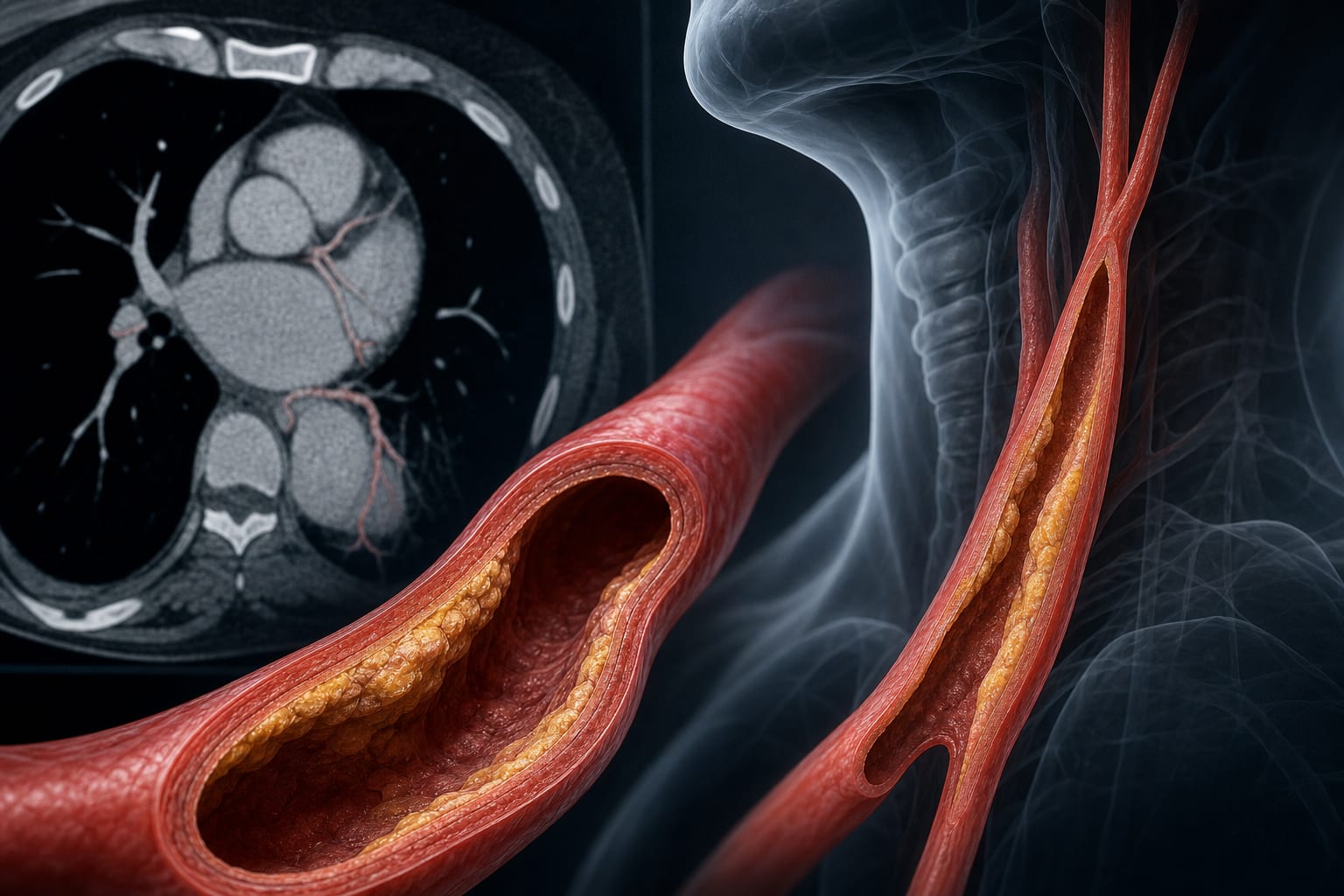
This study investigates the relationship between serum uric acid levels and subclinical atherosclerosis in coronary and carotid arteries.
Background
Cardiovascular disease remains a leading cause of mortality globally, necessitating the exploration of additional biomarkers beyond traditional risk factors. Serum uric acid has been linked to cardiovascular risk, but its causal relationship with atherosclerosis is still debated.
Data Highlights
No numerical data or trial data provided in the source material.
Key Findings
Serum uric acid is associated with various cardiovascular conditions, including coronary artery disease and heart failure.
Hyperuricemia is often linked with cardiometabolic abnormalities.
Imaging studies have shown the presence of monosodium urate deposits in vascular tissues.
The study utilized data from the Paracelsus 10,000 study to evaluate associations with subclinical atherosclerosis.
Sequential adjustments for cardiovascular risk factors were applied to assess the association of uric acid with atherosclerosis.
Clinical Implications
Clinicians should consider the associations of serum uric acid with cardiovascular risk when evaluating patients.
Conclusion
The study contributes to the understanding of the role of serum uric acid in cardiovascular health.
by Mathias Ausserwinkler, Christian Jung, Bernhard Paulweber, Johannes Bauer, Ludmilla Kedenko, Tobias Kiesslich, Barbara Fixl, Eugen Trinka, Patrick Langthaler, Bernhard Iglseder, Maria Flamm, Elmar Aigner, Bernhard Wernly
An ensemble electrocardiogram model classified derived diastolic dysfunction risk phenotypes and stratified heart failure–related death risk across external cohorts, according to findings presented at ASE 2026.
Researchers evaluated 300,828 adult transthoracic echocardiograms using the 2016 and 2025 American Society of Echocardiography diastolic function guidelines; 87,724 met criteria for analysis.