Clinical Report: Exploring Neutrophil Activity and Impairment
Overview
This editorial discusses the critical roles of neutrophils in immune response and their dysfunction in various diseases. It highlights the mechanisms of neutrophil activation, granule dynamics, and their implications for tissue injury and inflammation.
Background
Neutrophils are the most abundant leukocytes in the innate immune system, essential for host defense against infections and tissue repair. Their dysregulation can lead to chronic inflammatory diseases, tissue damage, and impaired immune responses. Understanding neutrophil function is vital for developing targeted therapies in various clinical contexts.
Data Highlights
No specific numerical data or trial results were provided in the source material.
Key Findings
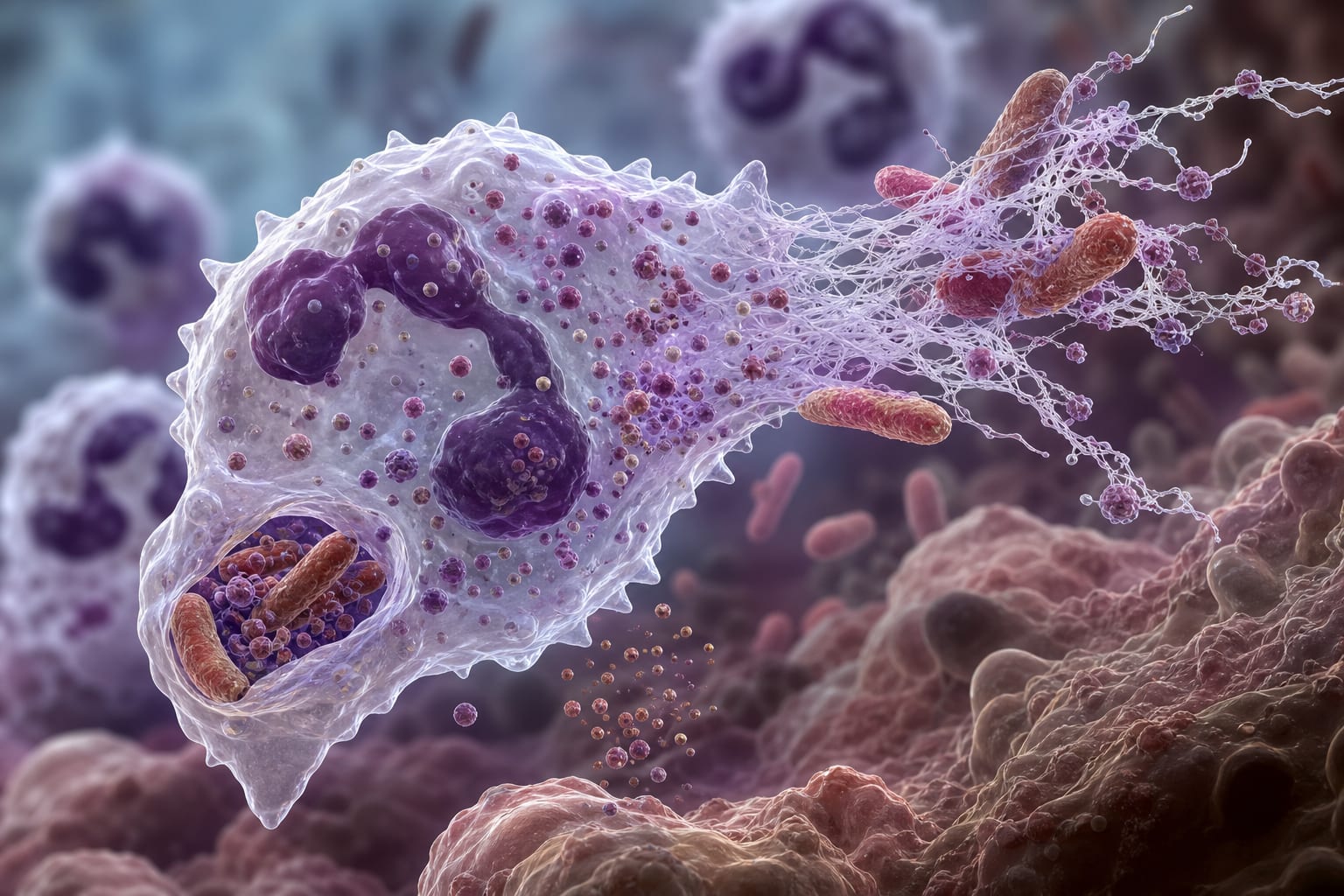
Neutrophils contribute to host defense through phagocytosis, degranulation, and NET formation.
Dysregulated neutrophil responses are implicated in chronic inflammatory disorders, cancer, and autoimmune diseases.
Autophagy plays a role in regulating granule homeostasis and neutrophil function.
Neutrophil heterogeneity can be exploited for diagnostic and prognostic purposes across multiple diseases.
Neutrophils are being explored as therapeutic targets in cancer treatment and tissue injury management.
Clinical Implications
Clinicians should consider the dual role of neutrophils in both promoting immune defense and contributing to tissue damage. Targeting neutrophil activation and fate may provide new therapeutic strategies for managing inflammatory diseases and cancer.
Conclusion
Neutrophils are central to both immune responses and tissue injury, necessitating precise regulation to balance their protective and damaging effects. Ongoing research into neutrophil biology will enhance our understanding and treatment of various diseases.