Clinical Report: Management of Immune Complexes in Transplantation
Overview
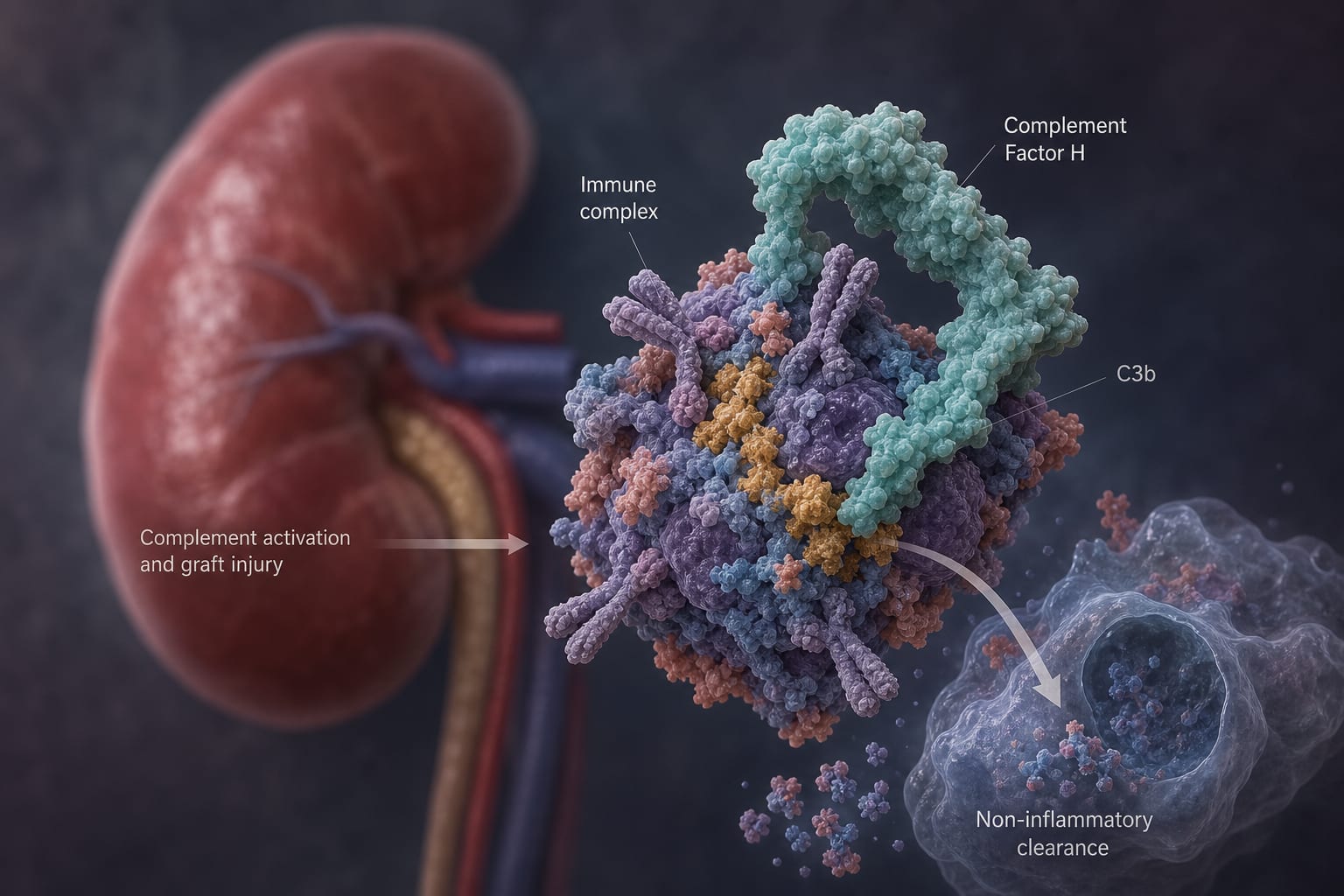
This report discusses the role of immune complexes (ICs) in graft injury during solid organ transplantation, emphasizing the importance of complement factor H (CFH) in modulating IC handling. The findings highlight the dynamic nature of ICs and their impact on transplant outcomes, suggesting that effective management of ICs is crucial for improving allograft survival.
Background
Immune complexes are increasingly recognized as significant contributors to antibody-mediated rejection (AMR) in transplantation, which remains a major challenge for achieving durable allograft survival. Understanding the mechanisms of IC formation and clearance, particularly the role of complement, is essential for developing targeted therapies to mitigate graft injury and improve patient outcomes.
Data Highlights
No numerical data or trial data presented in the article.
Key Findings
Immune complexes serve as dynamic regulators of graft injury in solid organ transplantation.
Complement factor H (CFH) is a principal regulator of the alternative pathway, influencing IC handling and clearance.
ICs vary in size, composition, and complement opsonization state, affecting their inflammatory potential.
Complement dysregulation can exacerbate antibody-mediated rejection and graft loss.
Emerging complement-targeted therapies may reshape the management of transplant immunology.
Clinical Implications
Clinicians should consider the role of immune complexes and complement regulation in the context of antibody-mediated rejection to enhance transplant outcomes. Targeted therapies that modulate complement activity may offer new avenues for improving allograft survival and reducing graft injury.
Conclusion
Effective management of immune complexes and understanding their interaction with the complement system are critical for optimizing transplant outcomes. Continued research into these mechanisms will inform future therapeutic strategies.