Diagnostic delay and histopathological subtyping challenges in idiopathic multicentric Castleman disease, not otherwise specified: a case report of a three-hospital odyssey - Report - MDSpire
Advertisement
Challenges in Diagnosis and Histopathological Classification of Idiopathic Multicentric Castleman Disease: A Case Study Involving Multiple Healthcare Facilities
Challenges in Diagnosis and Histopathological Classification of Idiopathic Multicentric Castleman Disease
Background
Castleman disease (CD) encompasses a group of rare lymphoproliferative disorders that are often misdiagnosed due to their heterogeneous nature. Accurate diagnosis and subtyping are crucial for effective management, particularly in cases of iMCD-NOS, which can present with systemic symptoms and elevated inflammatory markers.
Data Highlights
No numerical data or trial data presented in the article.
Key Findings
A 53-year-old male presented with persistent right submandibular lymphadenopathy and systemic inflammatory symptoms.
Final diagnosis of iMCD-NOS was made after excluding HHV-8 infection and other mimickers.
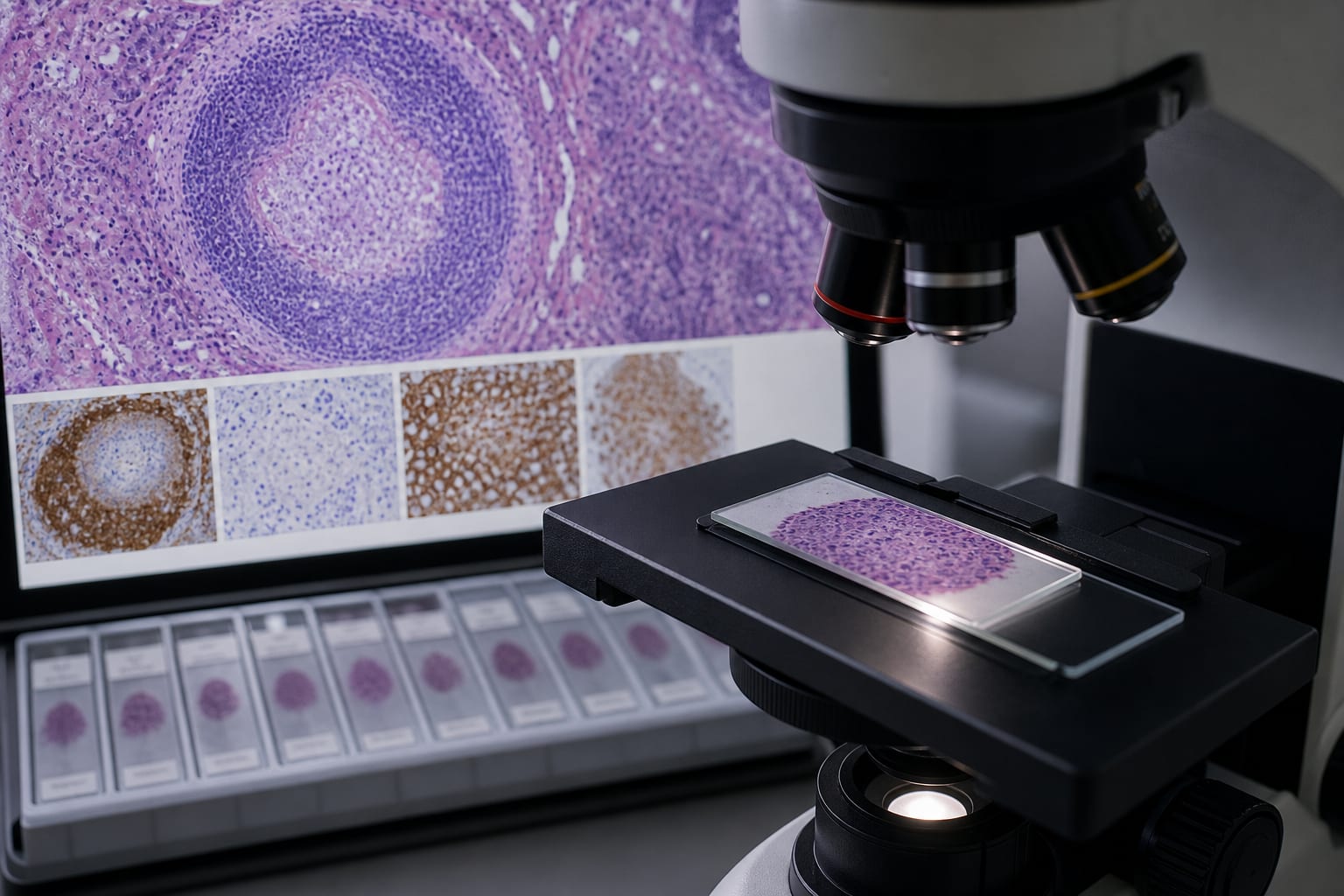
Excisional biopsy was deemed essential for accurate diagnosis compared to core needle biopsy.
The patient responded positively to treatment with siltuximab plus prednisone.
Clinical Implications
Castleman disease should be considered when encountering unexplained lymphadenopathy, systemic symptoms, and elevated inflammatory markers. Excisional biopsy is critical for accurate diagnosis, and systematic exclusion of differential diagnoses is necessary for proper subtyping.
Conclusion
This case illustrates the diagnostic challenges of idiopathic multicentric Castleman disease-not otherwise specified (iMCD-NOS) and highlights the importance of excisional biopsy over core needle biopsy, systematic exclusion of differential diagnoses, and multidisciplinary collaboration.