Clinical Report: Evaluation of Commercial AI Solutions for Assessing Pulmonary Nodules
Overview
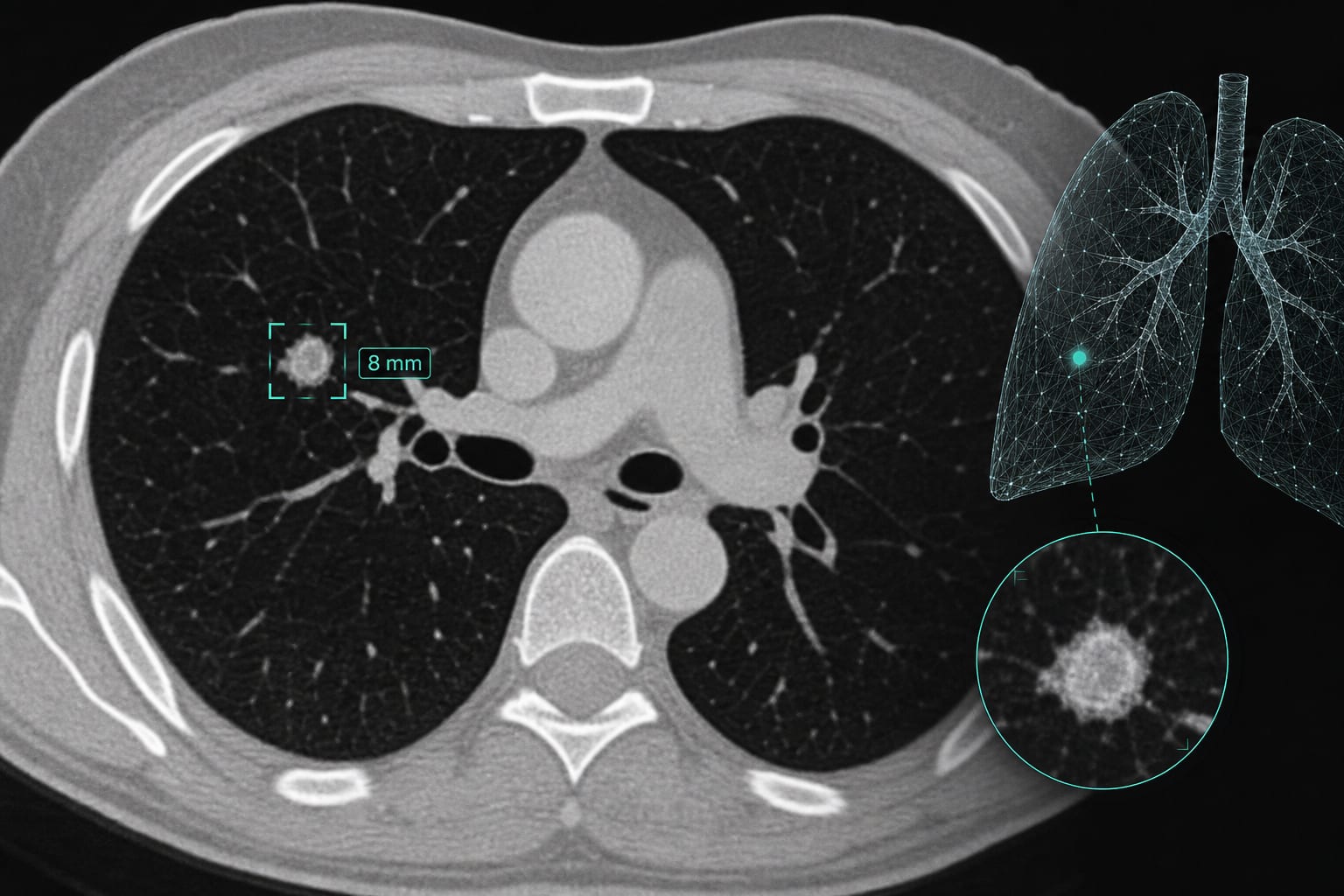
This systematic review evaluates the efficacy of commercially available AI solutions for assessing pulmonary nodules on CT scans.
Background
Lung cancer is the leading cause of cancer-related mortality, making early diagnosis critical. The increasing volume of chest CT scans presents challenges for radiologists, including the risk of overlooking nodules. AI technologies offer potential to enhance nodule detection and analysis, but their efficacy requires thorough evaluation.
Data Highlights
No numerical data or trial results were provided in the source material.
Key Findings
AI technologies can automate the detection and analysis of pulmonary nodules, potentially reducing radiologist workload.
There is a lack of comprehensive evaluation of the real-world efficacy of commercially available AI software for lung nodule assessment.
The RADAR framework provides a holistic approach to evaluating AI technologies, considering technical performance and broader clinical impacts.
Studies included in the review must be peer-reviewed and focus on CE-marked or FDA-cleared AI applications.
Validation of AI software includes assessing test accuracy and its impact on clinical management and patient outcomes.
Clinical Implications
The findings emphasize the importance of rigorous evaluation of AI tools to ensure their effectiveness in clinical settings. Understanding the capabilities and limitations of these technologies is essential for their integration into routine practice.
Conclusion
The systematic review highlights the need for comprehensive assessments of AI solutions in pulmonary nodule evaluation.
by Jasika Paramasamy, Asabi Leliveld, Jan-Willem Groen, Bo Willems, Joachim G. J. V. Aerts, Aad van der Lugt, Ties A. Mulders, Arlette E. Odink, Jacob J. Visser