Nomogram-based prediction of hemorrhagic transformation risk integrating platelet-to-white blood cell ratio in patients with acute ischemic stroke after intravenous thrombolysis - Report - MDSpire
Advertisement
Nomogram-based prediction of hemorrhagic transformation risk integrating platelet-to-white blood cell ratio in patients with acute ischemic stroke after intravenous thrombolysis
Clinical Report: Prediction of Hemorrhagic Transformation Risk Using a Nomogram
Overview
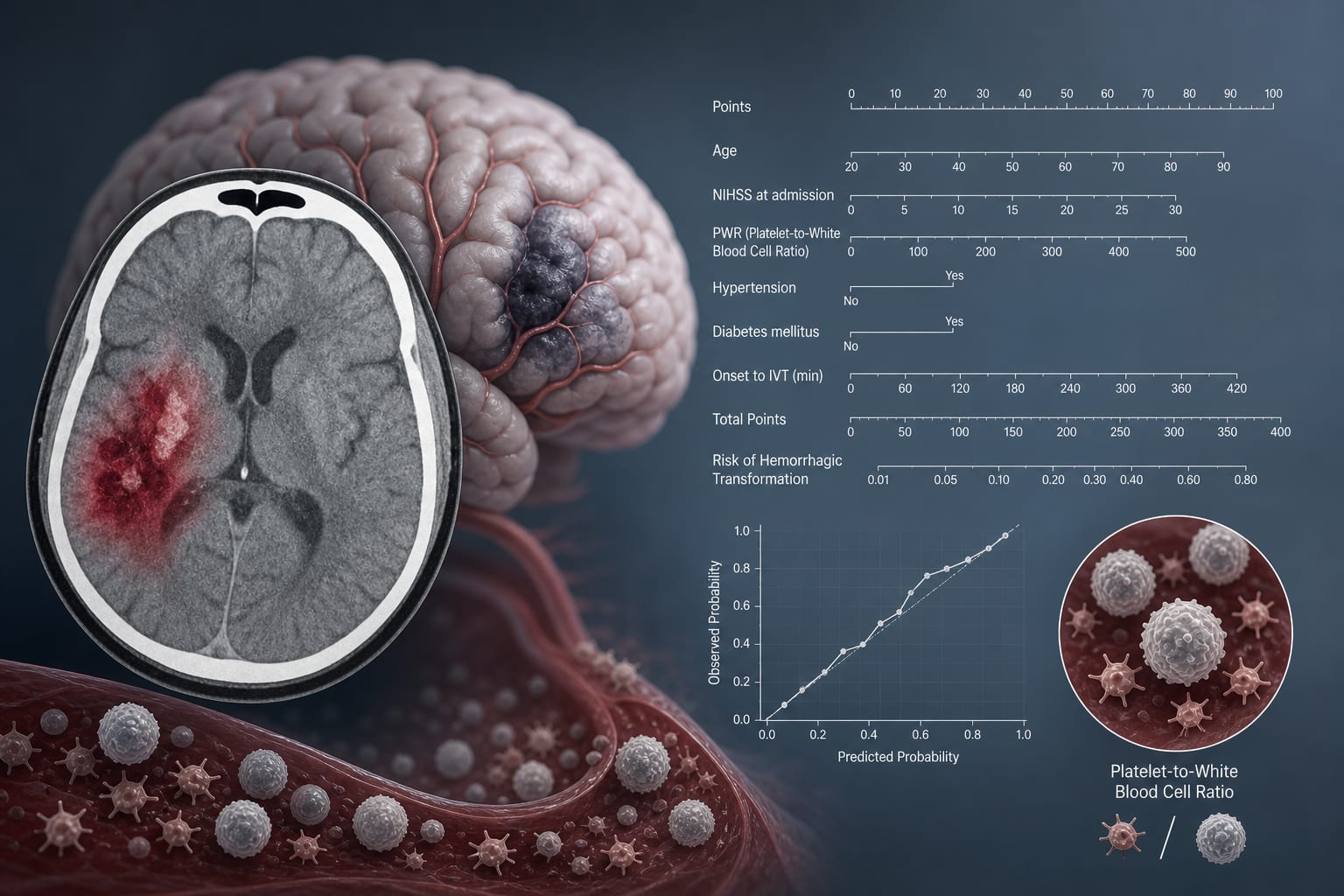
This study identifies a significant association between low platelet-to-white blood cell ratio (PWR) and increased risk of hemorrhagic transformation (HT) in acute ischemic stroke patients post-intravenous thrombolysis.
Background
Hemorrhagic transformation is a critical complication following intravenous thrombolysis in acute ischemic stroke patients, impacting clinical outcomes. Understanding the risk factors associated with HT is essential for improving patient management and outcomes. The platelet-to-white blood cell ratio (PWR) has emerged as a potential prognostic indicator.
Data Highlights
PWR Quartile
Risk of HT
Q1 (<22.0)
Highest risk
Q2 (22.0–28.3)
Moderate risk
Q3 (28.3–36.2)
Lower risk
Q4 (>36.2)
67% reduced risk (OR: 0.33; 95% CI: 0.18–0.61)
Key Findings
Lower PWR levels are significantly associated with increased risk and severity of HT after IVT.
Patients in the highest PWR quartile (Q4) had a 67% reduced risk of HT.
The nomogram developed achieved an AUC of 0.767 for predicting HT risk.
HT was identified through cranial imaging within 24 hours post-IVT.
Multivariate logistic regression was utilized to assess the relationship between PWR and HT.
Clinical Implications
The findings indicate a relationship between PWR and the risk of hemorrhagic transformation in acute ischemic stroke patients undergoing intravenous thrombolysis.
Conclusion
Lower PWR is correlated with a higher risk of hemorrhagic transformation in acute ischemic stroke patients post-IVT.