Blind nasoenteric tube insertion using a pharmaco-mechanical synergy protocol in frail older adults with chronic wounds: a retrospective study - Report - MDSpire
Advertisement
Blind nasoenteric tube insertion using a pharmaco-mechanical synergy protocol in frail older adults with chronic wounds: a retrospective study
Clinical Report: Evaluation of a Pharmaco-Mechanical Approach for Blind Nasoenteric Tube Insertion
Overview
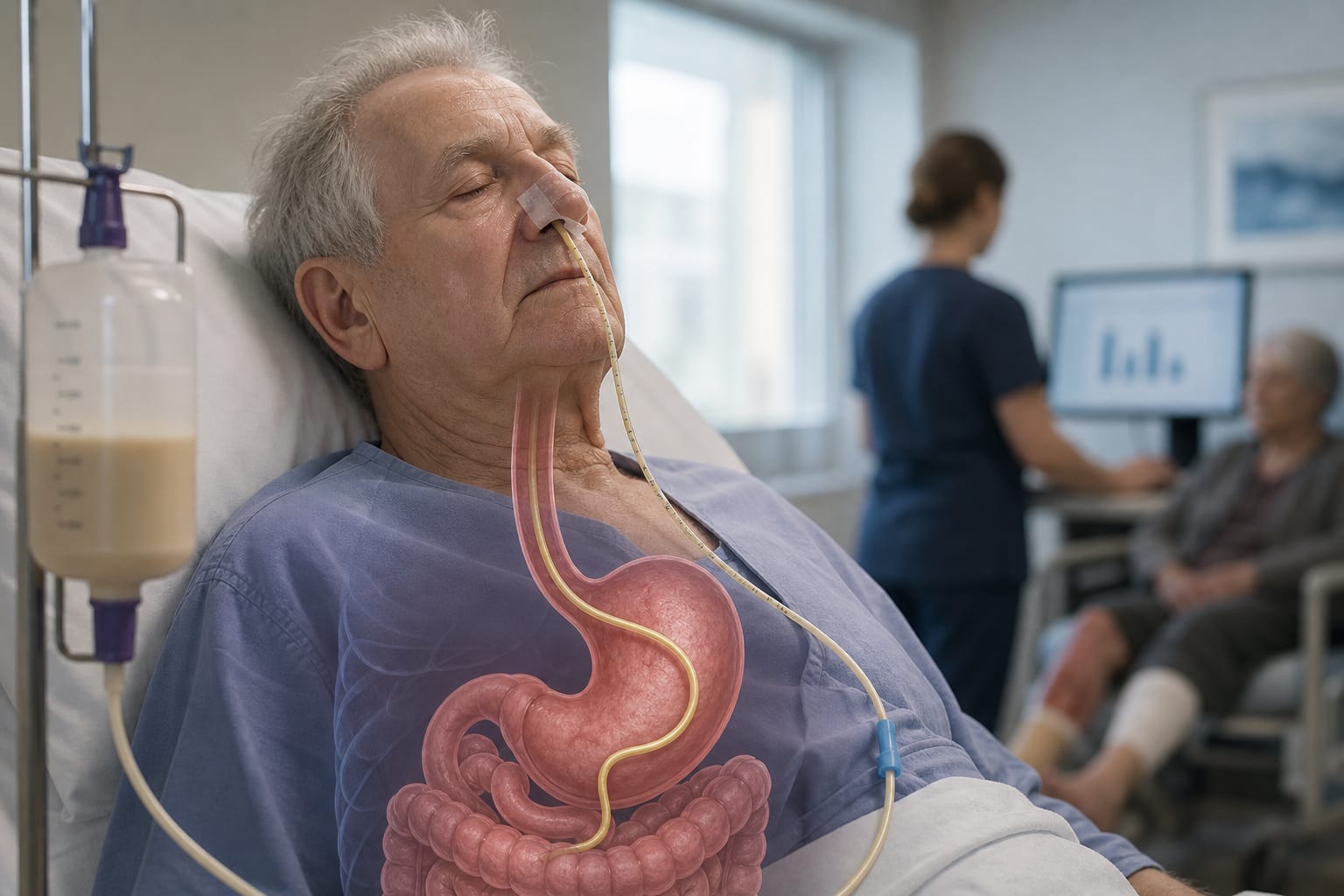
This study evaluates the feasibility and outcomes of a pharmaco-mechanical protocol for blind nasoenteric tube insertion in frail elderly patients with chronic wounds.
Background
As the population ages, frailty syndrome and chronic wounds are increasingly prevalent in older adults, significantly impacting their health and quality of life. Malnutrition is both a cause and consequence of frailty, necessitating effective nutritional interventions. The complexity of nasoenteric tube insertion poses challenges, particularly in frail patients.
Data Highlights
Measure
Pre-Insertion
Post-Insertion
Success Rate
-
76.2%
Insertion Time (min)
-
40 ± 9.2
Insertion Depth (cm)
-
101 ± 11.0
Serum Total Protein
-
Improved (p < 0.05)
Albumin Levels
-
Improved (p < 0.05)
Prealbumin Levels
-
Trend toward improvement (p = 0.05)
Infection Markers
-
No significant change (p > 0.05)
Key Findings
The overall procedural success rate for blind NET insertion was 76.2%.
Mean total insertion time was 40 ± 9.2 minutes.
Significant improvements in serum total protein and albumin levels were observed post-insertion.
No insertion-related complications were reported, indicating a favorable safety profile.
Learning curve analysis showed rapid skill acquisition among nursing staff.
Clinical Implications
The study suggests that the pharmaco-mechanical synergy protocol for blind NET insertion is a viable option for improving nutritional status in frail older adults with chronic wounds. The favorable safety profile and high success rates indicate its potential for broader clinical application.
Conclusion
The findings support the use of a pharmaco-mechanical approach for blind nasoenteric tube insertion in frail elderly patients, demonstrating significant improvements in nutritional markers and a favorable safety profile.