Clinical Report: Comparison of Pin Orthosis Extension Block Pinning and Conservative Management for Doyle Type 4B Mallet Finger Fractures
Overview
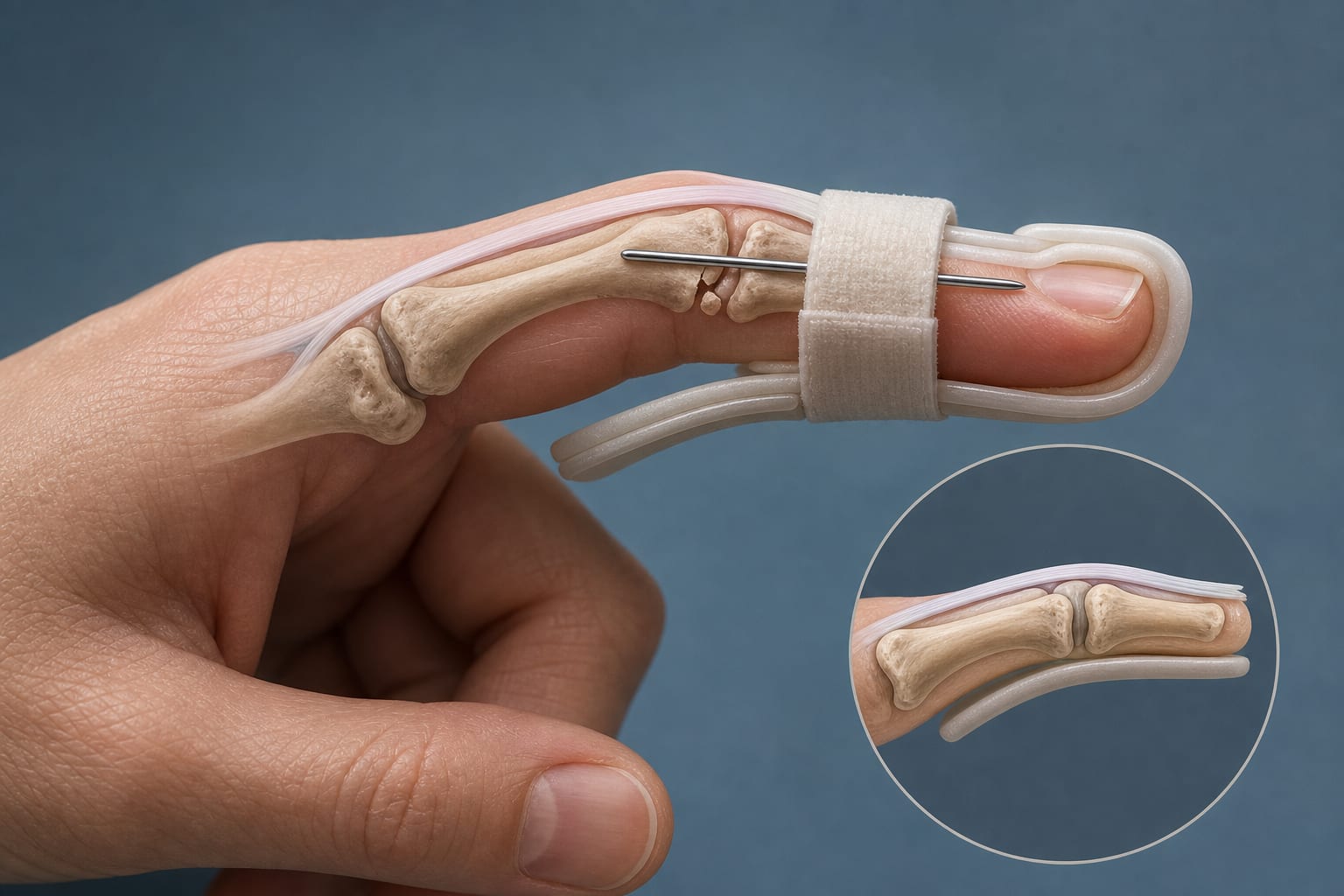
This study compares the clinical and radiographic outcomes of pin-orthosis extension-block pinning (PO-EBPT) with conservative treatment in patients with Doyle type 4B mallet fractures.
Background
Mallet finger is a common hand injury characterized by the inability to extend the fingertip, often resulting from trauma to the distal interphalangeal joint. The management of mallet fractures, particularly those involving significant articular surface, remains debated among clinicians.
Data Highlights
Group
Sample Size
PO-EBPT
33
Conservative Treatment
29
Key Findings
PO-EBPT avoids DIP joint transfixation while maintaining fracture reduction.
Conservative treatment involves the use of a Stack orthosis to maintain slight hyperextension of the DIP joint.
Inclusion criteria for the study were acute mallet fractures with 20–50% involvement of the DIP joint articular surface.
Patients were randomized into two groups: PO-EBPT and conservative treatment.
Loss to follow-up occurred in three patients from the conservative group during the 12-month observation period.
Clinical Implications
Both PO-EBPT and conservative management are treatment options for Doyle type 4B mallet fractures.
Conclusion
This study compares the effectiveness of PO-EBPT versus conservative management for mallet fractures.