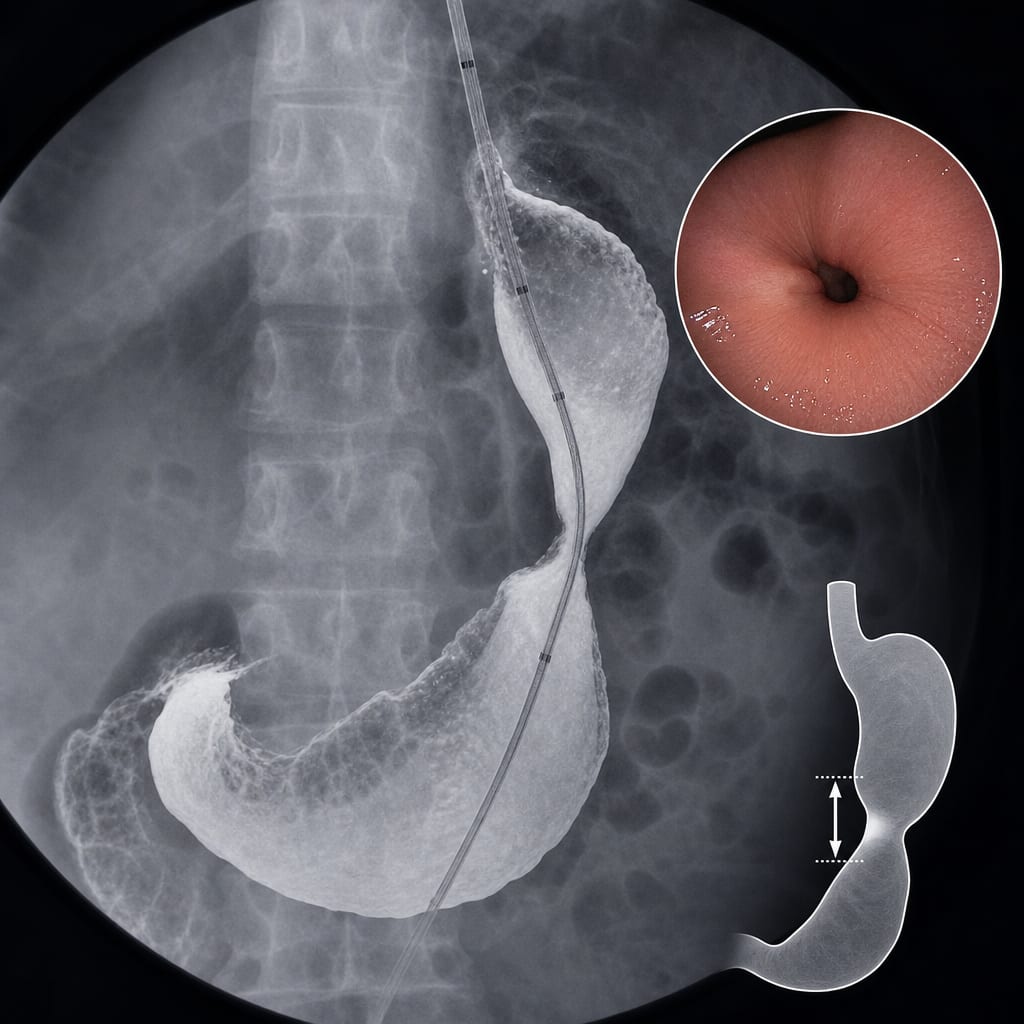
Gastrogastric Intussusception 10 Years After Laparoscopic Greater Curvature Plication
Overview
This case study reports a rare instance of gastrogastric intussusception occurring a decade after laparoscopic gastric greater curvature plication (LGCP). The patient underwent successful laparoscopic sleeve gastrectomy (LSG) conversion with significant postoperative weight loss and resolution of comorbidities.
Background
Metabolic bariatric surgery (MBS) is the primary long-term treatment for obesity, with laparoscopic gastric greater curvature plication (LGCP) introduced as a reversible alternative to laparoscopic sleeve gastrectomy (LSG). LGCP involves folding and suturing the stomach's greater curvature without tissue removal, aiming to reduce complications such as leakage. However, recent evidence suggests LSG surpasses LGCP in safety, weight loss efficacy, and long-term complication rates. Gastrogastric intussusception is a rare late complication after LGCP, with few cases reported in the literature.
Data Highlights
Parameter
Preoperative
Postoperative (6 months)
Weight (kg)
89
65
BMI (kg/m2)
33.7
24.6
Hemoglobin (g/dL)
10.9
11.7
Ferritin (ng/mL)
Not reported
55
Iron (micromol/L)
Not reported
17
Total Cholesterol (mg/dL)
277
168.5
Triglycerides (mg/dL)
155
101.7
HDL Cholesterol (mg/dL)
34
45.3
LDL Cholesterol (mg/dL)
200
102.8
Cholesterol/HDL Ratio
Not reported
3.72
Key Findings
Gastrogastric intussusception can present as a late complication, occurring 10 years after LGCP.
Symptoms included frequent vomiting, epigastric tenderness, and mild anemia.
Imaging (barium meal and CT) and endoscopy confirmed intussusception with gastric fold prolapse.
Laparoscopic exploration allowed reduction of intussusception and conversion to LSG with good postoperative recovery.
Postoperative follow-up showed significant weight loss (24 kg) and improvement in hypertension and hyperlipidemia.
Histopathology revealed chronic gastritis without dysplasia in the resected specimen.
Clinical Implications
Clinicians should consider gastrogastric intussusception as a potential late complication in patients with prior LGCP presenting with gastrointestinal symptoms. Laparoscopic exploration and conversion to LSG can be effective management strategies, offering weight loss benefits and resolution of comorbidities. Long-term follow-up with multidisciplinary care is essential to monitor nutritional status and prevent complications.
Conclusion
This rare case highlights the possibility of gastrogastric intussusception occurring many years after LGCP and demonstrates that laparoscopic conversion to sleeve gastrectomy is a feasible and effective treatment option with favorable outcomes.
References
Almulaifi and Mohammad 2023 -- Obstructive jaundice after LGCP caused by gastric fold herniation
Perivoliotis et al. 2018 -- Systematic review and meta-analysis comparing LSG and LGCP
A retrospective database study found a low absolute incidence but higher relative hazard of ischemic optic neuropathy following semaglutide initiation.