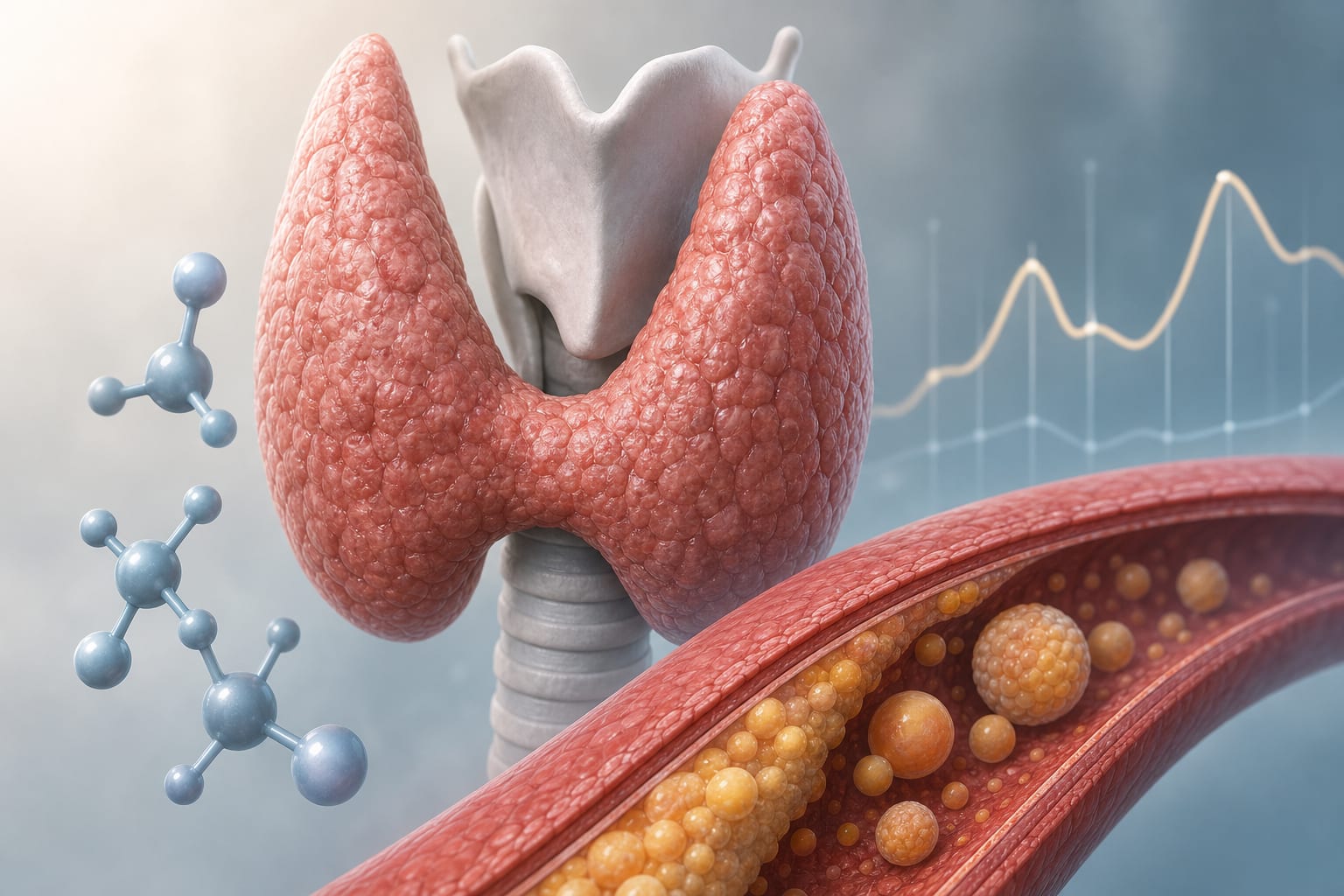
Management of Mild Subclinical Hypothyroidism and Its Effects on Lipid Profiles
Overview
This study evaluates the impact of levothyroxine therapy on lipid profiles in patients with mild subclinical hypothyroidism. Results indicate that treatment is associated with changes in total and LDL cholesterol levels, contrasting with untreated patients who showed no significant changes.
Background
Subclinical hypothyroidism is prevalent and poses cardiovascular risks, yet treatment guidelines for mild cases remain unclear. Dyslipidemia is often a concern in these patients, and the role of levothyroxine therapy in managing lipid profiles is debated. Understanding the effects of treatment on lipid metabolism is crucial for optimizing patient care.
Data Highlights
Group
Median TSH Change (mIU/L)
Median Total Cholesterol Change (mg/dL)
Median LDL Cholesterol Change (mg/dL)
Treated
-2.5
7.8
13.2
Untreated
-1.7
0
0
Key Findings
Levothyroxine therapy in treated patients led to a significant decrease in TSH levels.
Treated patients experienced an increase in total cholesterol by 7.8 mg/dL and LDL cholesterol by 13.2 mg/dL.
Untreated patients showed no significant changes in lipid profiles.
No changes were observed in HDL cholesterol and triglycerides for either group.
Clinical Implications
Further research is needed to clarify the relationship between thyroid hormone treatment and lipid metabolism.
Conclusion
The study presents findings on the effects of levothyroxine therapy in mild subclinical hypothyroidism, particularly regarding lipid profiles.
Higher annual oral corticosteroid exposure was associated with greater odds of systemic adverse events, with avascular bone necrosis and pneumonia showing dose-dependent associations with cumulative dose and osteoporosis associated with longer annual exposure duration.
National survey findings suggest many US adults report making health decisions based on social media despite widespread concerns about the accuracy of health information shared to the platforms.