The protective role of resilience-related strength in the association between sleep reactivity and insomnia symptoms among young Chinese male university students: a moderated network approach - Report - MDSpire
Conexiant’s news site is now MDSpire News. Learn more
Advertisement
The Moderating Effect of Resilience-Related Strength on the Relationship Between Sleep Reactivity and Insomnia Symptoms in Young Male University Students in China: A Network Analysis
Clinical Report: The Moderating Effect of Resilience on Insomnia Symptoms
Overview
This study investigates the relationship between sleep reactivity, psychological resilience, and insomnia symptoms in young male university students in China. It finds that psychological resilience, particularly the dimension of Strength, moderates the relationship between sleep reactivity and insomnia symptoms.
Background
Insomnia is a common sleep disorder that can significantly impair daily functioning and quality of life. Understanding the factors that contribute to insomnia, such as sleep reactivity and psychological resilience, is crucial for developing effective interventions. This study focuses on young male university students, a population at risk for sleep disturbances due to academic and social pressures.
Data Highlights
The study analyzed data from 1,122 male participants (Mean age = 21.13, SD age = 1.48). The assessment tools included the Ford Insomnia Response to Stress Test, Insomnia Severity Index, and Connor-Davidson Resilience Scale.
Key Findings
Greater sleep reactivity was associated with more severe insomnia symptoms.
The dimension of Strength in psychological resilience showed a negative association with insomnia symptoms.
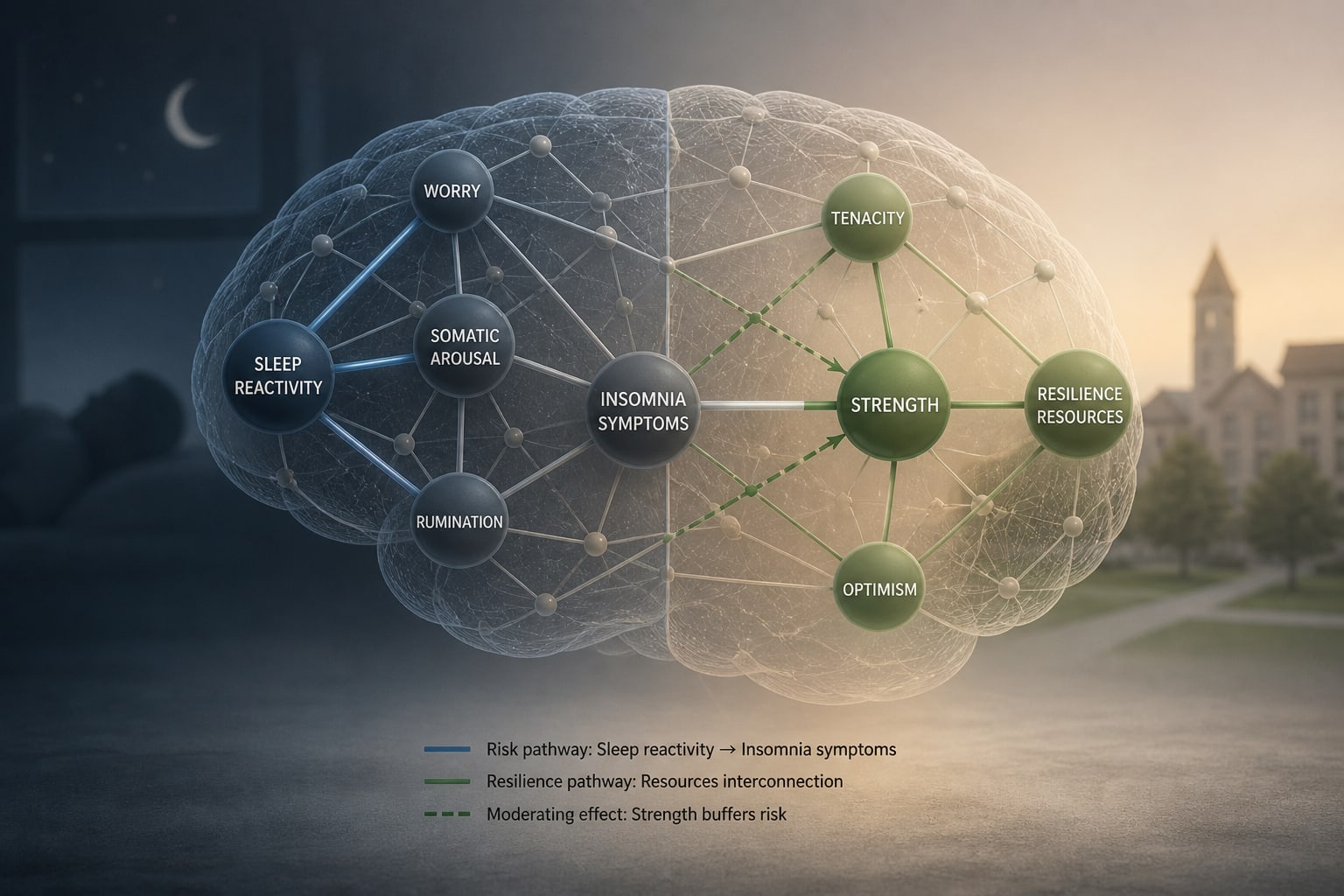
Strength significantly moderated the relationship between sleep reactivity and insomnia symptoms.
Moderated network analysis indicated that Strength moderated specific connections between sleep reactivity components and insomnia symptoms.
Particular sleep reactivity related to interpersonal conflict and public speaking was notably moderated by Strength.
Clinical Implications
The findings indicate a relationship between psychological resilience, particularly Strength, and insomnia symptoms in young men experiencing high sleep reactivity.
Conclusion
Strength serves as a protective factor against insomnia symptoms related to sleep reactivity.