Clinical Report: Irradiation Enhances CAR T Cell Efficacy in Lung Metastases
Overview
Irradiation of tumors significantly enhances the effectiveness and persistence of CAR T cells in treating lung metastases by improving antigen presentation and T cell activation.
Background
Chimeric antigen receptor (CAR) T cell therapy has revolutionized the treatment of hematologic malignancies but faces significant challenges in solid tumors, including immunosuppressive microenvironments, limited T cell persistence, and the risk of on-target, off-tumor toxicity. Understanding how to enhance CAR T cell efficacy in these settings is crucial for improving outcomes in patients with advanced cancers, particularly those with extensive solid tumors like lung cancer.
Data Highlights
The study provides qualitative insights into the enhanced cytotoxicity of CAR T cells post-irradiation, although no numerical data is available.
Key Findings
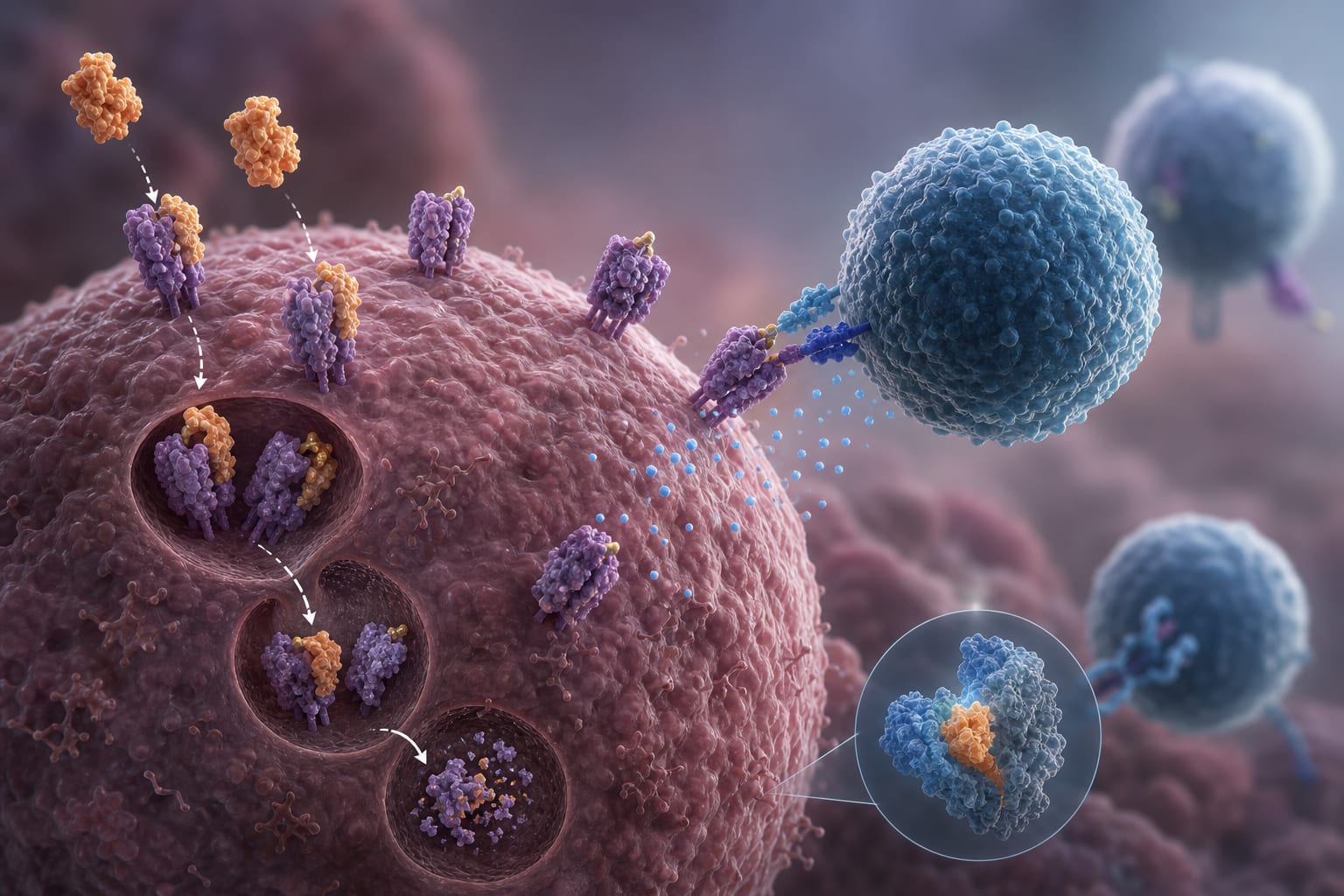
1. Irradiation of tumors enhances CAR T cell cytotoxicity against target+ tumor cells. 2. 8 Gy of thoracic radiotherapy (TRT) sensitizes lung tumors to CAR T cell attack without causing significant injury to surrounding tissues. 3. Antigen dressing of tumor antigens onto dendritic cells (DCs) improves T cell expansion through the chimeric receptor. 4. CAR T cells demonstrated enhanced efficacy when directed to both ectopic and endogenous antigens on irradiated tumors. 5. The study utilized a syngeneic lung tumor model that mimics human non-small-cell lung cancer (NSCLC) to assess CAR T cell interactions within the tumor microenvironment.
Clinical Implications
The findings suggest that combining irradiation with CAR T cell therapy may improve treatment outcomes for patients with solid tumors, particularly lung metastases. Clinicians should consider the potential benefits of tumor irradiation in enhancing CAR T cell responses, including patient selection and timing of therapy.
Conclusion
Irradiation represents a promising strategy to enhance the effectiveness of CAR T cell therapy in solid tumors by improving antigen presentation and T cell persistence. Further clinical exploration is warranted to validate these findings in human subjects, particularly in identifying optimal patient populations.
by Sophia Navarre, Maki N. Ishibashi, Achuth Nair, Ivan Reyes-Torres, Meriem Belabed, Laszlo Halasz, Matthew D. Park, Raphaël Mattiuz, Merouane Ounadjela, Gertrude Gunset, Jorge Mansilla-Soto, Judith Feucht, Annalisa Cabriolu, Jessica Le Berichel, Alexander Birbrair, Justin Eyquem, Brian D. Brown, Miriam Merad, Michel Sadelain, Jalal Ahmed