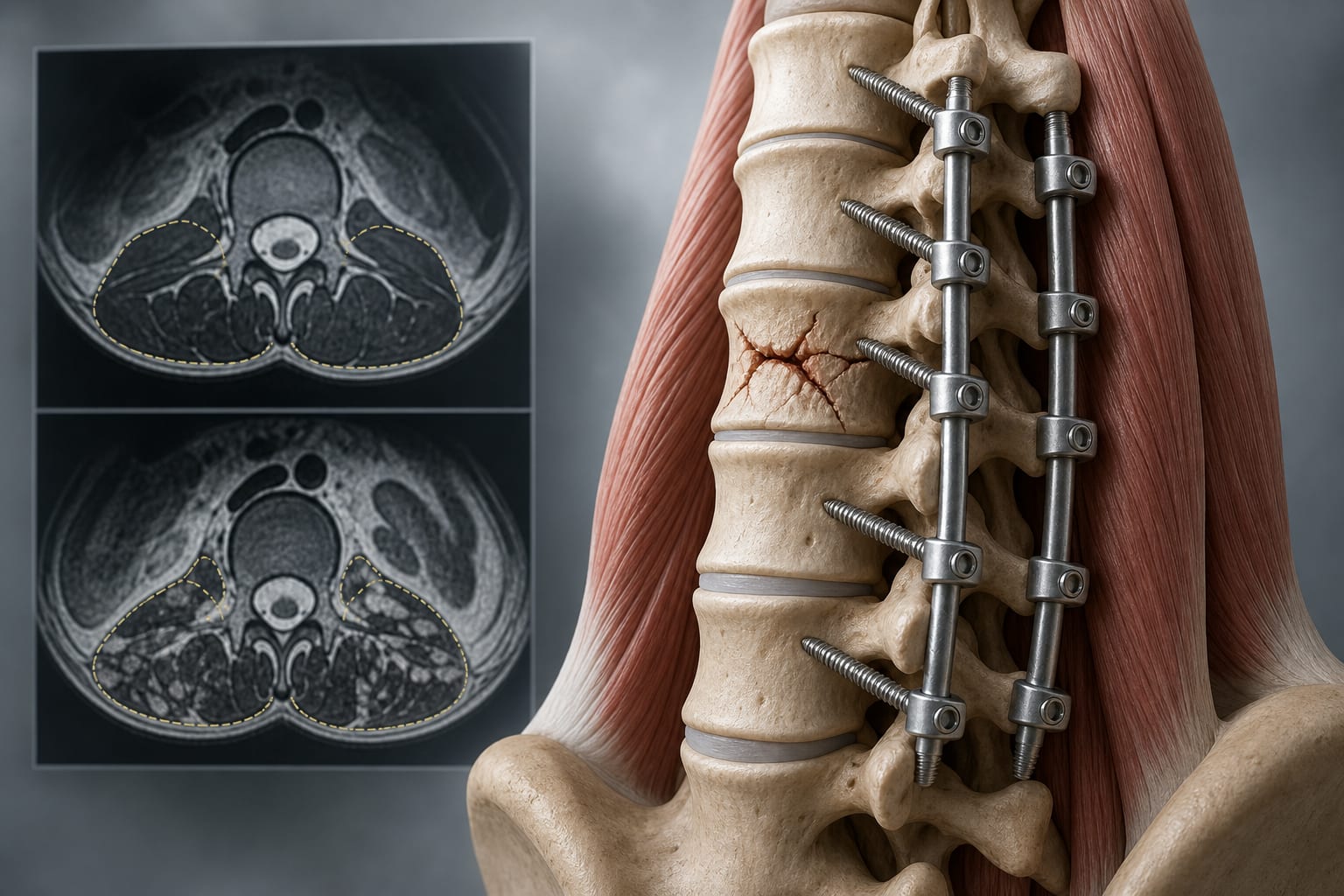
Influence of Preoperative Lumbar Paraspinal Muscle Condition on Outcomes After Open Pedicle Screw Fixation for Thoracolumbar Fractures
Overview
This study investigates the impact of preoperative paraspinal muscle quality on clinical and radiographic outcomes following open pedicle screw fixation (OPSF) for thoracolumbar fractures. Findings indicate that while initial surgical reduction is unaffected, long-term maintenance of radiographic correction is significantly influenced by muscle quality, particularly in unstable fracture patterns.
Background
Thoracolumbar fractures are prevalent spinal injuries that can severely affect motor function and quality of life. Surgical intervention, especially OPSF, is often necessary for unstable fractures, yet complications such as correction loss remain a concern. Understanding the role of paraspinal muscle quality may help improve surgical outcomes and patient management.
Data Highlights
Group
Fat Infiltration
Patients
Correction Loss (1 Year)
Low-Fat Group (LFG)
< 25%
26
Less
High-Fat Group (HFG)
≥ 25%
22
More
Key Findings
Preoperative fat infiltration (FI) of paraspinal muscles was assessed using MRI.
The LFG exhibited better paraspinal muscle parameters compared to the HFG.
Both groups achieved similar immediate postoperative radiographic correction.
The HFG showed significantly greater loss of correction in vertebral body angle (VBA) and regional kyphosis angle (RKA) at 1 year postoperatively.
No significant differences in Visual Analogue Scale (VAS) and Oswestry Disability Index (ODI) scores were observed at any postoperative time point.
Complication rates were comparable between the two groups.
Clinical Implications
Assessing preoperative paraspinal muscle quality may provide valuable prognostic information for surgical planning and patient counseling. This could help identify patients at higher risk for long-term correction loss, particularly those with unstable fracture patterns.
Conclusion
The quality of preoperative lumbar paraspinal muscles significantly influences the long-term maintenance of radiographic correction after OPSF for thoracolumbar fractures. This finding underscores the importance of evaluating muscle condition in surgical decision-making.