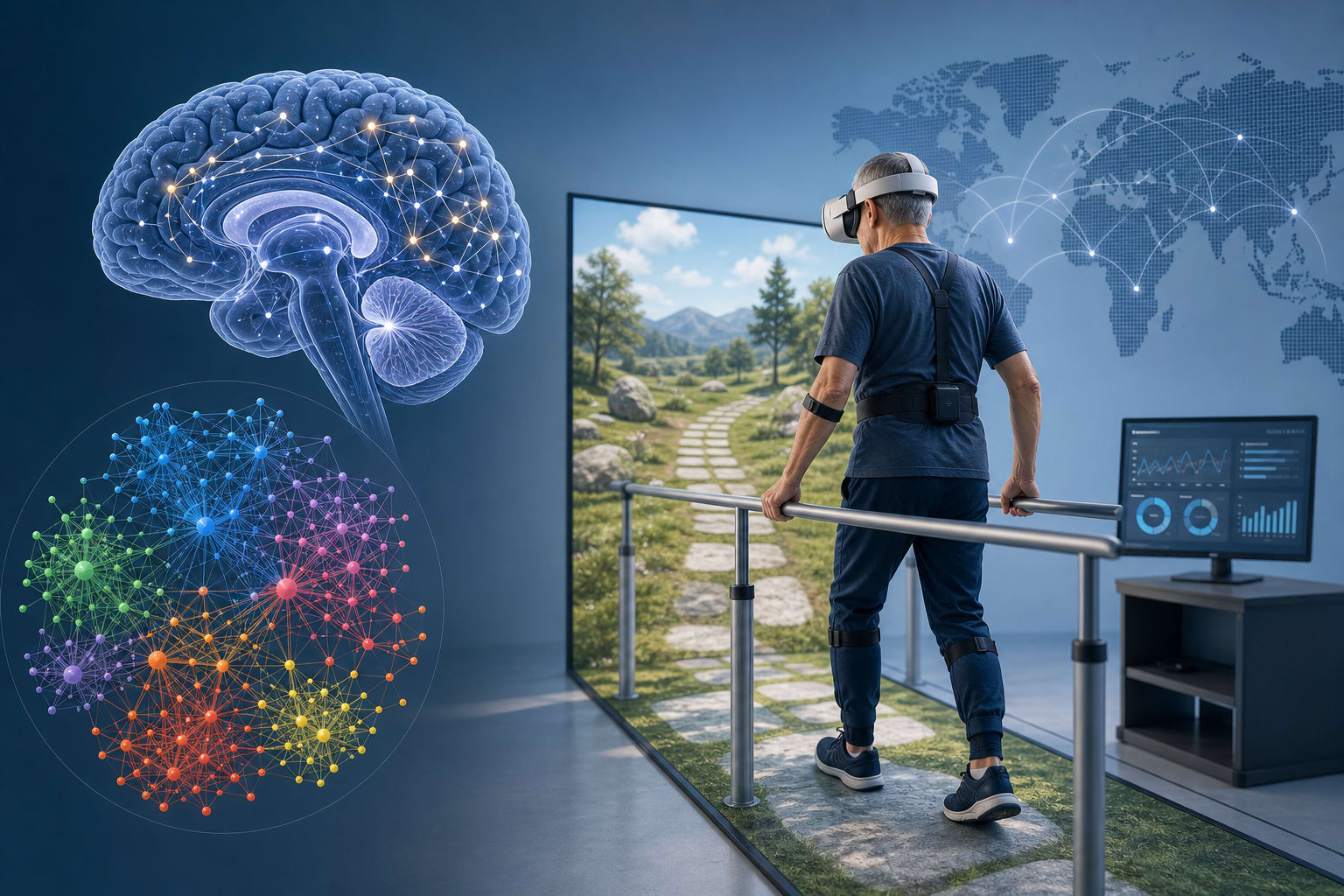
Virtual reality training for gait disorders in Parkinson’s disease: a bibliometric and visual analysis of hotspots and trends using CiteSpace and VOSviewer - Report - MDSpire
Advertisement
Virtual reality training for gait disorders in Parkinson’s disease: a bibliometric and visual analysis of hotspots and trends using CiteSpace and VOSviewer
Clinical Report: Trends in Virtual Reality Training for Gait Impairments in PD
Overview
This bibliometric study reviews the growth and trends in virtual reality (VR) training for gait impairments in Parkinson's disease (PD). It highlights the disparity in publication volume between English and Chinese literature and identifies emerging research frontiers in VR applications for gait rehabilitation.
Background
Parkinson's disease is a prevalent neurodegenerative disorder that significantly impacts gait and mobility, affecting patients' quality of life. Traditional rehabilitation methods often fall short due to patient adherence issues and limited access to resources. Virtual reality offers a novel approach to enhance engagement and personalize rehabilitation protocols, making it a critical area of research.
Data Highlights
Year
English Publications
Chinese Publications
2008
4
0
2024
62
3
Key Findings
English publications on VR training for PD have increased significantly, peaking between 2020 and 2025.
The United States leads in publication volume, while China ranks third but lacks international collaboration.
Research keywords indicate a shift towards intelligent and personalized interventions like wearable sensors and telerehabilitation.
Approximately 80% of PD patients experience gait disturbances, with over 50% developing Freezing of Gait.
VR training has shown promise in improving gait speed, balance, and dual-task performance in PD patients.
Clinical Implications
Healthcare professionals should consider integrating VR training into rehabilitation programs for PD patients to enhance engagement and improve outcomes. Emphasizing multi-center collaborations and personalized interventions may bridge existing research gaps and improve clinical efficacy.
Conclusion
The study underscores the expanding role of VR in PD gait rehabilitation and highlights the need for further research and collaboration to optimize therapeutic strategies.