Authors’ Reply: Clarifying the Comparative Interpretation and Clinical Implications of Radiomics-Based AI for Pathological Response Prediction - Report - MDSpire
Clinical Report: Response from Authors on AI-Driven Radiomics in NSCLC
Background
The integration of AI-driven radiomics into clinical practice is being explored for its ability to predict treatment responses in NSCLC, which is important for managing neoadjuvant immunotherapy. Understanding the performance of AI models compared to traditional criteria is necessary for patient outcomes and treatment strategies.
Data Highlights
No numerical data presented in the source material.
Key Findings
The total of 72 test assessments in the meta-analysis refers to assessments rather than unique participants.
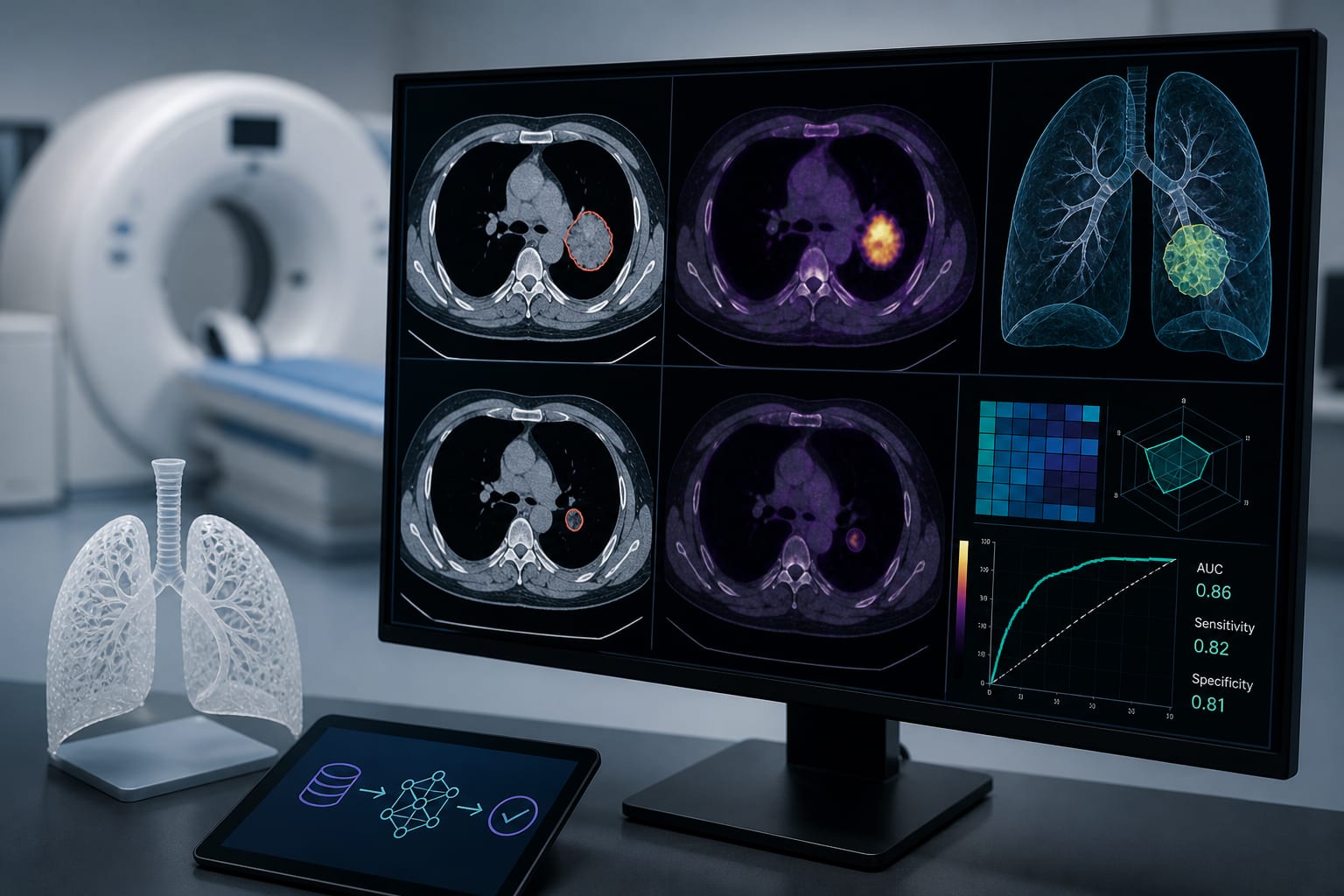
AI demonstrated greater sensitivity for predicting pathological complete response (pCR) compared to conventional criteria, which had greater specificity.
In a direct comparison, Deng et al. reported a sensitivity of 100.0% and specificity of 94.1% for their AI model, compared to lower values for RECIST 1.1 and PERCIST.
The pooled analysis included only validation cohorts, limiting the generalizability of findings to an intention-to-treat population.
Future studies should clarify whether pathological response pertains to the primary tumor, nodes, or both, and include nonsurgical patients.
Implementation of AI models requires multicenter validation and standardized protocols.
Clinical Implications
Clinicians should consider the sensitivity-specificity trade-off when utilizing AI-driven radiomics for predicting treatment responses in NSCLC.
Conclusion
The authors note that AI-driven radiomics has shown diagnostic performance in predicting pathological responses in NSCLC.
Standardized preprocessing, multicenter datasets, external validation, and interpretable models may matter more than further gains in classification accuracy