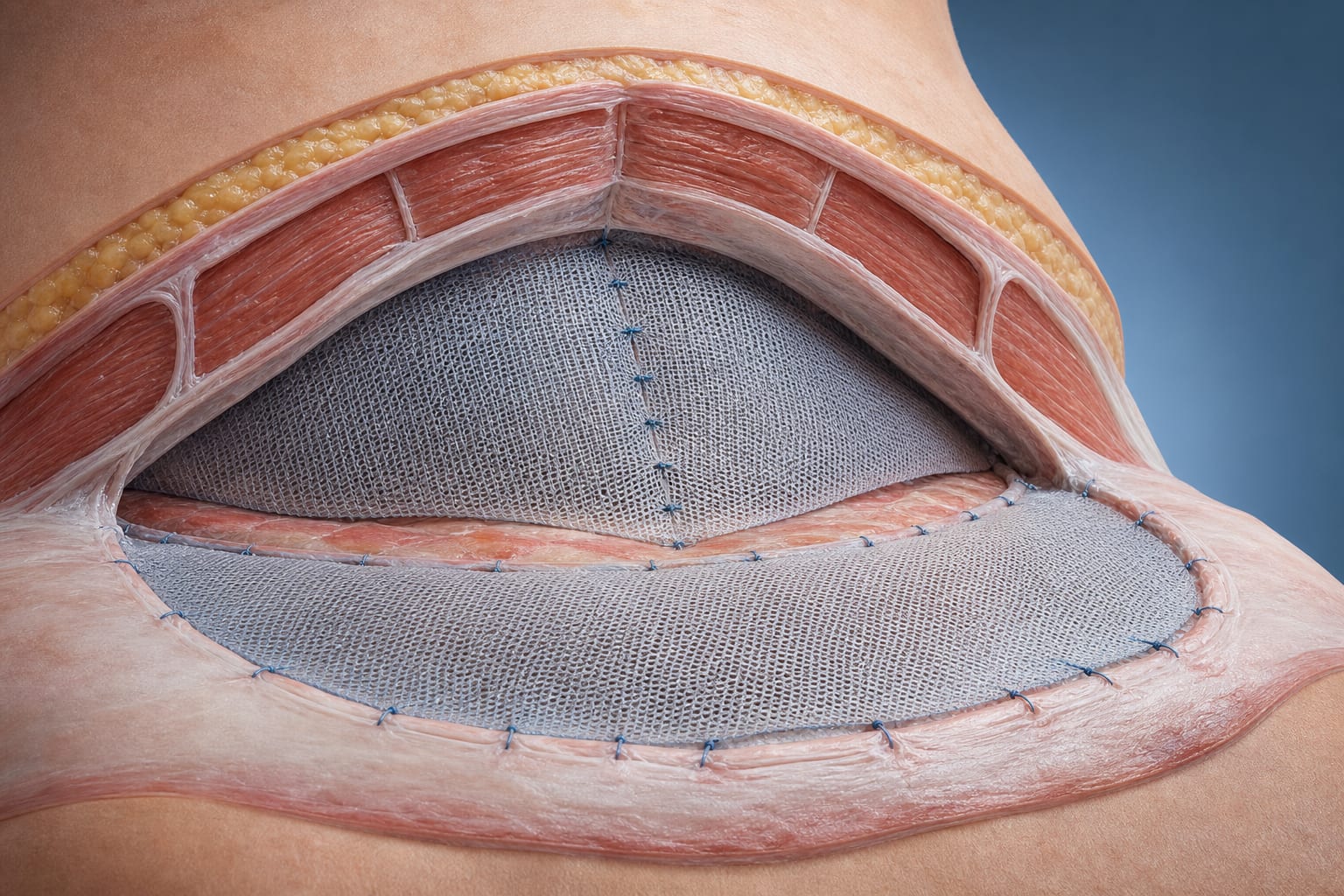
Comparison of laparoscopic and open inguinal–hernia repair in elderly patients: the experience of two comprehensive medical centers over 10 years - Report - MDSpire
Advertisement
Comparison of laparoscopic and open inguinal–hernia repair in elderly patients: the experience of two comprehensive medical centers over 10 years
Clinical Report: Laparoscopic vs Open Inguinal Hernia Repair in Elderly Patients
Overview
This retrospective cohort study compared laparoscopic and open inguinal hernia repair outcomes in elderly Chinese patients over a decade. It found that laparoscopic repair under surgical and medical co-management (SMC) is as safe as open repair, with potential benefits in recovery and complication rates.
Background
Inguinal hernia prevalence increases with age due to tissue weakening and comorbidities raising intra-abdominal pressure. Elderly patients (≥65 years) represent a significant proportion of hernia cases and face higher perioperative risks. Traditional open repair is common but associated with more postoperative pain and longer hospital stays. Laparoscopic repair offers less pain and faster recovery but requires general anesthesia and its safety in elderly Chinese patients remains under-evaluated. The SMC model aims to optimize perioperative care and improve outcomes in elderly surgical patients.
Data Highlights
The study included patients aged 65 years or older undergoing elective or emergency inguinal hernia repair from two medical centers between 2012 and 2021. One center used traditional care, the other implemented SMC. Data collected included demographics, comorbidities, ASA class, anesthesia, surgical approach, intraoperative parameters, and postoperative complications categorized as major or minor. Frailty was assessed using a specific scale for elderly inguinal hernia patients.
Key Findings
Laparoscopic inguinal hernia repair under SMC was as safe as open repair in elderly patients, including those with multiple comorbidities.
SMC involved multidisciplinary preoperative evaluation and postoperative management, reducing perioperative complications and improving recovery.
Major complications such as deep surgical site infections and intestinal injuries were rare in both groups.
Minor complications like seroma and urinary retention were more frequent after laparoscopic repair but were manageable.
Laparoscopic repair patients experienced less postoperative pain and faster mobilization compared to open repair patients.
General anesthesia required for laparoscopic repair was well tolerated under SMC protocols in elderly patients.
Clinical Implications
Clinicians should consider laparoscopic inguinal hernia repair as a viable and safe option for elderly patients, especially when integrated with a surgical and medical co-management approach. The SMC model enhances perioperative care, potentially reducing complications and facilitating faster recovery. Careful patient selection and multidisciplinary coordination are essential to optimize outcomes.
Conclusion
Laparoscopic inguinal hernia repair combined with surgical and medical co-management is a safe and effective treatment for elderly patients, offering advantages in recovery without increasing major complications. This approach supports expanding minimally invasive surgery use in geriatric populations.
References
Chinese Epidemiological Study 2021 -- Prevalence of Inguinal Hernia in Elderly
Surgical and Medical Co-management Model Studies 2018-2022 -- Improving Perioperative Outcomes