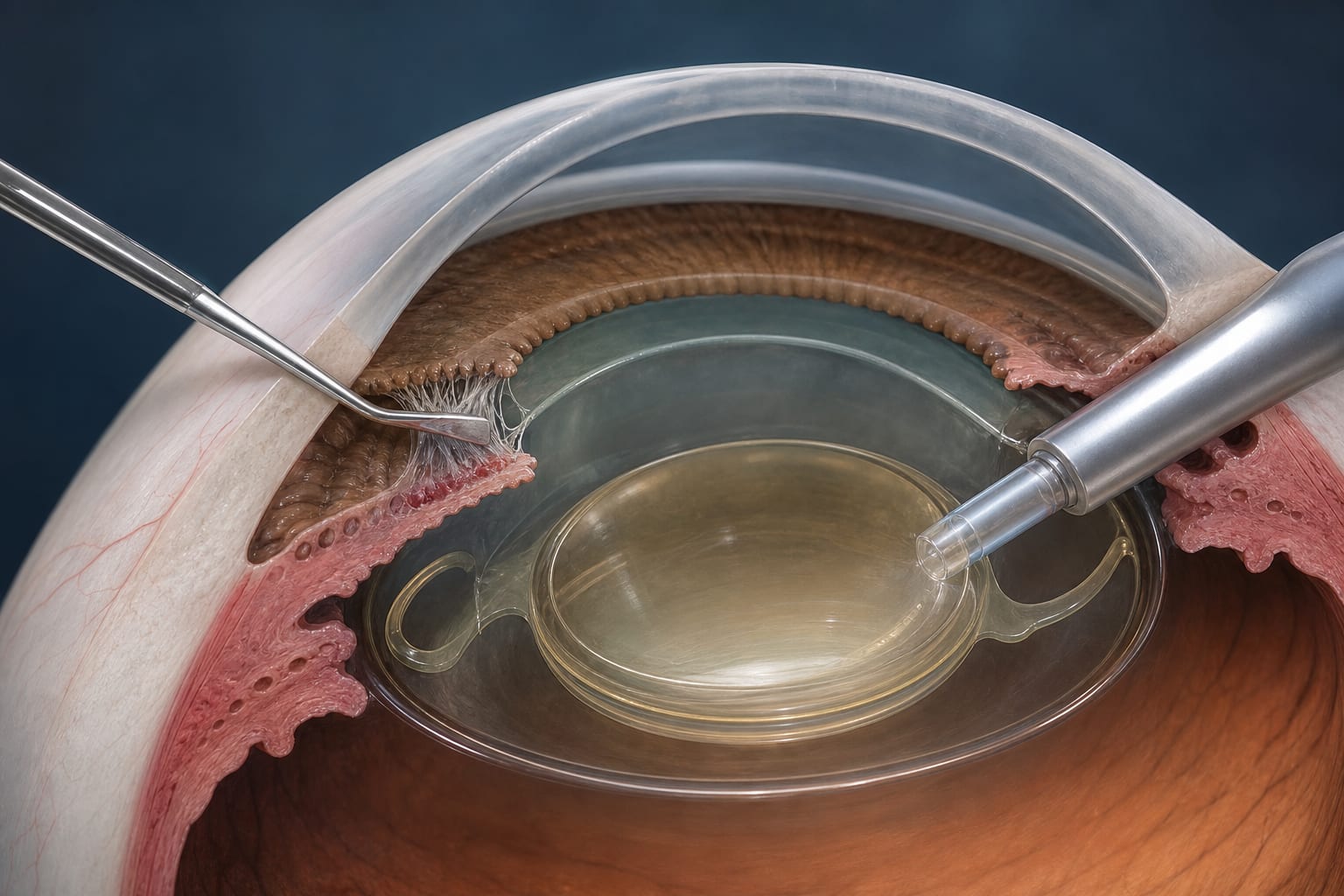
Clinical Report: The Gut–Eye Cataract Connection
Overview
This study identifies significant alterations in the gut microbiome and fecal metabolome of patients with age-related cataract (ARC). Levels of key anti-inflammatory short-chain fatty acids (SCFAs) were significantly reduced in ARC patients.
Background
Age-related cataract is the leading cause of blindness globally, affecting approximately 95 million individuals. While aging is the primary risk factor, systemic factors such as metabolism, oxidative stress, and inflammation are recognized as contributors to lens degeneration.
Data Highlights
| Parameter | ARC Patients | Healthy Controls |
|---|---|---|
| Microbial Diversity | No significant difference | No significant difference |
| SCFA Levels (Acetate, Propionate, Butyrate) | Significantly reduced | Normal levels |
| Distinct Metabolomic Signatures | 430 metabolites differed | N/A |
| Lipid Metabolites | Majority of changes | N/A |
Key Findings
- Patients with ARC exhibited a more dysbiotic microbiome profile compared to healthy controls.
- Distinct fecal metabolomic signatures were identified in ARC patients, particularly involving glycerophospholipid and choline metabolism.
- Levels of anti-inflammatory SCFAs were significantly reduced in ARC patients.
- Microbial depletion correlated with impaired fermentation activity and reduced SCFA production.
- Altered lipid metabolism and reduced SCFA signaling may contribute to chronic inflammation and oxidative stress.
Clinical Implications
The findings suggest that gut microbiome alterations may play a role in cataract pathogenesis, highlighting the potential for microbiome-targeted interventions. Future research could explore the utility of stool-based biomarkers for non-invasive cataract risk assessment.
Conclusion
This study provides preliminary evidence supporting the gut-eye axis in age-related cataract, warranting further investigation into the relationship between gut health and ocular diseases.
Related Resources & Content
- Gut microbiota dysbiosis and altered fecal metabolome in patients with age-related cataract, Scientific Reports, 2026 -- Gut microbiota dysbiosis and altered fecal metabolome in patients with age-related cataract
- Ophthalmology Management — The Complex Relationship Between Cataract and Diabetic Eye Disease
- Ophthalmology Management — Visionaries and Educators
- Journal of Medical Internet Research (JMIR) — Image-Based Deep Learning for Cataract Diagnosis: Systematic Review and Meta-Analysis
- Optometric Management — CLINICAL: Glaucoma
- The Complex Relationship Between Cataract and Diabetic Eye Disease
- Visionaries and Educators
- Recommendations | Cataracts in adults: management | Guidance | NICE
- Frontiers | Intracameral moxifloxacin for endophthalmitis prophylaxis after cataract surgery: a systematic review and meta-analysis
- Gut microbiota dysbiosis and altered fecal metabolome in patients with age-related cataract | Scientific Reports
Based on findings from:
The Gut–Eye Cataract Connection
The Ophthalmologist, 2026.
https://theophthalmologist.com/issues/2026/articles/july/the-gut-eye-cataract-connection/
This content is an AI-generated, fully rewritten summary based on a published scholarly article. It does not reproduce the original text and is not a substitute for the original publication. Readers are encouraged to consult the source for full context, data, and methodology.