Evaluation of Unilateral Biportal Endoscopy versus Minimally Invasive Transforaminal Lumbar Interbody Fusion for Lumbar Spinal Brucellosis Treatment
-
By
-
Cao Rui
-
Yin Ming
-
June 1, 2026
Clinical Report: Evaluation of UBE-TLIF vs MIS-TLIF for Lumbar Spinal Brucellosis
Overview
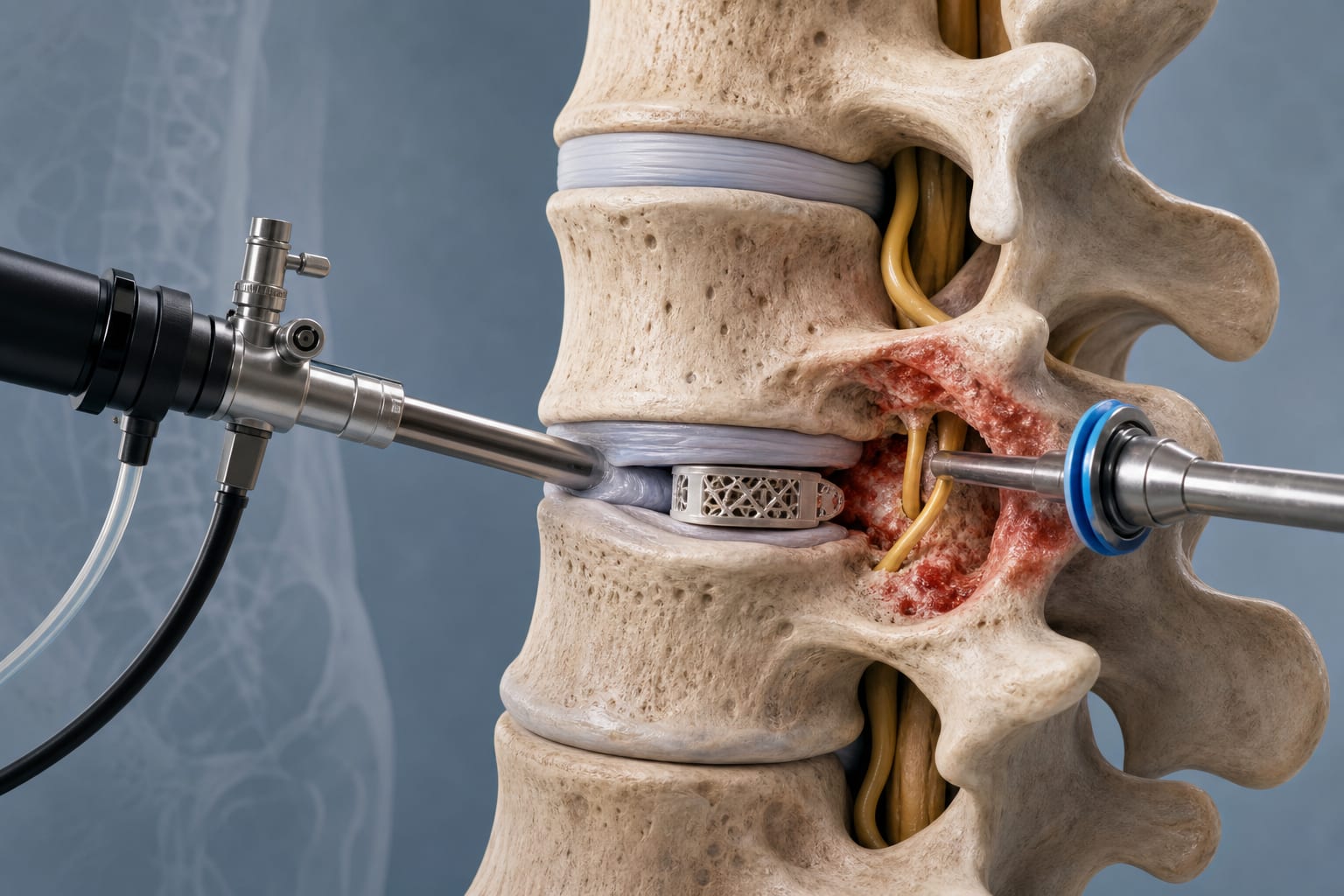
This study compares the clinical efficacy and safety of unilateral biportal endoscopy-assisted transforaminal lumbar interbody fusion (UBE-TLIF) and minimally invasive transforaminal lumbar interbody fusion (MIS-TLIF) in treating lumbar spinal brucellosis. UBE-TLIF demonstrated advantages in operative time, blood loss, and early postoperative pain control.
Background
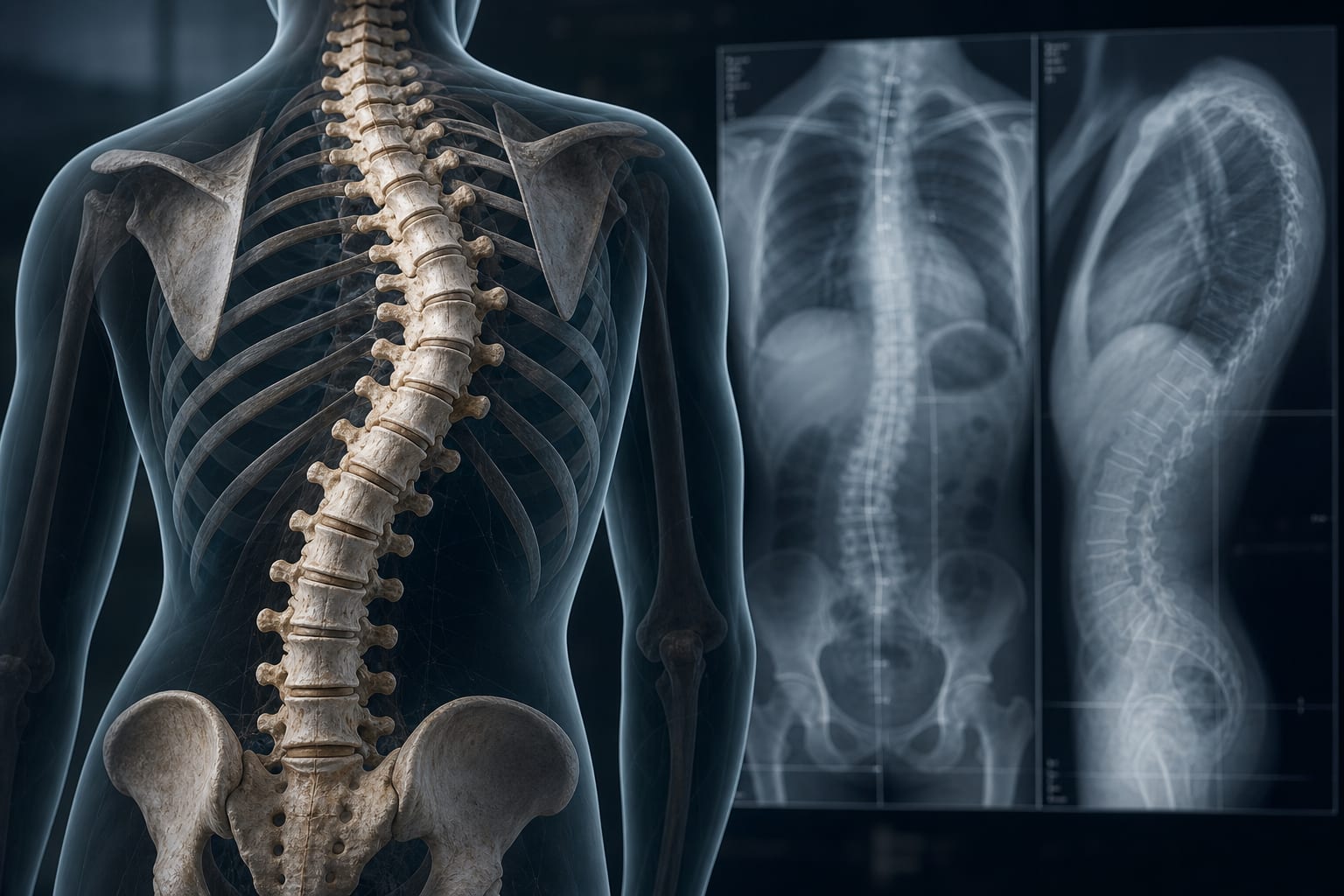
Lumbar spinal brucellosis is a significant complication of brucellosis, characterized by vertebral destruction and nerve compression, necessitating surgical intervention when conservative treatment fails. Traditional open surgery poses risks of high trauma and complications, prompting the exploration of minimally invasive techniques like UBE-TLIF and MIS-TLIF, which promise reduced recovery times and improved outcomes.
Data Highlights
| Parameter | UBE-TLIF | MIS-TLIF |
|---|---|---|
| Operative Time | Shorter | Longer |
| Estimated Blood Loss | Less | More |
| Incision Length | Smaller | Larger |
| Hospital Stay | Shorter | Longer |
| Bone Fusion Rate | 96.88% | 93.33% |
| MacNab Excellent/Good Rate | 93.75% | 90.00% |
Key Findings
- UBE-TLIF resulted in significantly shorter operative time and hospital stay compared to MIS-TLIF.
- UBE-TLIF had less intraoperative blood loss and smaller incision lengths.
- Both surgical approaches showed significant improvements in pain scores and functional outcomes postoperatively.
- Complication rates were comparable between UBE-TLIF and MIS-TLIF.
- No recurrence or implant-related complications were reported in either group.
Clinical Implications
Surgeons may consider UBE-TLIF as a preferred option for treating lumbar spinal brucellosis due to its minimally invasive benefits, including reduced operative time and blood loss. Both surgical techniques are effective, but UBE-TLIF may enhance early postoperative recovery and pain management.
Conclusion
UBE-TLIF and MIS-TLIF are both effective and safe surgical options for lumbar spinal brucellosis, with UBE-TLIF offering distinct advantages in terms of surgical trauma and recovery. Further studies may help refine surgical strategies for optimal patient outcomes.
Related Resources & Content
- Frontiers in Surgery, 2026 -- Comparative study of two minimally invasive transforaminal interbody fusions for single-segment lumbar disc herniation: a retrospective study
- Frontiers in Surgery, 2026 -- Comparative analysis of single vs. double cage insertion in unilateral biportal endoscopic lumbar interbody fusion: clinical and radiological outcomes
- Impact of Obesity and Body Mass Index Variability on Clinical Outcomes and Safety in Biportal Endoscopic Lumbar Decompression: A Comparative Cohort Analysis
- Evaluation of Anterior versus Posterior Surgical Approaches for Debridement, Interbody Fusion, and Stabilization in Mono-segment Lumbar Spine Tuberculosis Treatment
- National Guidelines for the Management of Priority Zoonotic Diseases, 2025
- Comparative Efficacy and Safety of Minimally Invasive, Full-Endoscopic, and Biportal Transforaminal Lumbar Interbody Fusion for Lumbar Degenerative Diseases: A Network Meta-Analysis - PMC
- Efficacy of spinal fusion in Brucella spondylitis: a systematic review - PMC
- Table of contents
- Comparative Efficacy and Safety of Minimally Invasive, Full-Endoscopic, and Biportal Transforaminal Lumbar Interbody Fusion for Lumbar Degenerative Diseases: A Network Meta-Analysis - PMC
- Efficacy of spinal fusion in Brucella spondylitis: a systematic review - PMC
This content is an AI-generated, fully rewritten summary based on a published scholarly article. It does not reproduce the original text and is not a substitute for the original publication. Readers are encouraged to consult the source for full context, data, and methodology.