Evolutionary Conservation and Energy-Dependent Responses of CART in Fish
Overview
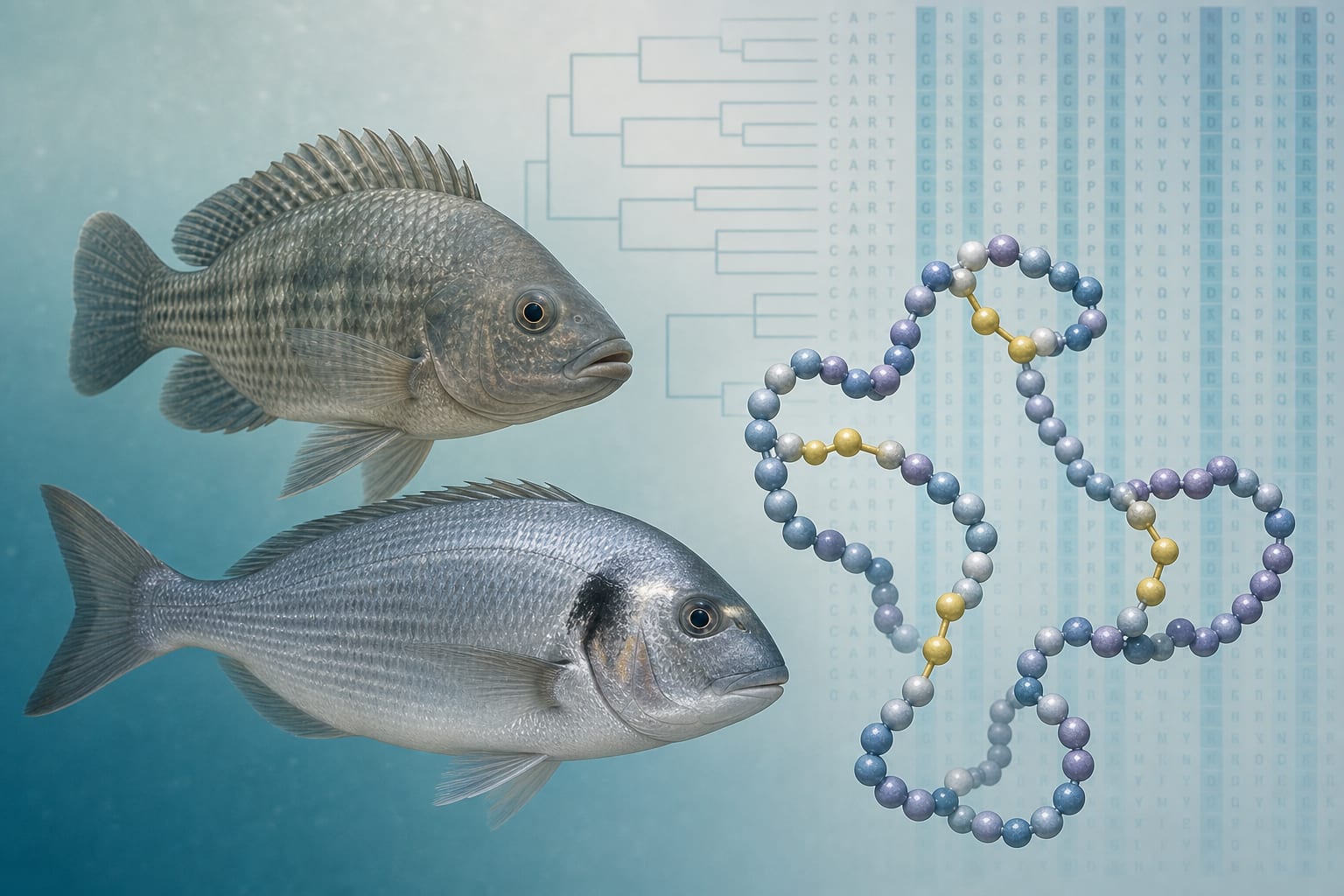
This study identifies multiple cocaine- and amphetamine-regulated transcript (Cart) genes in Nile tilapia and gilthead seabream, revealing high sequence conservation with other vertebrates. The research demonstrates species-specific responses of Cart to energy status.
Background
CART is a neuropeptide that plays a crucial role in appetite regulation and energy homeostasis in vertebrates. Understanding the genetic and functional diversity of Cart in fish species is essential for comparative neuroendocrine research.
Data Highlights
Species
Number of cart Genes
Main Expression Site
Nile tilapia
7
Brain and other tissues
Gilthead seabream
6
Brain and other tissues
Key Findings
Seven cart genes identified in Nile tilapia and six in gilthead seabream.
High sequence conservation of Cart genes with other vertebrates.
Predicted mature peptide sequences retain cysteine residues critical for structure.
Short- and long-term food deprivation affects midbrain cart expression differently in each species.
Species-specific responses of Cart to energy status support functional partitioning in the CART system.
Clinical Implications
The findings highlight the importance of understanding the genetic basis of appetite regulation in aquaculture species.
Conclusion
This research enhances the understanding of Cart gene diversity and its role in energy regulation in fish.