Therapeutic Agents for Bone Health in Advanced Castration-Resistant Prostate Cancer
Overview
This study evaluates the use of bone-modifying agents (BMAs) in patients with metastatic castration-resistant prostate cancer (mCRPC) and bone metastases. It reports that 56.6% of patients received BMAs, while 43.4% did not, despite clinical guidelines recommending their use.
Background
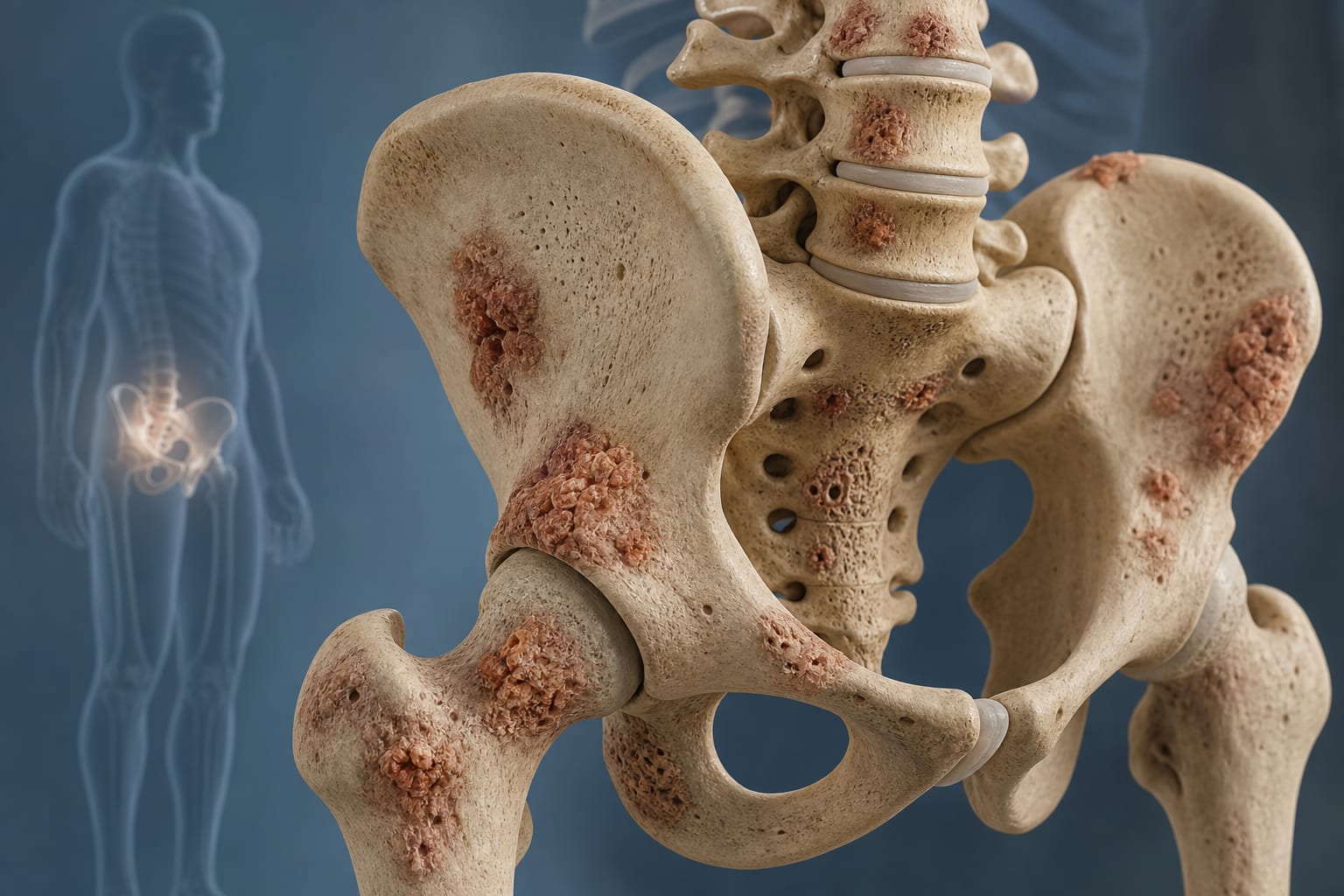
Bone metastases are prevalent in mCRPC, affecting over 90% of patients and leading to a high risk of skeletal-related events (SREs). Androgen deprivation therapy exacerbates bone loss, increasing the risk of SREs. BMAs like denosumab and zoledronic acid are effective in reducing SREs, but their use remains limited.
Data Highlights
Year
BMA Receipt (%)
2013
57.6
2019
55.5
2024
44.4
Key Findings
56.6% of patients with mCRPC received BMAs, while 43.4% did not.
Median time from mCRPC diagnosis to BMA initiation was 39 days.
54.1% of BMA recipients started treatment within 30 days of diagnosis.
Denosumab use decreased from 60.1% in 2013 to 53.2% in 2024, while zoledronic acid use increased from 38.0% to 46.8%.
Patients receiving BMAs were more likely to be treated in community practices and have commercial insurance.
Clinical Implications
The findings highlight the discrepancy between clinical guidelines recommending BMAs for mCRPC patients and the actual rates of BMA administration.
Conclusion
This study highlights the ongoing gap in BMA utilization among mCRPC patients despite established guidelines.
by Zeynep Irem Ozay, Yeonjung Jo, Georges Gebrael, Micah Ostrowski, Vinay Mathew Thomas, Haoran Li, Ryon P. Graf, Soumyajit Roy, Benjamin L. Maughan, Avirup Guha, Irbaz Bin Riaz, Emmanuel S. Antonarakis, Rana R. McKay, Neeraj Agarwal, Umang Swami