Precision medicine decision-making under pharmacogenomics in nursing: realizing value from limited evidence to scaled clinical pathways - Report - MDSpire
Advertisement
Precision medicine decision-making under pharmacogenomics in nursing: realizing value from limited evidence to scaled clinical pathways
Clinical Report: Enhancing Nursing Decision-Making in Precision Medicine Through Pharmacogenomics
Background
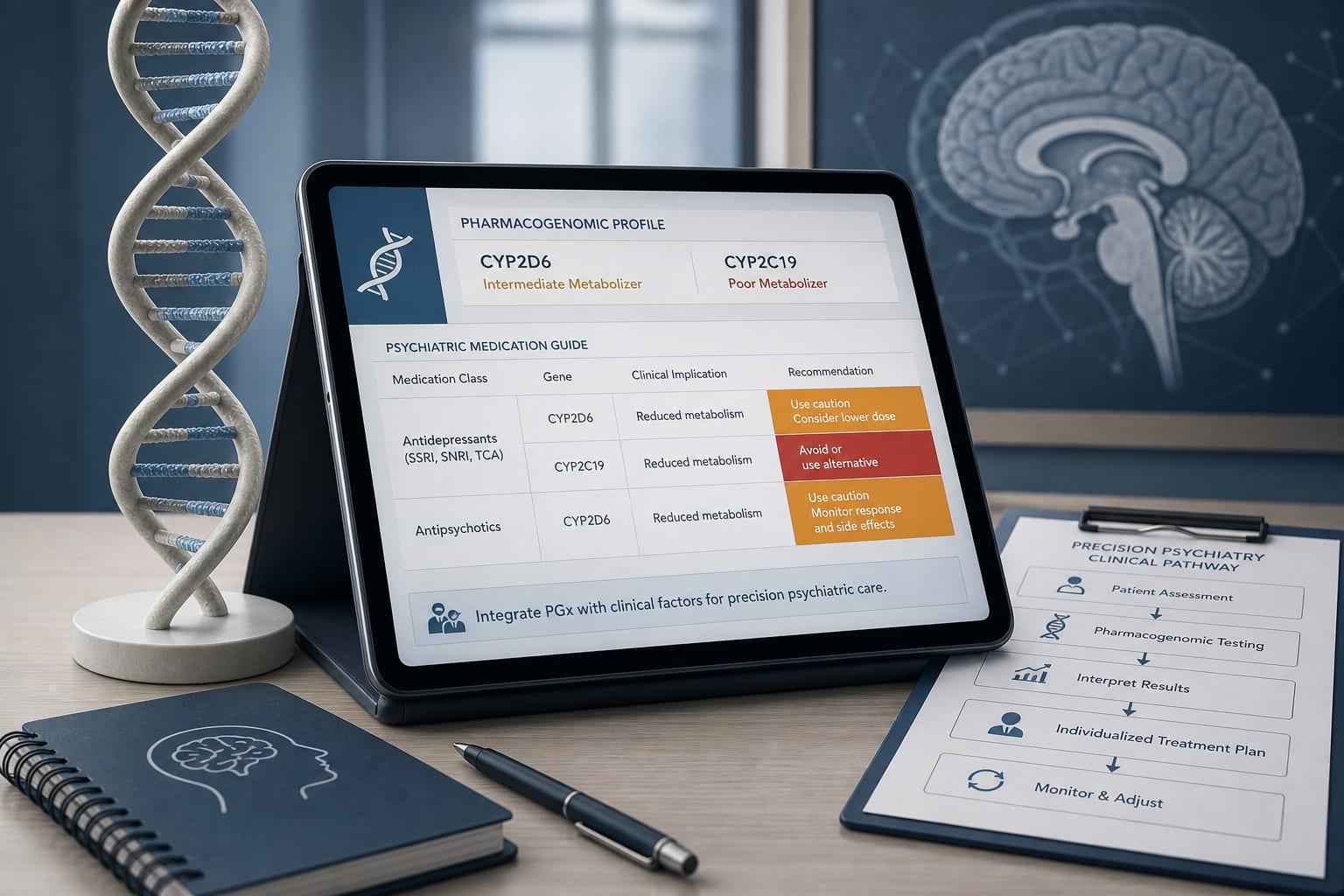
Inter-individual variability in treatment response poses significant challenges in psychiatric care, contributing to prolonged illness and increased healthcare costs. Pharmacogenomics offers a strategy to tailor antidepressant and antipsychotic therapies based on genetic profiles. However, the clinical application of PGx remains inconsistent across different drug classes and patient populations.
Data Highlights
No numerical data available in the provided source material.
Key Findings
Pharmacogenomics is most effective as an adjunctive tool for selected antidepressants and antipsychotics.
Pooled estimates from depression trials show modest improvements in remission or response, but effects vary significantly.
Patients with prior treatment failures or complex polypharmacy are more likely to benefit from PGx testing.
Routine PGx testing for all psychiatric patients is not supported by current evidence.
Nurses play a crucial role in medication history-taking, patient education, and adherence support in the context of PGx.
Clinical Implications
Nurses can contribute meaningfully to medication history-taking, patient education, sample logistics, adherence support, and structured monitoring. Implementation in routine care requires attention to workforce capabilities and the integration of genetic information into electronic health records.
Conclusion
Pharmacogenomics should be integrated into a broader precision-prescribing framework in psychiatry.