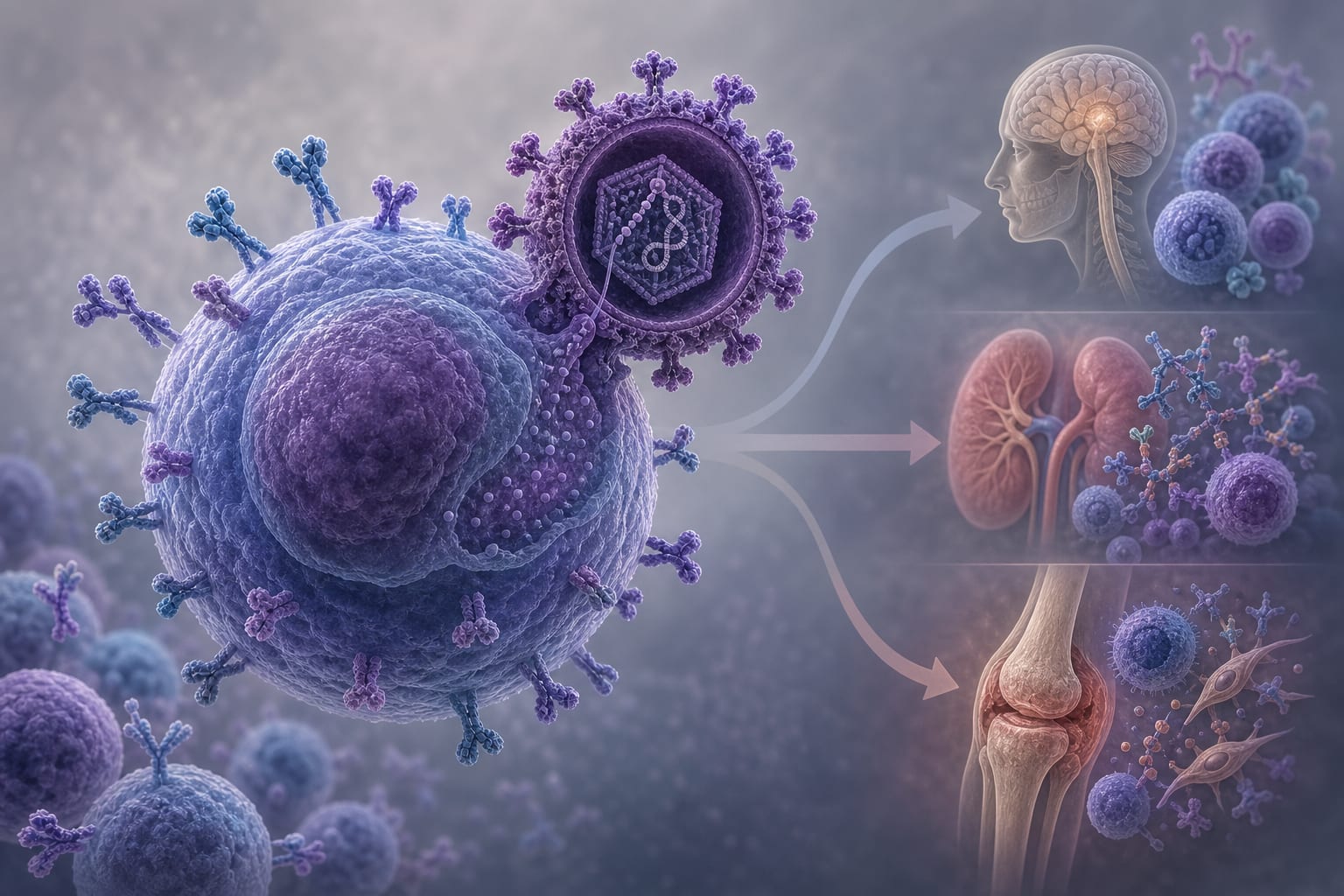
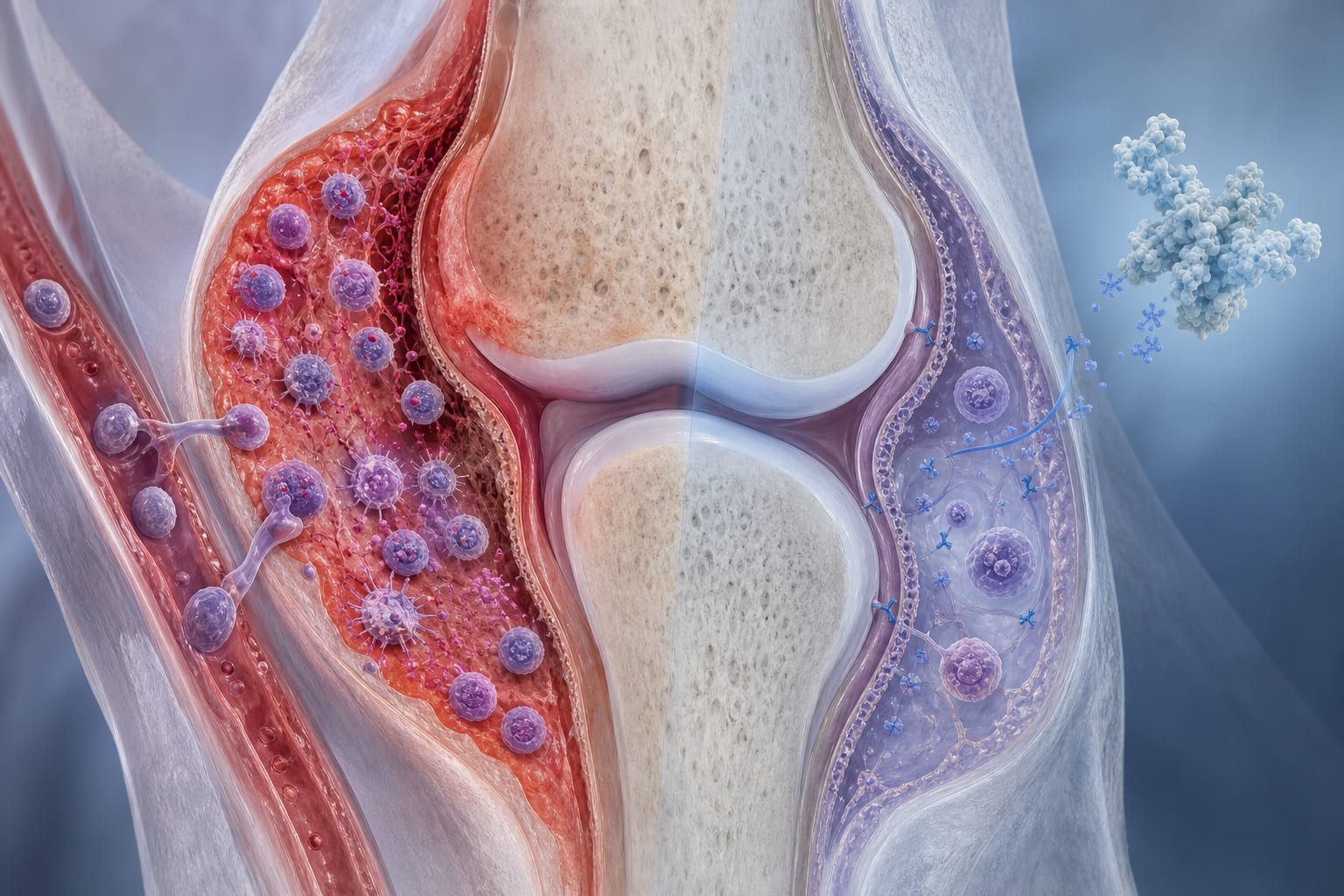
Forecasting Anti-CCP Positivity and Early Onset of Rheumatoid Arthritis Using Routine Laboratory Data: A Machine Learning Approach with SHAP Interpretation
-
By
-
Juan Wang
-
Jiaqing Chen
-
Kaiwen Wang
-
June 29, 2026
Forecasting Anti-CCP Positivity and Early Onset of Rheumatoid Arthritis
Overview
This study evaluates the predictive capabilities of machine learning models using routine laboratory data to forecast anti-CCP positivity and early rheumatoid arthritis (RA) onset. Logistic regression achieved an accuracy of 84.8% and an AUC of 0.857 based on the study results.
Background
Rheumatoid arthritis (RA) is a prevalent autoimmune disease that can lead to significant joint damage and disability if not diagnosed early. Traditional diagnostic methods often rely on single autoantibody markers, which may overlook many patients. This study explores the potential of machine learning to integrate multiple laboratory parameters for improved early detection of RA.
Data Highlights
| Model | Accuracy | AUC | F1 Score | MCC |
|---|---|---|---|---|
| Logistic Regression | 0.848 | 0.857 | 0.910 | 0.441 |
| Transformer | N/A | 0.812 | N/A | N/A |
Key Findings
- Logistic regression achieved the best overall performance metrics for predicting early RA.
- Anti-CCP positivity and early RA onset were defined as dual binary prediction targets.
- ESR and CRP were identified as key positive predictive drivers, while albumin served as a protective factor.
- The SHAP analysis provided mechanistic interpretability, revealing interactions between laboratory parameters.
- Dependence plots indicated a non-linear protective threshold effect of albumin.
Clinical Implications
The findings indicate that integrating routine laboratory parameters with machine learning can enhance early RA risk prediction.
Conclusion
The study demonstrates the feasibility of using machine learning to predict early RA onset and anti-CCP positivity.
Related Resources & Content
- Greener et al., Clinical Rheumatology, 2026 -- Evaluation of Automated Anti-CCP-2 and Anti-CCP-3 Antibody Tests for Diagnosing Rheumatoid Arthritis
- Huang et al., Clinical Rheumatology, 2026 -- Reevaluating the Predictive Value of Disease Activity Scores in Early Rheumatoid Arthritis Prognostic Models
- Zhang et al., Frontiers in Medicine, 2026 -- A machine learning-based classification model for interstitial lung disease in rheumatoid arthritis
- Clinical Rheumatology — Association of Receptor Activator of Nuclear Factor Kappa-B Ligand (RANKL) with Joint Damage in Early Rheumatoid Arthritis, Excluding Sclerostin and Gene Polymorphisms
- 2010 Rheumatoid arthritis classification criteria: An American College of Rheumatology/European League Against Rheumatism collaborative initiative
- Autoantibodies as predictors of progression to rheumatoid arthritis: a systematic review and meta-analysis
- EULAR recommendations for the management of rheumatoid arthritis with synthetic and biologic disease-modifying antirheumatic drugs: 2025 update
- Diagnostic accuracy of the neutrophil-to-lymphocyte ratio and the platelet-to-lymphocyte ratio in rheumatoid arthritis: a systematic review and meta-analysis - PubMed
- Abatacept in individuals at high risk of rheumatoid arthritis (APIPPRA): a randomised, double-blind, multicentre, parallel, placebo-controlled, phase 2b clinical trial - PubMed
- Which arthralgia patients benefit most in reduction of subclinical joint inflammation by methotrexate treatment: results from the TREAT EARLIER trial - PMC
- TRIPOD+AI statement: updated guidance for reporting clinical prediction models that use regression or machine learning methods | The BMJ
Based on findings from:
Predicting anti-CCP positivity and early rheumatoid arthritis onset from routine laboratory parameters: a SHAP-explained machine learning pipeline
Juan Wang, Jiaqing Chen, Kaiwen Wang. Frontiers In Medicine, 2026.
https://www.frontiersin.org/journals/medicine/articles/10.3389/fmed.2026.1834291/full
This content is an AI-generated, fully rewritten summary based on a published scholarly article. It does not reproduce the original text and is not a substitute for the original publication. Readers are encouraged to consult the source for full context, data, and methodology.