Exploring the Role of Natural Products in Treating Pediatric Psoriasis: Focus on the Immune Microenvironment
-
By
-
Zitong Wang
-
Jingyu Zhang
-
Suwen Liu
-
Hongxiang Chen
-
June 24, 2026
Clinical Report: Exploring the Role of Natural Products in Treating Pediatric Psoriasis
Overview
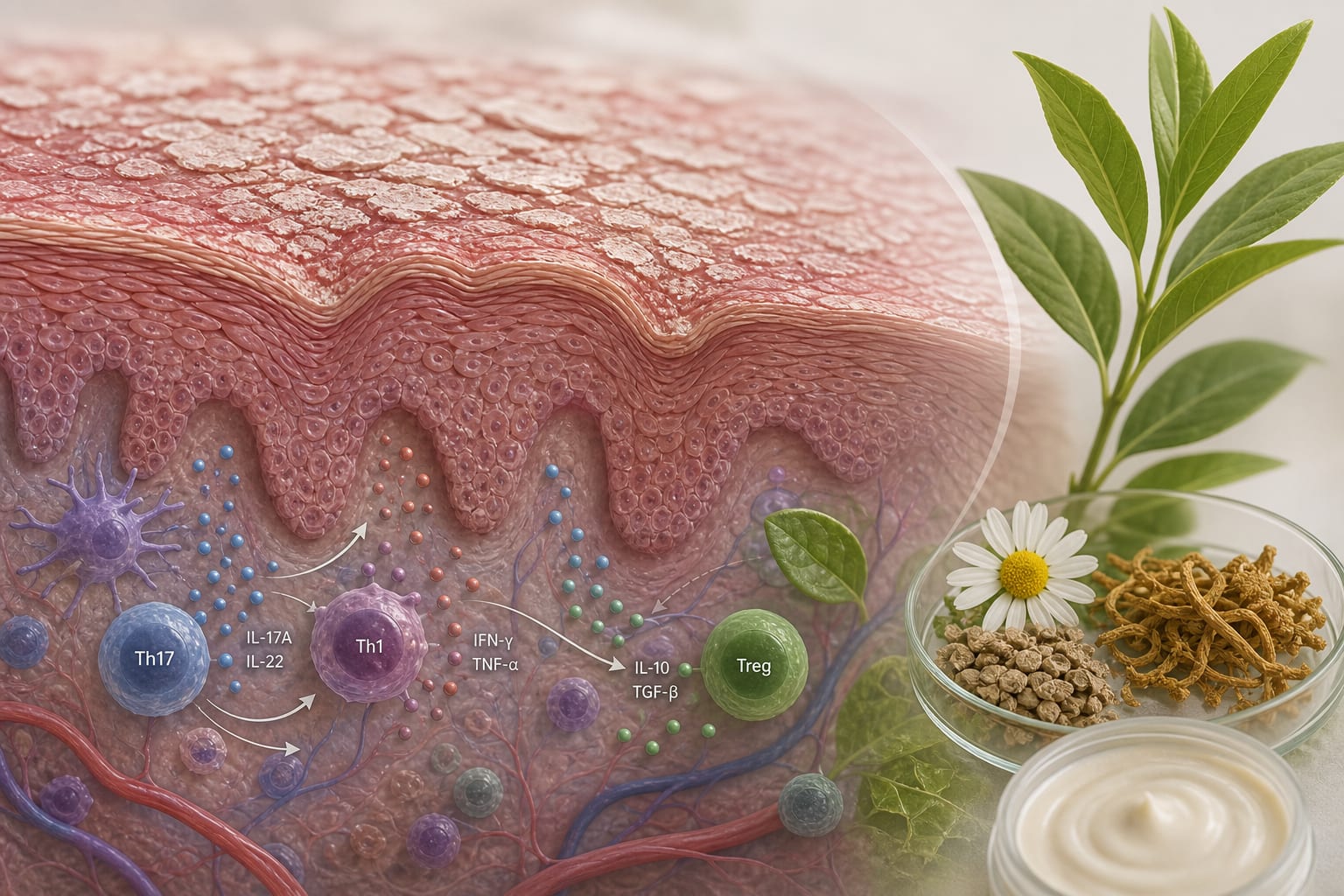
This review highlights the role of natural products in modulating the immune microenvironment in pediatric psoriasis.
Background
Psoriasis is a chronic inflammatory skin disorder that often begins in childhood, affecting one-third of cases. The unique challenges in treating pediatric psoriasis necessitate a focus on safety and long-term management. Current therapies, including biologics, face barriers such as cost and limited long-term safety data.
Data Highlights
No numerical data provided in the source material.
Key Findings
- Natural products exhibit multi-target and multi-pathway actions with favorable safety profiles.
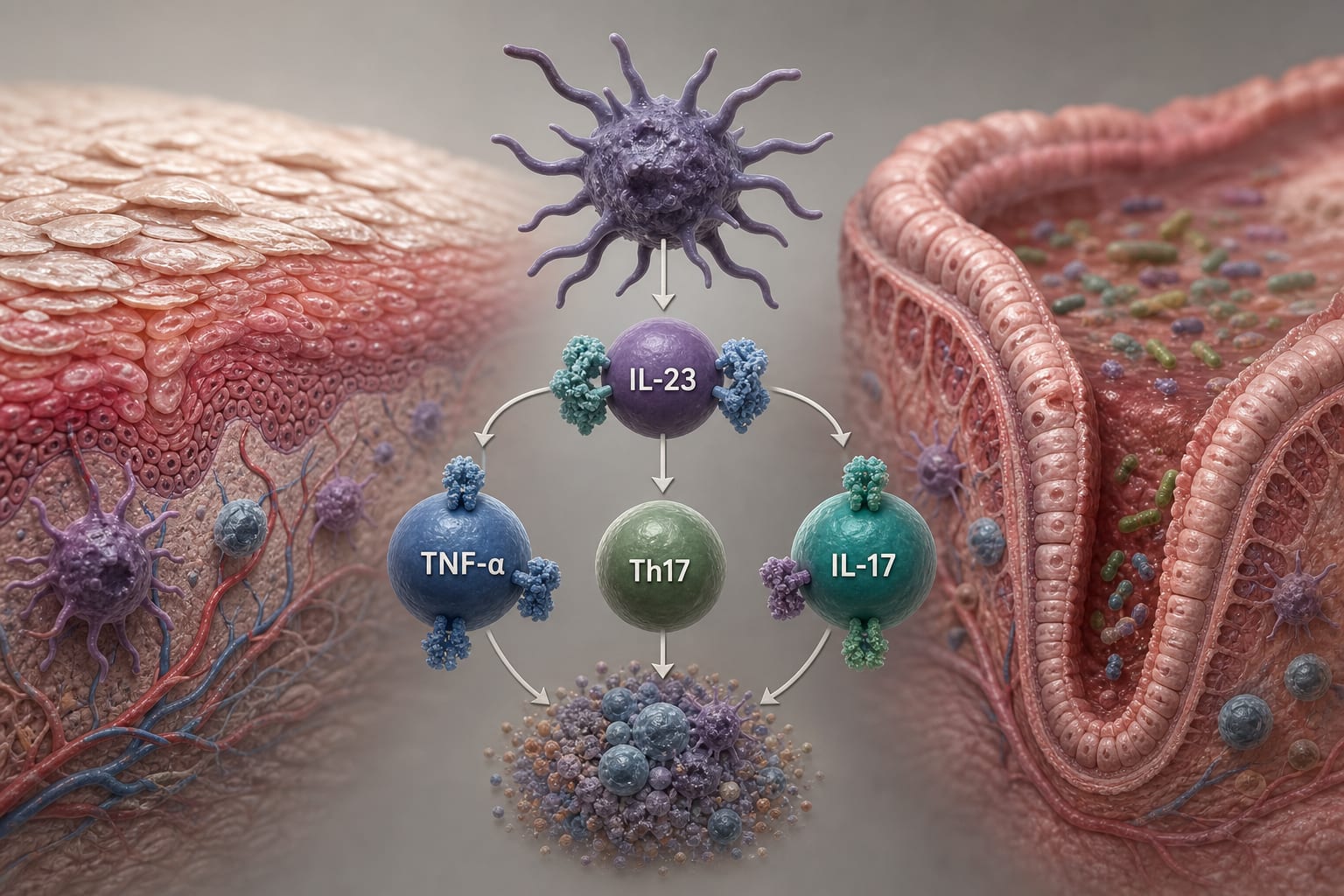
- They can modulate T cell subsets, cytokine networks, and innate immune cell functions in psoriatic lesions.
- Evidence from adult studies can be cautiously extrapolated to pediatric contexts, but pediatric-specific validation is necessary.
- Current therapeutic strategies include topical agents, phototherapy, and systemic drugs.
- Natural products may offer pleiotropic effects by targeting multiple pathways involved in psoriasis pathogenesis.
Clinical Implications
Ongoing research is essential to validate the efficacy and safety of these alternatives in children.
Conclusion
Natural products may contribute to the development of treatments for pediatric psoriasis.
Related Resources & Content
- Frontiers in Immunology, 2026 -- Navigating renal safety in the biologic treatment of psoriasis: from immunologic mechanisms to clinical practice
- conexiant, 2023 -- UVB and Psoriasis: More Than Immunosuppression
- Frontiers in Immunology, 2026 -- Psoriasis as a systemic inflammatory disease: an immune set-point framework for comorbidities and relapse
- Dermatology and Therapy, 2023 -- Summary of Research: Apremilast Improves Skin Outcomes in Pediatric Plaque Psoriasis of Shorter Disease Duration: 52-Week Results from the SPROUT Phase 3 Trial
- Frontiers | Immune cells in the epithelial immune microenvironment of psoriasis: emerging therapeutic targets
- Joint American Academy of Dermatology-National Psoriasis Foundation guidelines of care for the management and treatment of psoriasis in pediatric patients
- Consensus Statement From the Spanish Academy of Dermatology and Venereology (AEDV) Psoriasis Working Group
- Psoriasis systemic treatment: EuroGuiDerm guideline
- Frontiers | Immune cells in the epithelial immune microenvironment of psoriasis: emerging therapeutic targets
- Efficacy and safety of ixekizumab in a phase III, randomized, double‐blind, placebo‐controlled study in paediatric patients with moderate‐to‐severe plaque psoriasis (IXORA‐PEDS) | British Journal of Dermatology | Oxford Academic
- Long-term Efficacy and Safety of Up to 108 Weeks of Ixekizumab in Pediatric Patients With Moderate to Severe Plaque Psoriasis: The IXORA-PEDS Randomized Clinical Trial - PMC
- TALTZ (ixekizumab) injection, for subcutaneous use
- Secukinumab demonstrates high efficacy and a favourable safety profile in paediatric patients with severe chronic plaque psoriasis: 52‐week results from a Phase 3 double‐blind randomized, controlled trial - PMC
- Long‐term safety and efficacy of secukinumab in paediatric severe plaque psoriasis: 236‐week, Phase 3 trial results - PMC
- Efficacy and safety of apremilast in pediatric patients with moderate-to-severe plaque psoriasis: 16-week results from SPROUT, a randomized controlled trial - PubMed
- Complementary and Alternative Therapies for Psoriasis - PubMed
- Skin Conditions and Complementary Health Approaches: What the Science Says | NCCIH
- Efficacy of indigo naturalis nanofibrous patches in the treatment of chronic plaque psoriasis: a 4-week prospective, randomized, semi-compartmental paired, positive drug-controlled trial - PubMed
- Review of the Efficacy and Safety of Topical Mahonia aquifolium for the Treatment of Psoriasis and Atopic Dermatitis - PMC
Based on findings from:
The therapeutic potential of natural products for pediatric psoriasis: targeting the immune microenvironment
Zitong Wang, Jingyu Zhang, Suwen Liu, Hongxiang Chen. Frontiers In Pediatrics, 2026.
https://www.frontiersin.org/journals/pediatrics/articles/10.3389/fped.2026.1834627/full
This content is an AI-generated, fully rewritten summary based on a published scholarly article. It does not reproduce the original text and is not a substitute for the original publication. Readers are encouraged to consult the source for full context, data, and methodology.