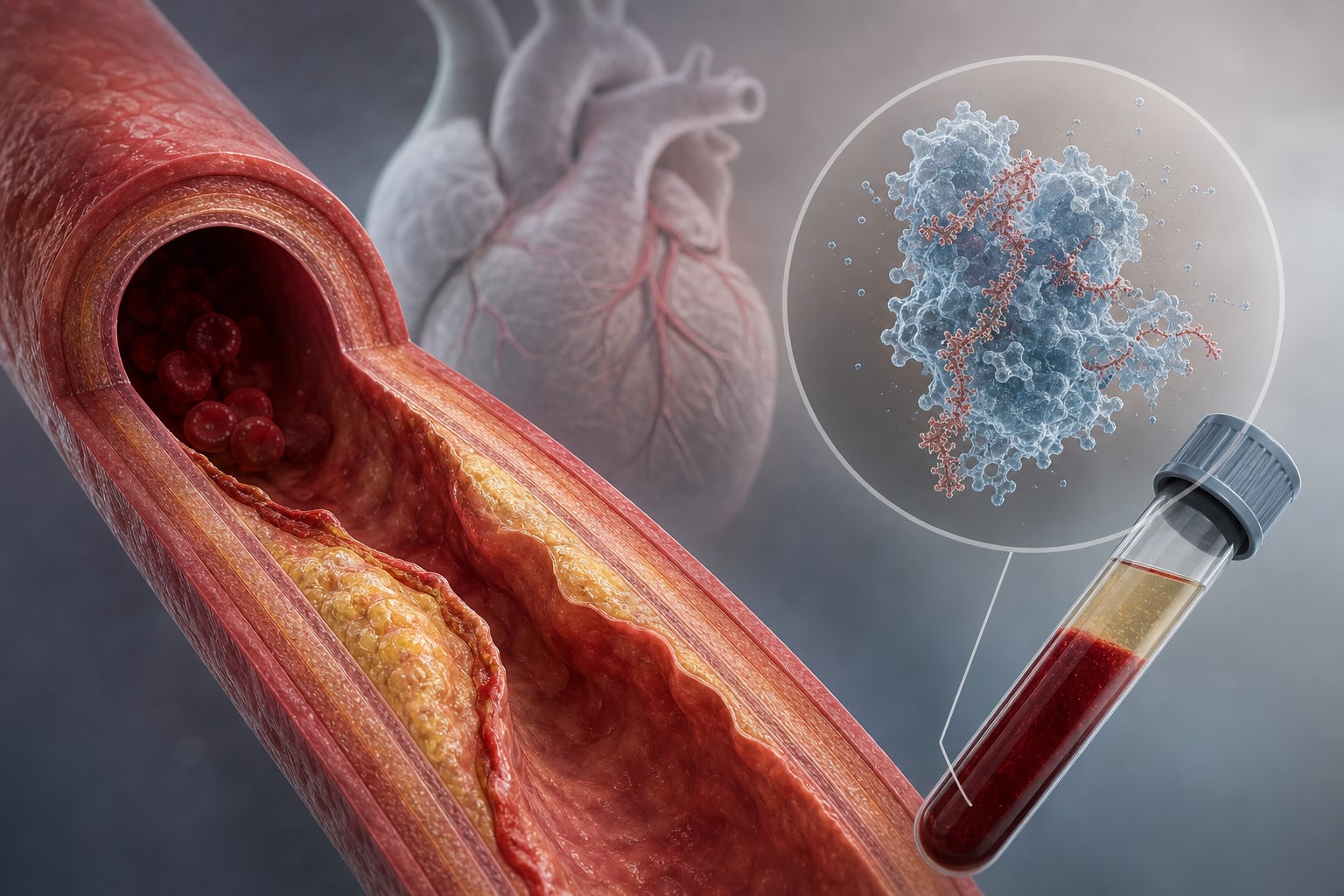
Serum Levels of Endocan in Patients with Non-ST-Segment Elevation Myocardial Infarction
Overview
This study investigates serum endocan levels in patients with NSTEMI, revealing significantly higher levels in those with clinically significant coronary stenosis. Endocan is independently associated with the severity of coronary stenosis, suggesting its potential role as a biomarker for endothelial dysfunction.
Background
Endothelial dysfunction and inflammation are critical in the pathophysiology of acute coronary syndrome (ACS). Identifying reliable biomarkers for assessing coronary artery disease (CAD) severity is essential for effective patient management. Endocan, a novel biomarker linked to endothelial activation, may provide insights into the severity of coronary stenosis in NSTEMI patients.
Data Highlights
Parameter
Clinically Significant Stenosis (n=40)
Non-Significant Stenosis (n=41)
p-value
Serum Endocan Levels (ng/L)
Higher
Lower
< 0.001
Mean Age
Higher
Lower
0.038
BMI
Higher
Lower
0.042
CRP
Higher
Lower
< 0.001
WBC
Higher
Lower
0.011
NLR
Higher
Lower
0.038
Key Findings
Serum endocan levels are significantly higher in NSTEMI patients with clinically significant coronary stenosis.
Endocan is independently associated with angiographic severity of coronary stenosis.
High-sensitivity troponin levels do not effectively differentiate between critical and non-significant coronary stenosis.
The endocan cut-off value for distinguishing clinically significant stenosis is > 393.1 ng/L.
Systemic factors such as age, diabetes, and smoking may elevate endocan levels.
Clinical Implications
Endocan may serve as a valuable biomarker for assessing endothelial dysfunction and coronary stenosis severity in NSTEMI patients. Clinicians should consider incorporating endocan levels into their diagnostic and risk stratification processes, although it should not replace established biomarkers like high-sensitivity troponin.
Conclusion
Elevated serum endocan levels in NSTEMI patients indicate a potential link to endothelial dysfunction and atherosclerotic burden. Further research is warranted to validate its clinical utility in routine practice.