Clinical Report: Utilizing Biliary Stenting as a Temporary Measure Prior to Cholecystectomy
Overview
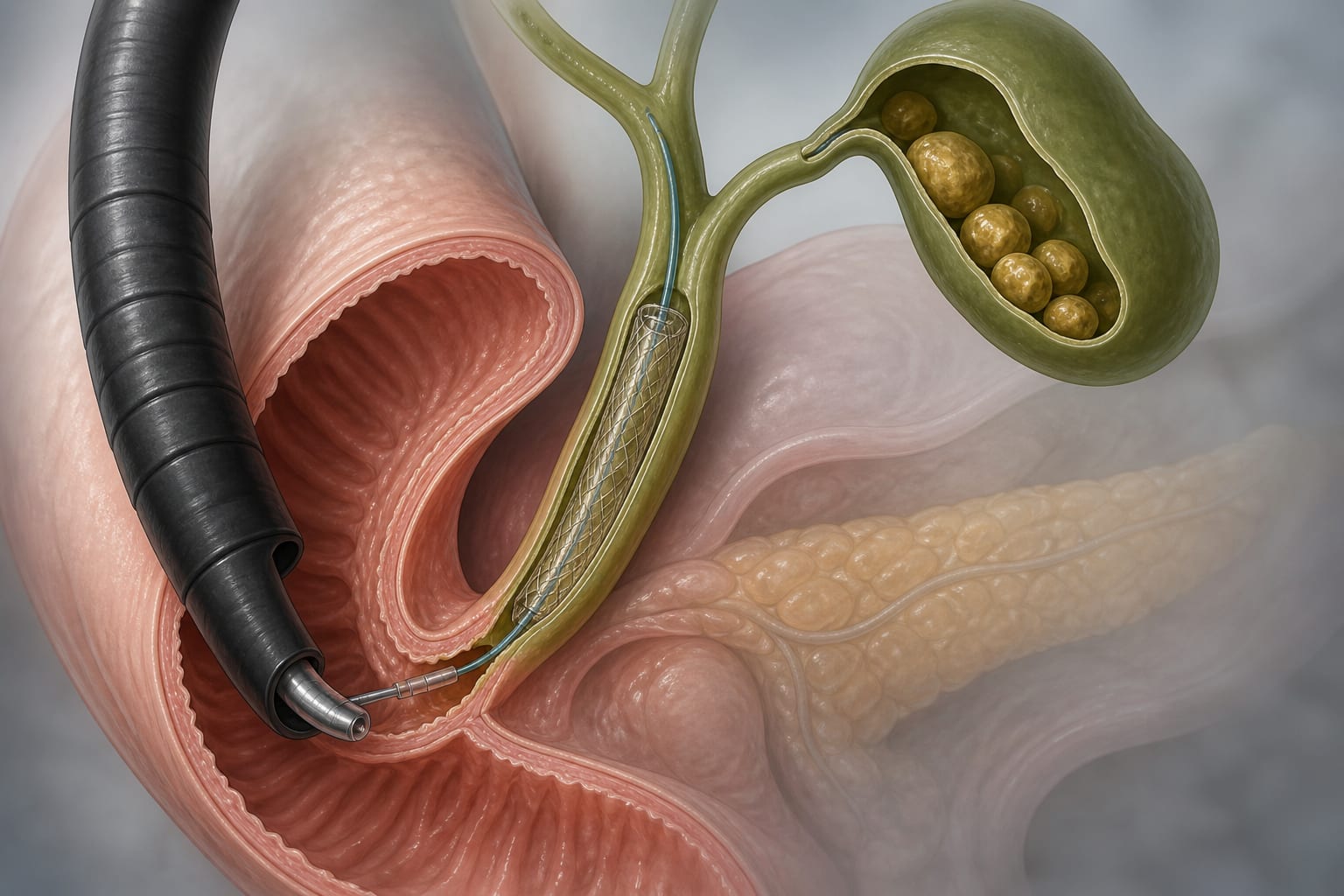
This study investigates the outcomes of patients with choledocholithiasis who underwent ERCP and biliary stent placement, comparing early versus delayed laparoscopic cholecystectomy.
Background
Choledocholithiasis is a common complication of gallstone disease, often requiring endoscopic or surgical intervention. The timing of laparoscopic cholecystectomy following endoscopic retrograde cholangiopancreatography (ERCP) remains debated, with guidelines recommending early intervention to reduce the risk of recurrent biliary events.
Data Highlights
No numerical data or trial data was provided in the source material.
Key Findings
Choledocholithiasis frequently leads to complications such as biliary colic and pancreatitis.
Early laparoscopic cholecystectomy is associated with lower risks of recurrent biliary events compared to delayed surgery.
Temporary biliary stents are often used to maintain bile drainage when stone clearance is incomplete.
Current literature inadequately addresses the impact of biliary stenting on the safety of delayed cholecystectomy.
This study focuses on patients with biliary stents to evaluate the outcomes of early versus delayed cholecystectomy.
Clinical Implications
Understanding the outcomes of delayed cholecystectomy in patients with biliary stents may inform clinical decision-making and individualized treatment strategies. This study aims to provide evidence-based insights into the management of choledocholithiasis.
Conclusion
The findings from this study will contribute to the understanding of the safety and feasibility of delayed cholecystectomy in patients with biliary stents, addressing a significant knowledge gap in current clinical practice.
by David Pinto, David Farkas, Lena Anthuber, Dmytro Vlasenko, Florian Sommer, Matthias Schrempf, Franz Poch, Christoph Römmele, Johannes Lauscher, Helmuth Messmann, Katharina Beyer, Michael Hoffmann
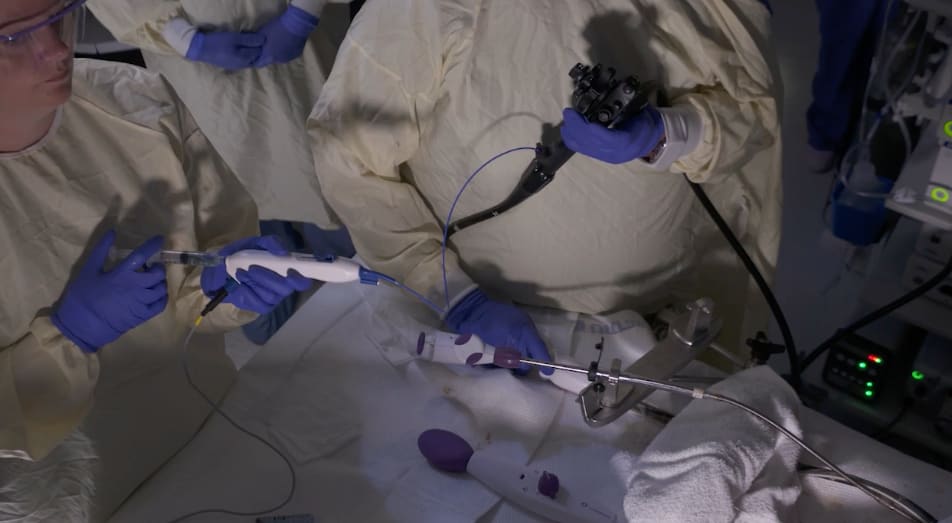
In this video Dr. Molham Abdulsamad of Geisinger Health demonstrates how Lumendi’s DiLumen™ C1 overtube and IgE Grasper improve access, stability and provide independent, multidirectional traction during resection of an ascending colon polyp adjacent to the hepatic flexure.