Clinical Report: Utilizing Artificial Intelligence in Triple-Negative Breast Cancer
Overview
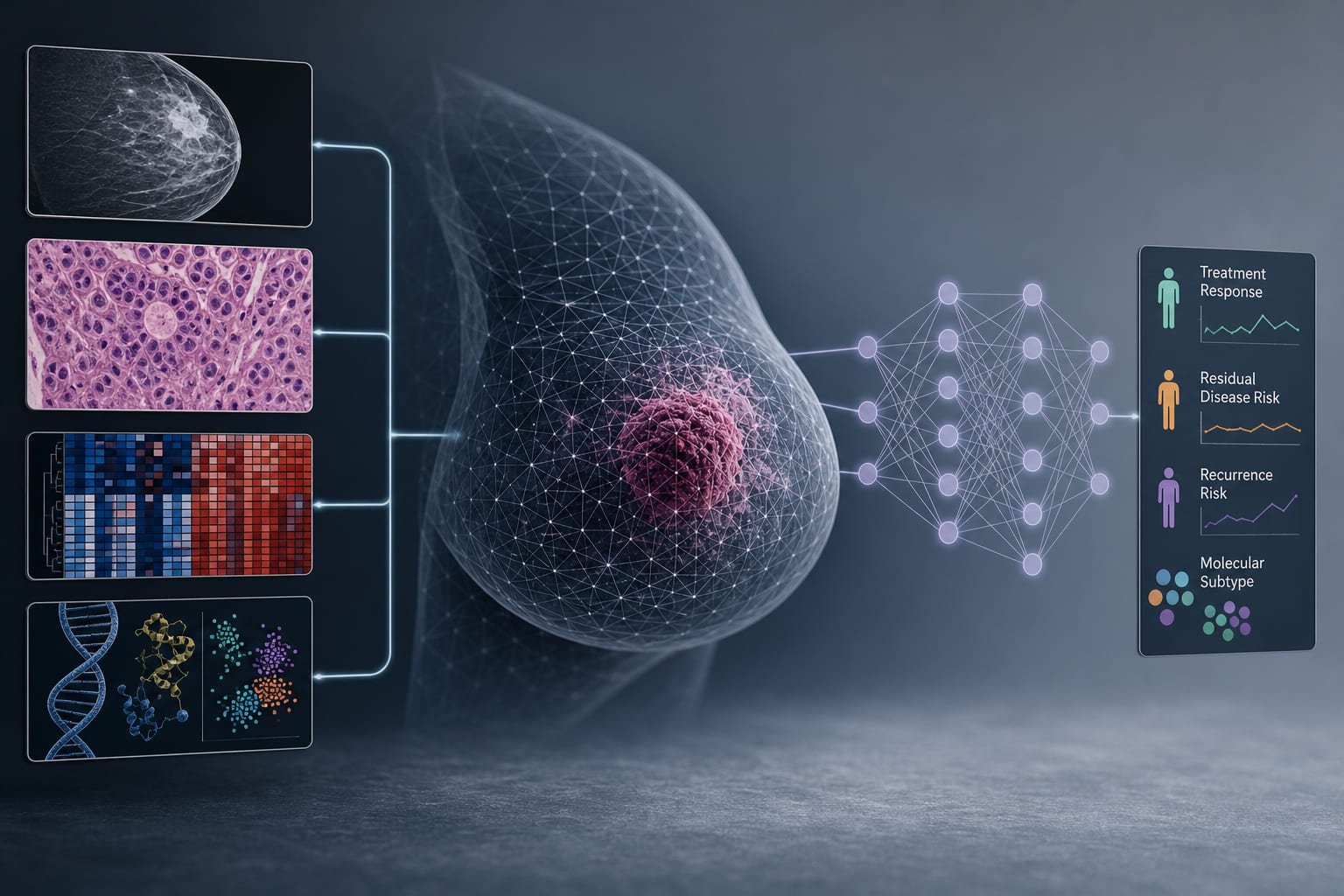
This review synthesizes the application of artificial intelligence (AI) in triple-negative breast cancer (TNBC), focusing on imaging, pathology, and multi-omics approaches.
Background
Triple-negative breast cancer (TNBC) is a challenging subtype of breast cancer characterized by its aggressive nature and lack of targeted therapies. The heterogeneity of TNBC complicates the identification of reliable biomarkers for diagnosis and treatment.
Data Highlights
This review does not contain specific numerical data or trial results.
Key Findings
AI has been utilized for lesion segmentation, subtype classification, and prediction of treatment response in TNBC.
Multimodal fusion and radiogenomic frameworks are being explored for capturing the heterogeneity of TNBC.
Current studies are limited by small cohorts and inconsistent endpoint definitions.
Robust validation and transparent reporting are essential for clinically credible AI applications in TNBC.
Future advancements will rely on multi-institutional data curation and privacy-preserving collaboration.
Clinical Implications
Clinicians should recognize the limitations of current studies on AI in TNBC and the importance of robust validation and integration of AI findings into clinical workflows.
Conclusion
Further research and validation are necessary to ensure the clinical utility of AI in TNBC.