Correction: Bridging reward and resilience: the endocannabinoid system as a unifying mechanism in exercise-induced protection against major depressive disorder - Report - MDSpire

Correction: Bridging reward and resilience: the endocannabinoid system as a unifying mechanism in exercise-induced protection against major depressive disorder

  • By

  • Guanmin Zhang

  • Qiuju Hu

  • Haiyang Zou

  • June 11, 2026

  • 0 min

Share

Correction: Connecting Reward and Resilience in Depression

Overview

This correction addresses missing citations in the original article regarding the endocannabinoid system's role in exercise-related protection against major depressive disorder. It also clarifies the erroneous citation related to SSRI antidepressants in the context of exercise and the endocannabinoid system.

Background

Major depressive disorder (MDD) is a prevalent mental health condition that significantly impacts individuals and society. Understanding the biological mechanisms, such as the endocannabinoid system, that contribute to resilience against MDD is crucial for developing effective interventions. Exercise has been identified as a potential protective factor against MDD, warranting further exploration of its underlying mechanisms.

Data Highlights

No numerical or trial data presented in the correction article.

Key Findings

  • Several citations were added to the reference list of the original article.
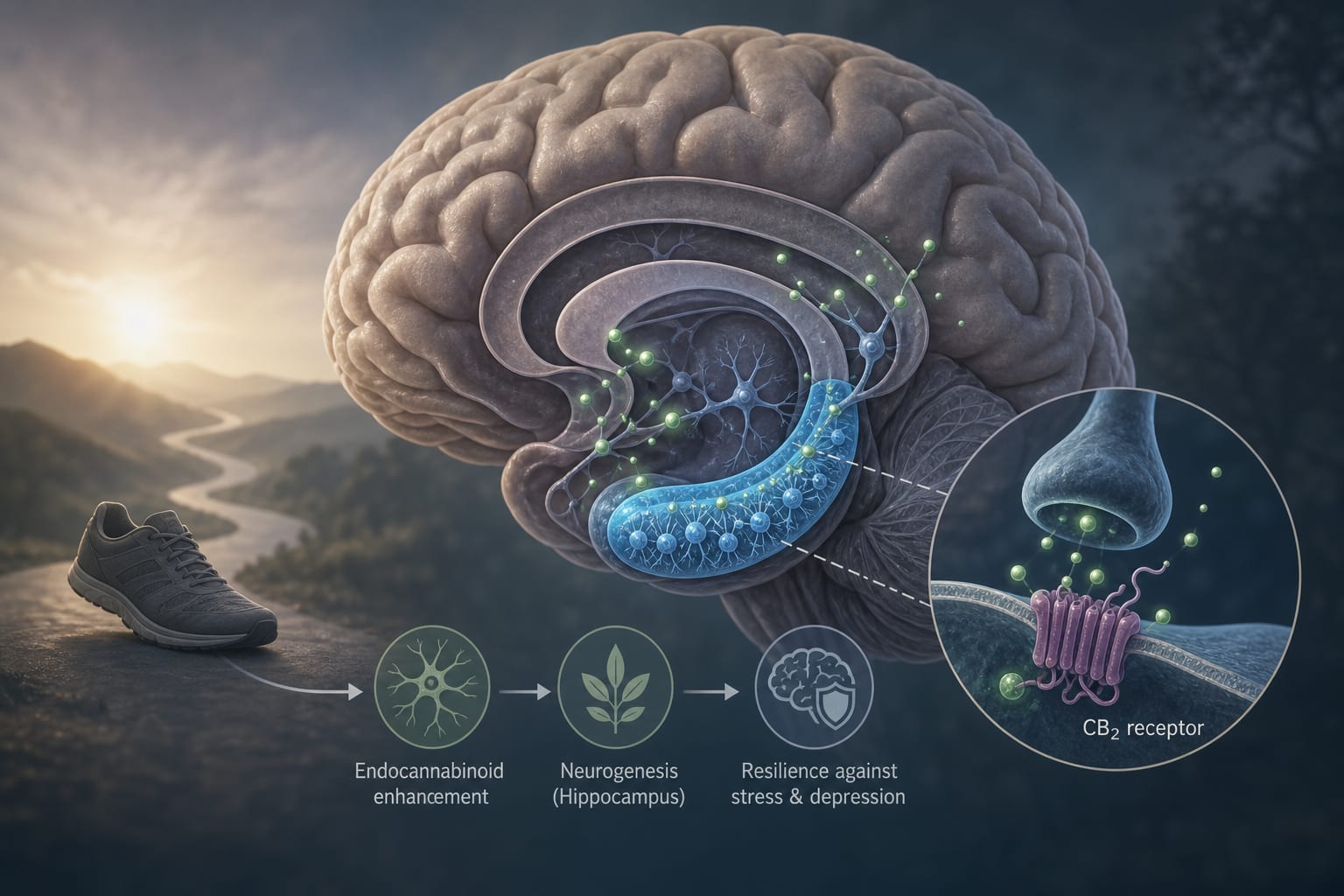
  • The correction clarifies the role of CB2 receptors in the antidepressant-like effects of exercise.
  • Misattributed references regarding SSRIs and exercise were corrected.
  • The endocannabinoid system is implicated in the neurobiological mechanisms of exercise-induced resilience against MDD.
  • Exercise is recognized as a potential therapeutic intervention for depression.

Clinical Implications

Clinicians should be aware of the evolving understanding of the endocannabinoid system's role in depression and exercise. Accurate citation and reference management are essential for maintaining the integrity of clinical research.

Conclusion

This correction emphasizes the importance of precise scientific communication in the context of mental health research and the role of exercise in managing depression.

Related Resources & Content

  1. Zhang G, Hu Q, Zou H, Front. Psychiatry, 2026 -- Correction on Bridging reward and resilience
  2. Brain — Enhanced behavioural and neural sensitivity to punishments in chronic pain and fatigue
  3. BMC Psychiatry (Springer) — Amygdala functional connectivity and response to aerobic exercise in subthreshold depression-an exploratory fMRI study
  4. Frontiers in Psychiatry — Disruption of a GalR2–mitochondrial axis in the ventral hippocampus contributes to depression-like phenotypes after prenatal stress
  5. Brain — Impaired reward sensitivity in Parkinson's depression is unresponsive to dopamine treatment
  6. NICE NG222 Recommendations for Depression Treatment
  7. CANMAT 2023 Update on Depression Management
  8. Effect and acceptability of different exercise modes on adult patients with clinically diagnosed depression: a network meta-analysis | Scientific Reports
  9. Effect of exercise for depression: systematic review and network meta-analysis of randomised controlled trials | The BMJ
  10. Effect of Different Exercise Modalities on Inflammatory Markers in Individuals with Depressive Disorder: A Systematic Review and Meta-Analysis | MDPI
  11. Bridging reward and resilience: the endocannabinoid system as a unifying mechanism in exercise-induced protection against major depressive disorder - PMC
  12. Serum Endocannabinoid and Mood Changes after Exercise in Major Depressive Disorder - PMC

Original Source(s)

Related Content