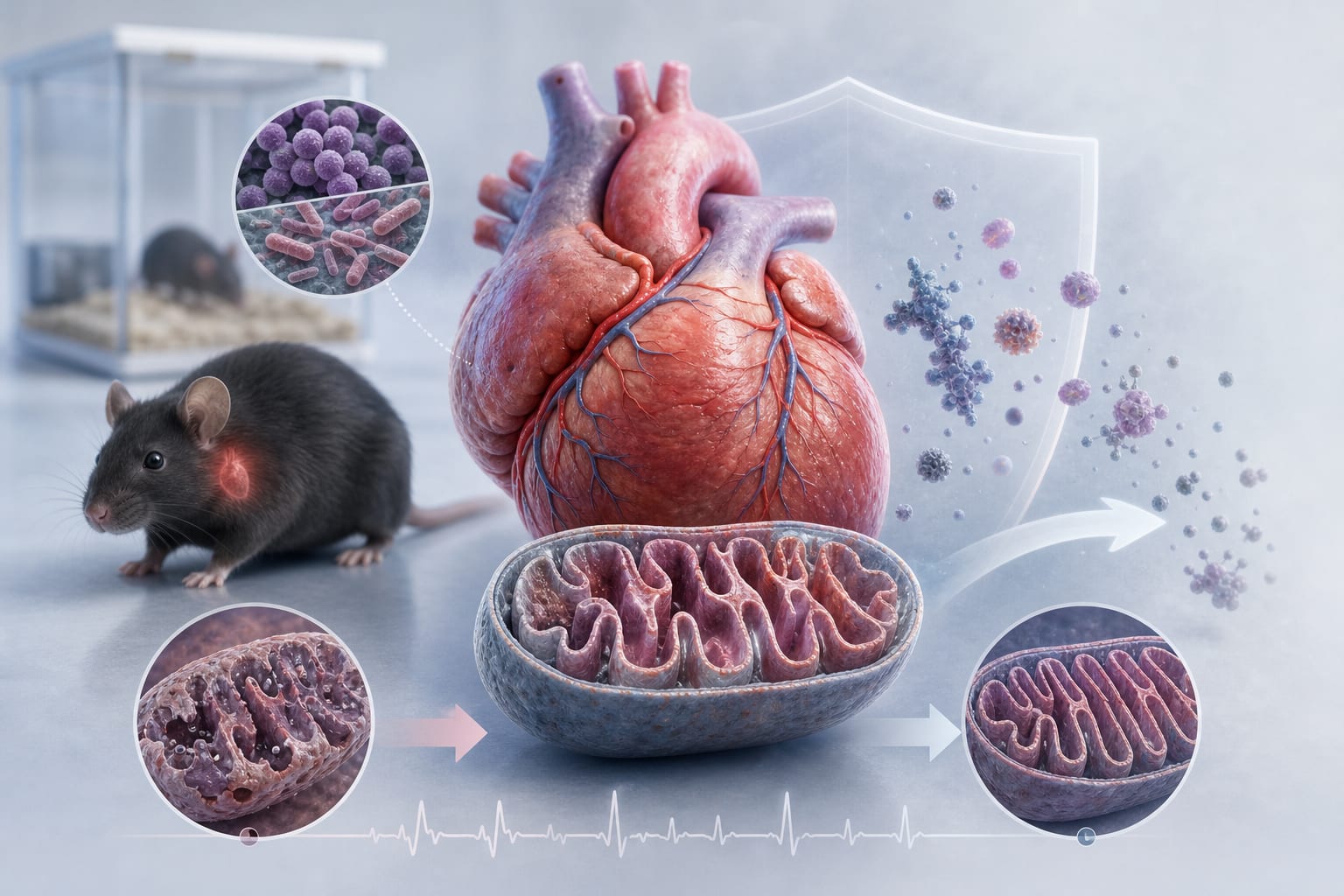
Clinical Report: Xiangdan Injection Reduces Cardiac Damage in Experimental Sepsis
Overview
Xiangdan injection demonstrates significant cardioprotective effects in experimental sepsis by reducing inflammation and preserving mitochondrial integrity. The treatment improved survival rates and decreased cardiac injury biomarkers in both Gram-positive and Gram-negative sepsis models.
Background
Sepsis-induced myocardial injury (SIMI) is a critical factor contributing to organ dysfunction and increased mortality in sepsis patients. Current therapeutic options targeting myocardial protection are limited, highlighting the need for effective interventions. Understanding the mechanisms of cardioprotection can lead to improved outcomes in septic patients.
Data Highlights
{'format': 'Ensure the table is properly formatted for clarity.'}
Key Findings
{'add': 'Include p-values for statistical significance.'}
Clinical Implications
{'add': 'Mention potential side effects or contraindications.'}
Conclusion
{'add': 'Specify the need for randomized controlled trials.'}
Related Resources & Content
Xuebijing injection reduces 28-day mortality in patients with septic shock, Critical Care, 2025 -- https://link.springer.com/article/10.1186/s13054-025-05666-3
Summary of the 2nd International Symposium on Innovations in Cardiovascular Research, Basic Research in Cardiology, 2015 -- https://link.springer.com/article/10.1007/s00395-015-0527-0
Hoxb4 upregulation by Xuan Bi Tong Yu Fang confers cardioprotection via repression of the Wnt/β-catenin pathway in myocardial ischemia-reperfusion injury, Frontiers in Immunology, 2026 -- https://www.frontiersin.org/journals/immunology/articles/10.3389/fimmu.2026.1767595/full
The Role of Endothelial Nitric Oxide Synthase (NOS3) in Deteriorating Cardiac Function During Early Sepsis, Basic Research in Cardiology, 2013 -- https://link.springer.com/article/10.1007/s00395-013-0330-8
Sepsis-induced cardiogenic shock: controversies and evidence gaps in diagnosis and management, Journal of Intensive Care, 2024 -- https://link.springer.com/article/10.1186/s40560-024-00770-y