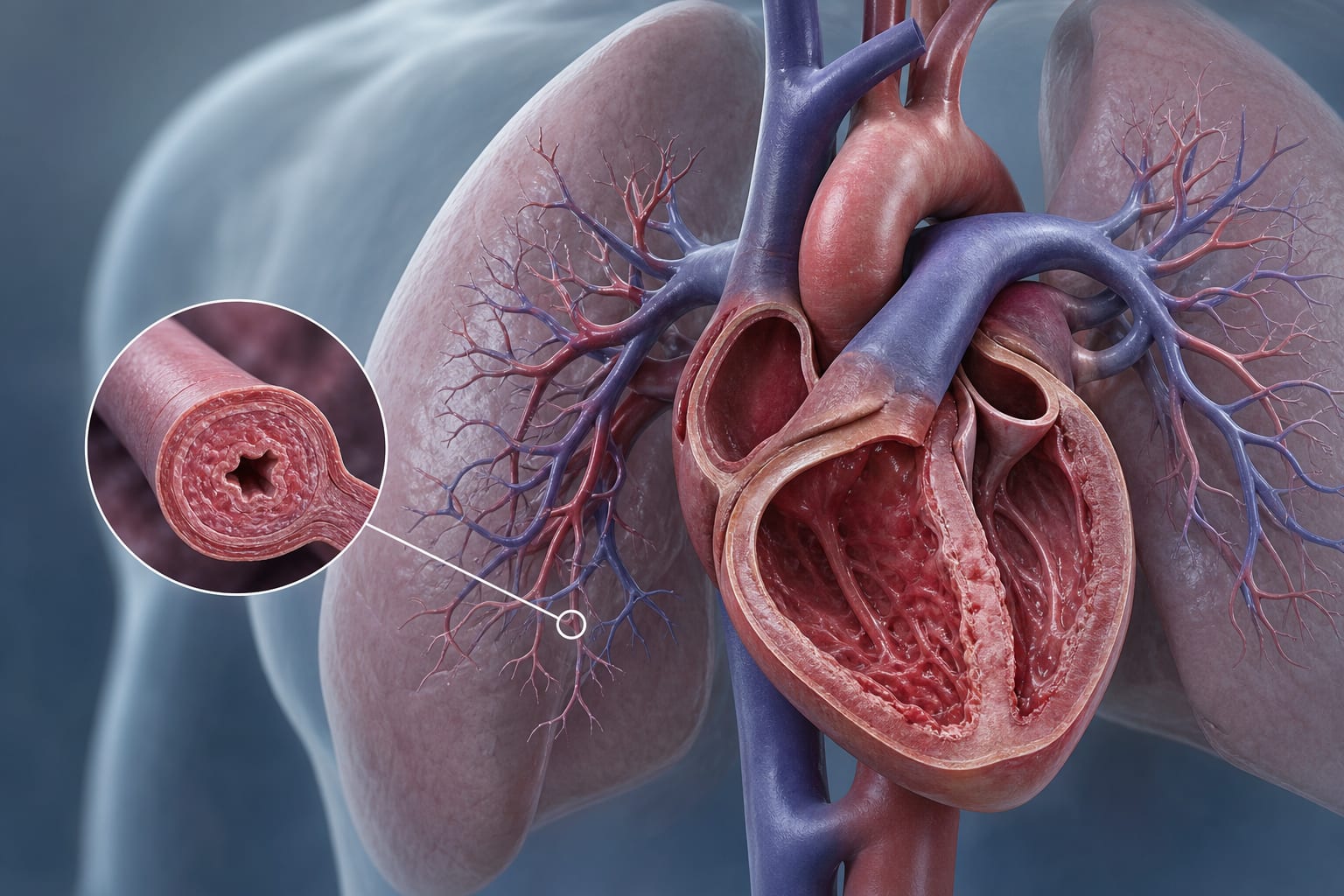
Clinical Report: Understanding Pulmonary Hypertension and GLP-1 Medications
Background
Pulmonary hypertension is a serious condition characterized by elevated blood pressure in the pulmonary arteries, which can lead to heart failure and other complications. It affects approximately 1% of the global population, with higher prevalence in certain demographics, including women, non-Hispanic Black individuals, and those aged 75 or older. Understanding its relationship with obesity and metabolic disorders is crucial for developing effective treatment strategies.
Data Highlights
No numerical data or trial data available in the source material, as indicated by the context provided.
Key Findings
Pulmonary hypertension is defined as elevated blood pressure in the blood vessels of the lungs.
It can arise from various conditions, including heart failure, congenital heart disease, and obesity.
GLP-1 medications, originally developed for type 2 diabetes, may have potential benefits in treating pulmonary hypertension, as suggested by preliminary studies.
Research indicates that obesity exacerbates pulmonary hypertension symptoms and complications.
Preliminary studies suggest a link between GLP-1 use and lower risk of pulmonary hypertension in patients with type 2 diabetes.
Clinical Implications
Healthcare professionals should consider the multifactorial nature of pulmonary hypertension, particularly in obese patients. Further investigation through prospective trials is warranted.
Conclusion
The relationship between pulmonary hypertension and GLP-1 medications is an emerging area of research that requires continued study to clarify potential benefits.
Updated 2025-2026 vaccination was linked to added protection in a CDC-funded analysis that became part of a broader debate over routine vaccine monitoring.